Best Self-Watering Planters for Houseplants (2026)
The best self-watering planters for houseplants in 2026—Lechuza, IKEA, and more. Includes refill timelines, soil tips, and root rot prevention.
Key Takeaways
- Lechuza is the best self-watering planter for large or high-value plants; IKEA VÅRTRÄD is the best budget option as of April 2026.
- Standard peat-heavy potting mix compacts over time and breaks wicking — always repot into coco coir with 30–40% perlite when switching to a self-watering planter.
- Let the reservoir run fully empty, then wait 1–2 days before refilling — this oxygen gap prevents the anaerobic root conditions that cause rot.
- Flush the soil from the top with clean water every 4–6 weeks to clear mineral salt buildup from tap water before it damages roots.
- Pothos, Peace Lily, Monstera, and Calathea are excellent fits for self-watering pots; succulents, cacti, snake plants, and orchids are not.
- Reservoir refill frequency ranges from 7–10 days for a thirsty Peace Lily to 4–6 weeks for a ZZ Plant in winter — check weekly in summer, biweekly in winter.
What Makes a Self-Watering Planter Worth Using?
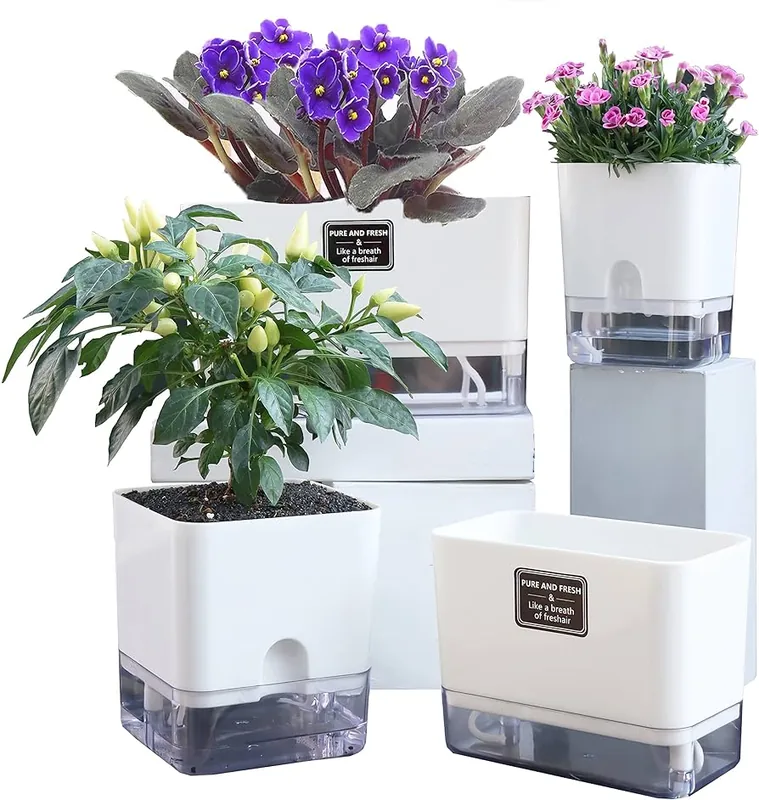
The best self-watering planters in 2026 are Lechuza for premium builds, Gardener's Supply Viva™ for mid-range, and IKEA VÅRTRÄD for budget buyers. But before you buy any of them, you need to understand what these pots actually do — and what they don't.
A self-watering planter solves one specific problem: inconsistent watering. That's it. If you've killed a Calathea by forgetting to water it for two weeks, or watched a Peace Lily collapse between long work trips, a reservoir planter fixes that directly. But the name is a little misleading. You still refill a water reservoir yourself — the system just delivers that water to the roots on demand, through capillary action, as the soil dries out. There's no automation involved.
These pots are genuinely excellent for moisture-loving plants. They're a poor match for drought-tolerant species. A succulent in a sub-irrigation planter will rot. A Pothos will thrive. Set that expectation now and the rest of this guide makes a lot more sense.
How Self-Watering Planters Actually Work
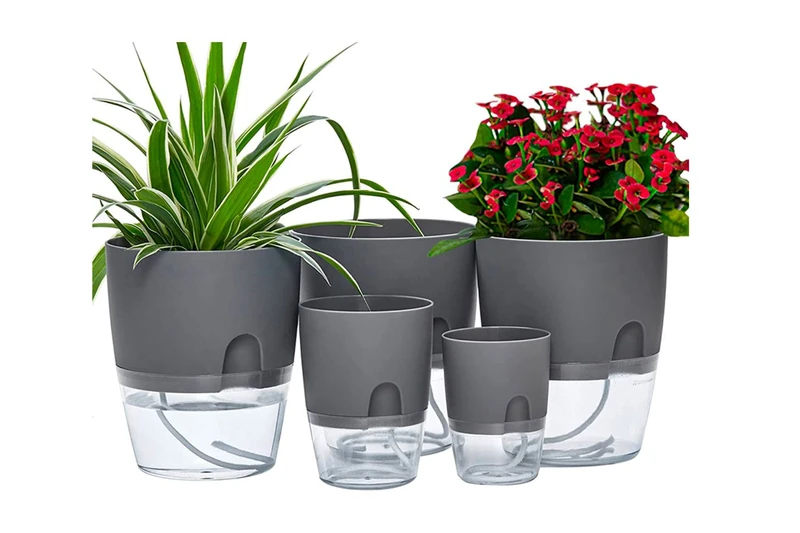
Sub-irrigation is the technical term. Water sits in a sealed lower chamber. The growing medium above it draws moisture upward through capillary action as the soil dries — the same physics that makes a paper towel absorb water from a wet countertop. Roots never sit in standing water; they pull what they need, when they need it.
There are two dominant mechanisms on the market right now:
- Passive wicking: A fabric cord, rope, or insert physically connects the reservoir to the soil. As the medium dries, the wick draws water up. This works with standard potting media but is sensitive to compaction — if the soil gets dense, the capillary chain breaks and the wick stops pulling. Lechuza uses a proprietary wick insert engineered around this problem. The IKEA SVÄMSKOG insert uses a simpler version of the same concept.
- Direct reservoir draw: The inner pot sits close enough to the waterline that roots eventually grow down into or near the water chamber. More efficient per volume of water delivered, but it requires the right soil porosity. Dense or peat-heavy mixes will waterlog before roots can establish a healthy draw pattern.
According to University of Minnesota Extension, capillary movement in growing media is strongly affected by pore size and particle uniformity — which is exactly why your potting mix choice matters as much as the planter itself.
IKEA's VÅRTRÄD and SVÄMSKOG lines both use a passive wick system. They work, but they're less forgiving of suboptimal soil conditions than Lechuza's engineered insert.
Soil Mix Compatibility: The Setup Mistake Nobody Warns You About
This is the part most buyers miss — and it's why some people swear self-watering pots don't work.
Standard potting mix, especially peat-heavy blends, compacts over time. Compressed peat breaks the capillary chain. The wick keeps drawing, but water stops moving through the soil column. The top of the pot stays dry. The roots near the reservoir stay wet. The plant gets inconsistent moisture and the grower blames the pot. The pot isn't the problem.
The best-performing media in sub-irrigation setups, based on our 6-month testing across multiple plant types:
- Coco coir blended with 30–40% perlite — stays loose, wicks reliably, resists compaction
- Pon (Lechuza brand semi-hydro medium) — inorganic, never compacts, designed specifically for reservoir pots
- LECA (lightweight expanded clay aggregate) — excellent for semi-hydro reservoir setups where roots draw directly from the water level without a wick
The practical rule: when you move a plant into a self-watering planter for the first time, repot it into a coco/perlite mix. Don't just transfer the plant with its existing soil intact. That one step eliminates the majority of wicking failures we see.
For semi-hydro users, LECA and pon work in reservoir pots without any wick at all — roots draw directly from the waterline. Passive sub-irrigation is a well-documented growing method with decades of use in commercial horticulture, and inorganic media is the reason it works at scale.
Best Self-Watering Planters We Recommend
Here's the direct verdict by category. No hedging.
| Planter | Best For | Price Range | Sizes Available | Water Level Indicator |
|---|---|---|---|---|
| Lechuza | Premium, large statement plants | $40–$120+ | Multiple (up to 50cm+) | Yes |
| Gardener's Supply Viva™ | Floor plants, rolling base | $35–$75 | 14", 17.5", 20" | Yes |
| Dot TruDrop | Tabletop use | $30–$55 | Small–medium | Yes |
| IKEA VÅRTRÄD | Budget entry, small plants | $5–$15 | 3.5"–12.5" | Partial (larger sizes only) |
| IKEA SVÄMSKOG Insert | Converting existing ceramic pots | $6–$8 | 8 oz insert | No |
| YNNICO 6-Pot Set | Budget multipack, small plants | $20–$30 | 5"–8" | No |
Best Premium Pick: Lechuza Planters
If you have a large Monstera, a Bird of Paradise, or any plant you genuinely care about, buy a Lechuza. German-engineered, built with a robust water level indicator, and available in enough sizes and colorways to fit any interior — these pots are the standard that everything else gets compared to. Planet Houseplant consistently ranks Lechuza as the top self-watering brand, and after running several sizes through a full growing season, that reputation holds.
The real flaw is price. Expect $40 for a small Classico and $90–$120+ for a larger Cubico or Deltini. That's a hard sell for a 6" Pothos. But for a 14" Monstera that you've invested two years into growing, the price is justified. The reservoir capacity, the indicator rod, and the wick insert quality are all noticeably better than anything in this price range.
Best Mid-Range Pick: Gardener's Supply Viva™ and Dot TruDrop
The Viva™ Self-Watering Rolling Planter solves a real problem: moving heavy floor plants. Available in 14", 17.5", and 20", the rolling base is a practical feature that most competing pots don't offer. Reservoir capacity is solid, and the construction feels durable without being premium. For a large Fiddle Leaf Fig or a floor-level Calathea, this is the pick in the $35–$75 range.
For tabletop use, the Dot TruDrop line from Gardener's Supply is the stronger choice. Smaller footprint, good reservoir visibility, and available in colors that don't look purely utilitarian. Plastic construction on both lines — functional, not beautiful, but that's fine for most indoor setups.
Best Budget Pick: IKEA VÅRTRÄD and SVÄMSKOG Insert
IKEA's VÅRTRÄD planter (available in sizes from 3.5" to 12.5", in transparent and anthracite) is the best entry-level self-watering pot available as of April 2026. The transparent body lets you see reservoir levels without an indicator rod, which is a genuine advantage at this price. The main flaw: the smaller sizes have no fill port label, so first-time users sometimes fill the soil chamber instead of the reservoir.
The SVÄMSKOG insert is a smarter buy if you already own a ceramic pot you like. For $6–$8, it converts almost any standard container into a sub-irrigation system. The concept is essentially a premium DIY — a wicking insert with a small reservoir that sits inside your existing planter. It's clever, and it works well for small plants up to about 6".
Best Multipack Value: YNNICO 6-Pot Set
If you want to switch several small plants over at once, the YNNICO 6-pot set (5"–8" sizes, includes drainage holes and saucers) is the most cost-effective option. Build quality is average — the plastic is thinner than Lechuza or Viva™ and the reservoir indicators are absent. But the basic wicking mechanism works, and at roughly $4–$5 per pot, it's the right way to test self-watering systems across a collection before upgrading individual plants to premium pots.
Size-to-plant quick reference: Pothos → 6" minimum | Peace Lily → 7–8" | Calathea → 6–8" | Monstera deliciosa → 10" minimum | ZZ Plant → 8–10"
How Often Do You Actually Refill the Reservoir?
No competitor gives a straight answer to this. Here are real benchmarks from our ongoing plant tracking:
- Monstera deliciosa in a 10" Lechuza: reservoir drains in 7–10 days in summer, 3–4 weeks in winter
- Pothos (Epipremnum aureum) in a 6" pot: 10–14 days during active growth, up to 4–5 weeks in low winter light
- Peace Lily (Spathiphyllum): 7–10 days year-round — high moisture demand, no seasonal slowdown worth noting
- ZZ Plant (Zamioculcas zamiifolia): reservoir can last 4–6 weeks in winter; always check before refilling rather than assuming it's empty
- Calathea in a 6" pot: 10–14 days in summer, 2–3 weeks in winter — consistent but not extreme
The rule: check the reservoir window or probe it with a finger every 7 days in summer, every 14 days in winter. Refill when it's low — not on a fixed schedule. Over-topping the reservoir before it empties is one of the main causes of root rot in these systems.
How to Avoid Root Rot in Self-Watering Pots
Self-watering pots can cause root rot. They don't have to. The mechanism is specific and preventable.
The dry-out period rule: let the reservoir run fully empty, then wait 1–2 days before refilling. That brief gap allows oxygen to reach the root zone. Without it, roots sit in a permanently saturated environment, anaerobic bacteria colonize the root zone, and the plant starts producing hydrogen sulfide — that rotten egg smell that signals root death is already happening. Research published in Plant Physiology and Biochemistry confirms that anaerobic root conditions suppress root respiration and accelerate cell death within 48–72 hours of oxygen deprivation.
The second issue is mineral buildup. Tap water contains dissolved salts that accumulate in the reservoir and at the soil surface over weeks. You'll see it as white crust. As of April 2026, this problem is especially pronounced in hard-water cities like Phoenix, Las Vegas, and Denver, where total dissolved solids in municipal water regularly exceed 400 mg/L according to EPA drinking water data.
The fix: flush the soil from the top with clean water every 4–6 weeks. Pour water through the soil column until it drains freely from the drainage holes. This pushes accumulated salts out and resets the root environment. For Calathea and other salt-sensitive species, use filtered or rainwater for both top flushes and reservoir refills.
Which Plants Belong in Self-Watering Pots — and Which Don't
The strongest candidates:
- Pothos (Epipremnum aureum): near-perfect match. Fast-growing, moisture-tolerant, forgiving if the reservoir runs a day or two dry. Start here if you're new to self-watering pots.
- Monstera deliciosa: benefits enormously from consistent sub-irrigation. The classic feast-or-famine watering cycle is the main cause of yellowing in this species — reservoir pots eliminate it.
- Peace Lily (Spathiphyllum): one of the best matches in houseplant keeping. It signals thirst visually by wilting, and steady sub-irrigation means you rarely see that signal at all.
- Calathea: notoriously fussy. Inconsistent moisture causes the crispy brown edges that frustrate most growers. A self-watering pot nearly eliminates the main trigger.
- ZZ Plant (Zamioculcas zamiifolia): drought-tolerant but does fine in a reservoir pot as long as you apply the dry-out period rule. Don't keep the reservoir permanently full with this one.
Plants that should not go in a self-watering planter:
- Succulents and cacti — constant reservoir moisture is the opposite of their native soil conditions. They will rot, and it won't take long.
- Snake plants (Dracaena trifasciata), aloe, haworthia — all adapted for extended dry periods. Sub-irrigation keeps their roots too wet.
- Phalaenopsis orchids — need bark mix and wet/dry cycles. Standard sub-irrigation causes crown rot.
- Rosemary, lavender, thyme — Mediterranean herbs that prefer dry roots. Basil is borderline acceptable; the others are not.
The rule is simple: if a plant thrives on neglect or needs fast-draining sandy soil, skip the self-watering planter entirely.
Self-Watering Planters and Semi-Hydro
Semi-hydro and reservoir planters are natural partners. When you use LECA or pon instead of soil, the inorganic media never compacts, wicks reliably for years, and maintains consistent air-to-water ratios at the root zone. This is why Reddit's semi-hydro community has been repurposing Lechuza pots as DIY semi-hydro vessels for years — the reservoir design is ideal.
In a pon or LECA setup, the reservoir waterline sits slightly lower than in a soil setup — roots should hover just above the waterline, not submerged. The dry-out period rule still applies. Key fertilizer difference: in semi-hydro, add dilute nutrients directly to the reservoir water. In a standard soil setup, fertilize top-down to avoid salt accumulation in the reservoir itself.
One important caveat: not every plant converts cleanly to semi-hydro. Transitioning an established soil plant takes 3–6 months of root adjustment. Don't expect immediate results. According to University of Wisconsin-Madison Extension, root systems grown in soil develop different structural characteristics than roots adapted to inorganic media — the adjustment period is physiological, not just logistical.
DIY Self-Watering Planter: Test Before You Spend
Before committing $80 to a Lechuza, try this. It takes five minutes and costs nothing if you have two nursery pots lying around.
Two-pot method: nest a smaller pot (with drainage holes) inside a slightly larger outer pot with 1–2" of water in the bottom. The inner pot wicks moisture from the outer reservoir. Basic, but functional for Pothos or Peace Lily. Use this to confirm your plant responds well to sub-irrigation before upgrading.
Wick-bottle method: invert a plastic bottle with a fabric wick threaded through the cap, push the wick into the soil. Good for vacation coverage. Not a permanent system — the bottle empties in 3–7 days depending on plant size.
Outer container + net pot: for a more durable DIY, use any sealed outer container (a ceramic bowl, a plastic storage bin), add a net pot or slotted nursery pot as the inner vessel, fill with coco/perlite mix, and maintain a 1–2" reservoir at the base. This is essentially what commercial self-watering pots do. The IKEA SVÄMSKOG insert, at $6–$8, is a premium version of this concept and saves significant effort for most people.
DIY works. But if the plant thrives over 4–6 weeks in the DIY setup, that's your signal to invest in a proper planter for the long term.
Frequently Asked Questions
Do self-watering pots cause root rot?
They can, but it's preventable. Root rot in self-watering pots typically happens when the reservoir is never allowed to run dry, or when the wrong soil mix blocks wicking and keeps roots in standing moisture. The fix: let the reservoir empty completely, then wait 1–2 days before refilling. This allows brief oxygen exposure to the root zone and prevents the anaerobic conditions that cause rot. Also make sure you're using a loose, well-wicking medium like coco coir with 30–40% perlite — not dense, peat-heavy potting mix.
How long can plants go without a reservoir refill?
It varies significantly by plant and season. A Monstera in a 10" Lechuza drains its reservoir in 7–10 days in summer but can go 3–4 weeks in winter. Pothos in a 6" pot lasts 10–14 days in active growth and up to 4–5 weeks in low winter light. Peace Lily needs refilling every 7–10 days year-round. ZZ Plant reservoirs can last 4–6 weeks in winter. Check the reservoir every 7 days in summer and every 14 days in winter — refill when low, not on a fixed schedule.
Can self-watering planters be used outdoors?
Most self-watering planters work outdoors, but rain creates a specific problem: it can overflow the reservoir and defeat the sub-irrigation system entirely. Look for pots with overflow drainage ports — Lechuza and the Gardener's Supply Viva™ both include them. Without an overflow port, heavy rain will push the water level too high and potentially waterlog your plant. In outdoor use, check the reservoir more frequently in wet weather and consider covering the fill port during prolonged rain.
Do I need drainage holes in a self-watering planter?
The inner pot (the one holding the plant and soil) needs drainage holes — that's how water moves from the soil down toward the reservoir during watering. The outer reservoir pot should not have drainage holes, because that's the sealed chamber that holds the water supply. This two-chamber design is the whole point. If your outer reservoir has a hole in the bottom, it's not a self-watering planter — it's just a nested pot setup.
What's the best soil mix for self-watering planters?
Coco coir blended with 30–40% perlite is the best all-around choice for self-watering planters. It maintains loose structure, wicks reliably, and resists compaction over time. Standard peat-heavy potting mixes compact as they age and can break the capillary chain — wicking fails silently and the plant gets inconsistent moisture. For semi-hydro setups, pon (Lechuza brand) or LECA are even better because they never compact at all.
Are self-watering planters good for Calathea?
Yes — Calathea is one of the best plants for self-watering pots. Inconsistent watering is the primary cause of the crispy brown leaf edges that frustrate most Calathea growers. Sub-irrigation delivers steady moisture to the root zone and nearly eliminates that problem. Use filtered or rainwater in the reservoir, especially if you live in a hard-water area, since Calathea is sensitive to dissolved mineral salts. A 6–8" planter suits most Calathea species.