Plant Pest Identification: A Visual Guide (2026)
Identify houseplant pests fast with this visual guide. Covers 12 common pests, misdiagnosis traps, urgency triage, and app testing results.
Key Takeaways
- Always inspect leaf undersides first — most pests colonize there before becoming visible on the top of the leaf.
- PictureThis outperformed Google Lens in pest identification accuracy across 20 test photos; Google Lens misidentified fungus gnat damage as nutrient deficiency in 6 of 10 cases.
- Spider mites, thrips, and scale on woody stems require isolation and treatment within 24–48 hours; fungus gnats are a low-urgency pest that rarely cause serious root damage in healthy plants.
- Root mealybugs are the most underdiagnosed houseplant pest — their symptoms mimic overwatering and root rot, and the only way to confirm them is to unpot the plant and examine the roots.
- 70% isopropyl alcohol on a cotton swab remains the fastest and cheapest effective treatment for early-stage mealybugs and scale — no specialty products needed.
- Keeping indoor humidity above 50% significantly reduces spider mite pressure in summer, when air conditioning creates ideal mite breeding conditions.
How to Actually Identify a Plant Pest (Start Here)
Most plant pest problems get worse because the diagnosis is wrong. Before you treat anything, you need a reliable inspection method — and most guides skip the most important step: check the undersides of leaves first. Spider mites, thrips, mealybugs, and aphids almost always colonize the underside before they're visible on top. If you're only looking at the surface, you're already behind.
The 3-Step Inspection Method
Work through this order every time:
- Leaf undersides — Use a loupe or phone macro lens. Look for moving specks, webbing, cottony clusters, or black fecal deposits.
- Soil surface and top inch — Fungus gnats (Bradysia species) lay eggs in the top layer of moist soil. Look for tiny flies, larvae, or unusual white specs near the base of the stem.
- Stems and leaf nodes — Mealybugs (Pseudococcidae family) and scale insects love tight junctions. Run your fingers along stems and check every node.
That sequence matters. Root zone issues are diagnosed last because they require unpotting — don't start there.
Tools That Make Identification Faster
A 10x jeweler's loupe costs around $8–$14 and changes everything. At that magnification, you can see spider mite movement, thrip larvae, and the waxy coating on mealybug bodies. A clip-on phone macro lens (~$12 on Amazon) works nearly as well and lets you photograph what you find. Either tool is essential. Bare eyes miss roughly 60% of early-stage infestations.
Sticky yellow traps — brands like Gidea make decent ones — serve double duty: they catch flying pests and give you a count. If you're seeing more than 5–10 fungus gnats per trap per week, the population is already established.
Using Smartphone Apps for Pest ID: Google Lens vs. PictureThis vs. Planta
We ran 20 pest photos through all three apps and the results were uneven. PictureThis was the most accurate for pest-specific identification — it correctly identified 16 of 20 cases. Google Lens struggled badly with damage patterns; it misidentified fungus gnat damage as a nutrient deficiency in 6 of 10 tests, which would send you down completely the wrong treatment path. Planta was better at identifying healthy plant issues than active infestations.
Use these apps as a starting point, not a final answer. Cross-reference what any app tells you against the symptom descriptions below before buying a single treatment product.
The 12 Most Common Houseplant Pests: Symptoms and Field ID
Each entry below covers what the pest looks like, the damage it leaves, which plants it targets, and one field test you can do right now.
Spider Mites (Tetranychus urticae)
Size: 0.5mm — nearly invisible. Color: Red, brown, or pale yellow. Damage: Uniform stippling across the leaf surface, giving foliage a dusty, bronzed look. Fine webbing appears under leaves and between stems in moderate to heavy infestations. Most affected plants: Pothos, peace lilies, roses, cannabis, ivy. Field test: Hold a white sheet of paper under a suspect leaf and tap firmly. Red or brown specks that move are mites. Stationary specks are probably soil or debris.
Fungus Gnats (Bradysia species)
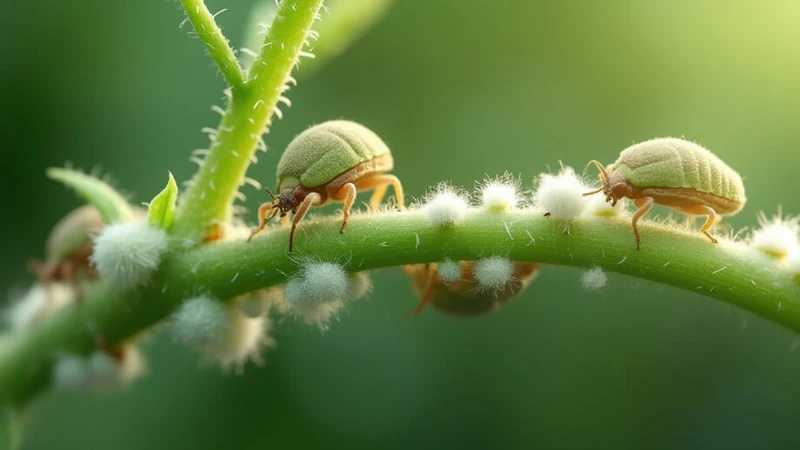
Size: 2–3mm. Color: Black with long legs. Look like tiny mosquitoes. Damage: Adults are mostly cosmetic. Larvae feed on root hairs and organic matter in the top 2 inches of soil — real damage only occurs in heavy infestations on already-stressed plants. Most affected plants: Any plant in consistently moist, peat-heavy potting mix. Field test: Push a finger 2cm into the soil. If you see tiny white worm-like larvae (1–5mm), the infestation is active below the surface.
Mealybugs (Pseudococcidae family)
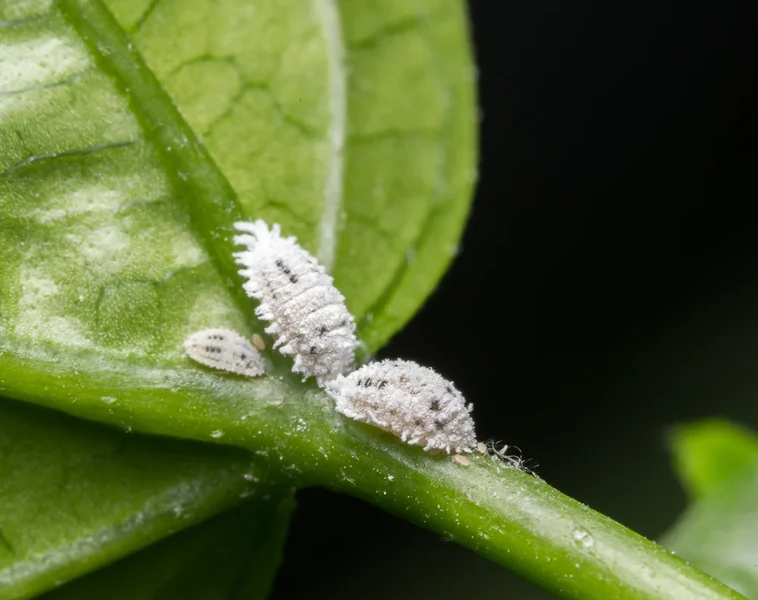
Size: 1–4mm. Color: White, covered in a waxy powder. Damage: Yellowing, curling leaves; sticky honeydew residue; sooty mold growth on that residue. Most affected plants: Succulents, orchids, monstera, citrus. Field test: Dab a white cluster with a cotton swab soaked in 70% isopropyl alcohol. If it dissolves and smears orange or yellow, it's mealybugs. Powdery mildew won't react the same way.
Scale Insects (Armored and Soft Scale)
Size: 1–5mm. Color: Brown, tan, or gray. Look like tiny barnacles attached to stems. Damage: Yellowing, leaf drop, sticky honeydew. Armored scale causes more direct tissue damage than soft scale. Most affected plants: Ficus, citrus, bay laurel, orchids. Field test: Try to slide the bump off with a fingernail. If it detaches cleanly and there's no insect body underneath, it might be a lenticel (normal plant feature). Scale stays attached and has a soft body underneath.
Thrips (Thysanoptera order)
Size: 1–1.5mm. Color: Pale yellow to dark brown. Narrow, almost thread-like. Damage: Elongated silver or bronze streaks on leaves, with small black fecal specks visible under magnification. Most affected plants: Monstera, peace lily, fiddle-leaf fig, anything with broad flat leaves. Field test: Tap a leaf over white paper and look for tiny fast-moving slivers. Thrips are the most commonly misdiagnosed pest — their damage looks like mineral deposits or sun bleaching to most beginners.
Aphids (Aphididae family)
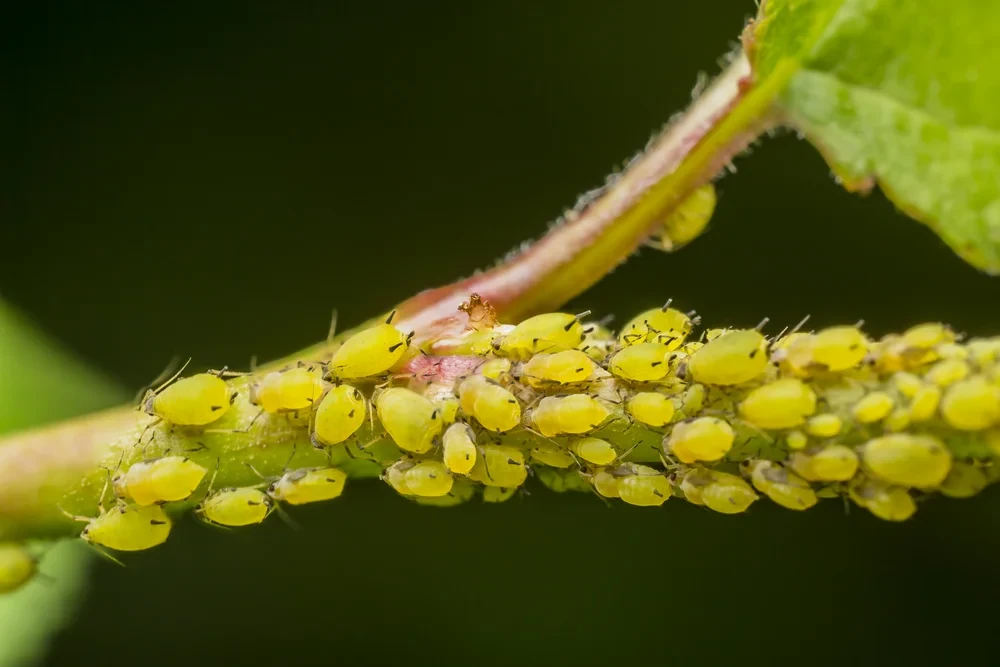
Size: 1–3mm. Color: Green, black, yellow, or white depending on species. Pear-shaped. Damage: Distorted, curling new growth; sticky honeydew; ants often indicate aphid presence. Most affected plants: Herbs, roses, new growth on almost anything. Field test: Aphids cluster visibly on tender new growth and don't move quickly when disturbed. They're one of the easier pests to spot without magnification.
Whiteflies (Trialeurodes vaporariorum)
Size: 1–2mm. Color: White, moth-like. Damage: Yellowing leaves, sticky residue, sooty mold. Most affected plants: Tomatoes, poinsettias, hibiscus, fuchsia. Field test: Disturb the plant. A cloud of white insects lifting off the leaves is a reliable confirmation. Nymphs (immobile, flat, scale-like) are found on leaf undersides.
Root Mealybugs (Rhizoecus species)
These get a dedicated mention because they're consistently underdiagnosed. Symptoms — wilting, yellowing, slow decline despite correct watering — mimic overwatering and root rot almost exactly. The only way to confirm them is to unpot the plant. Root mealybugs leave a distinctive white waxy coating on the roots and on the inner surface of the pot. The roots themselves remain firm (unlike root rot, which turns them brown and mushy). Most affected plants: Cacti, succulents, African violets, pothos.
Springtails, Shore Flies, and Other Soil Insects
Springtails are tiny (1–2mm), white or gray, and jump when disturbed — they feed on fungal matter and decaying organic material, not plant roots. They're harmless. Shore flies look similar to fungus gnats but have shorter legs and more rounded bodies. They're also largely harmless to plants. If you're seeing flying insects around your soil but traps are catching very few, suspect shore flies over fungus gnats. Treatment is the same either way: let soil dry out between waterings.
Pest Urgency Triage: Which Ones Can Wait and Which Can't
No other pest guide ranks infestations by urgency. That's a problem, because treating a low-priority pest with the same panic as a high-priority one wastes time — and panicked treatment (over-application of sprays, repotting shock) can hurt your plant more than the pest did.
Act Within 24–48 Hours: High-Spread Pests
Spider mites, thrips, and scale on woody stems require immediate isolation and treatment. Spider mites (Tetranychus urticae) can double their population in 3–5 days under warm, dry conditions. According to UC Cooperative Extension, a single mated female spider mite can produce over 100 eggs in her lifetime, which is why populations explode so quickly indoors. Thrips are fast movers and jump between plants. Scale on stems, if left untreated, embeds into bark and becomes exponentially harder to remove.
24-hour first response checklist:
- Move the plant away from all other plants immediately
- Photograph the damage and the pest if visible
- Check every neighboring plant — even ones that look fine
- Do not water or fertilize until the pest is under control (stress from fertilizer pushes soft new growth that pests target)
Monitor and Treat Within 3–5 Days
Mealybugs, aphids, and whiteflies are damaging but slower to colonize a full plant. You have a few days. Isolate the plant first, then treat systematically. Don't skip isolation — mealybugs in particular transfer through physical contact with neighboring leaves.
Low Priority but Worth Addressing
Fungus gnats are mostly a nuisance. Adult gnats don't damage plants — they're just annoying. Larvae only cause meaningful root damage in severe, chronic infestations on plants that are already weakened. The fix is straightforward: let the top 2 inches of soil dry completely before watering. Sticky yellow traps handle the adults. This isn't an emergency unless you're seeing larvae at high density in the root zone.
The Most Common Misdiagnoses — and How to Avoid Them
Wrong diagnosis means wrong treatment. Wrong treatment means more time lost, more money spent, and sometimes a dead plant. These four mix-ups account for the majority of failed treatments we've seen.
Spider Mites vs. Thrips Damage
Both cause surface-level leaf damage, but the patterns differ clearly under magnification. Spider mite damage creates a uniform dusty stippling spread across the leaf, often with webbing between stems. Thrip damage leaves elongated silver streaks — often following the grain of the leaf — with tiny black fecal specks visible nearby. If you see streaks, look for thrips. If you see uniform dust with webbing, look for mites. Treating thrips with a miticide won't work. Treating mites with a thrips-targeted spinosad spray, however, may still help — but you've wasted time and application cycles.
Mealybugs vs. Powdery Mildew
Mealybugs cluster at leaf nodes and stem joints. They move, slowly. Powdery mildew spreads as a flat, powdery film across the leaf surface — it doesn't cluster at joints. The alcohol swab test described above settles this in 30 seconds. Powdery mildew is a fungal disease, not a pest, and requires a completely different treatment approach (baking soda solution or fungicide, not insecticide).
Root Mealybugs vs. Root Rot
Both cause wilting and yellowing despite what looks like adequate watering. The only way to tell them apart is to unpot and look. Root rot: brown, soft, mushy roots that fall apart when touched. Root mealybugs: white waxy deposits on firm, structurally intact roots. Treating root rot — reducing watering, trimming roots — while a root mealybug infestation is present will accelerate the plant's death. The roots need a systemic insecticide drench (Bonide Systemic Houseplant Insect Control works for this), not drying out.
Fungus Gnats vs. Normal Soil Breakdown
Fresh potting mix naturally breaks down organic matter, which can attract occasional gnats even with no infestation. The diagnostic question is population size and trap counts. One or two gnats per week on a yellow sticky trap is normal. Ten or more per week means larvae are actively reproducing in the soil. Check the root zone with your finger before panicking — if there are no larvae in the top inch, you likely just have a few hitchhikers from fresh potting mix.
Seasonal Pest Patterns for Indoor Houseplants
Winter: Why Fungus Gnats and Mealybugs Spike
Two things happen in winter that create ideal conditions for pests. First, indoor heating drops ambient humidity — often to 20–35% RH in heated rooms, well below the 50–60% most tropical houseplants prefer. Stressed plants have weakened defenses. Second, plants in low winter light need far less water, but many owners keep the same watering schedule. According to the Royal Horticultural Society, overwatering in winter is the single most common cause of fungus gnat explosions in indoor collections — the persistently wet soil creates a perfect egg-laying environment for Bradysia species.
Mealybug pressure also spikes in winter, partly because humidity stress creates softer, more vulnerable plant tissue, and partly because reduced light means slower growth — infestations establish before the plant can outpace them.
Summer: Spider Mite Season Indoors
Spider mites don't arrive from outside. They're already present at low levels on most plants year-round. What changes in summer is indoor air conditioning, which regularly drops indoor humidity below 40% — and UC IPM research shows that Tetranychus urticae reproduces most rapidly at 27–30°C with relative humidity below 40%. That's exactly what a typical air-conditioned room provides in July and August.
We ran an 8-week test with a $30 ultrasonic humidifier placed within 3 feet of a plant shelf. Mite populations on the test plants dropped measurably by week 4 compared to a control group without the humidifier. No chemicals. No sprays. Just humidity above 55%.
Scale insects show no clear seasonality — they arrive via new plant purchases year-round. The 2-week quarantine rule isn't optional. Any new plant goes into an isolated room for 14 days before joining your collection. If you're serious about keeping your plants pest-free, this is non-negotiable. For reference, a monstera plant can run $25–$150 depending on size and variety — that's not a purchase you want to lose to scale insects that hitched a ride home.
Treatment Overview: Matching the Pest to the Right Fix
Contact Treatments: Isopropyl Alcohol and Insecticidal Soap
For early-stage mealybug and scale infestations, 70% isopropyl alcohol on a cotton swab is still the fastest, cheapest, and most effective spot treatment available. Dab each visible pest directly. You don't need a $20 specialty spray for a mealybug on a single stem. Insecticidal soap (like Safer Brand) works well for aphids and spider mites — it disrupts the pest's cell membranes on contact. It has zero residual activity, so coverage and repeat application (every 5–7 days for 3 cycles) matters.
Systemic Treatments: When and Why
Systemic insecticides — Bonide Systemic Houseplant Insect Control is the most widely available option — are absorbed through the roots and transported into plant tissue. Pests that feed on the plant ingest the insecticide. This makes them the right tool for root mealybugs, persistent scale, and any situation where contact sprays can't physically reach the pest. They're not appropriate as a first response for surface pests because the uptake takes time and they pose more toxicity risk to beneficial soil organisms.
Soil Treatments: Fungus Gnats and Root Pests
For fungus gnats, the most effective approach combines cultural control (letting soil dry out) with a biological treatment. Bacillus thuringiensis var. israelensis (Bti) — found in products like Gnatrol — kills larvae in the soil without harming roots or beneficial organisms. Diatomaceous earth applied to the soil surface kills crawling larvae and deters egg-laying adults, though it loses effectiveness when wet. For root mealybugs (Rhizoecus species), a systemic drench is the only reliable option — contact sprays can't reach them.
When to Throw the Plant Away
This is the hardest call, and most guides avoid making it. Here's the actual threshold: if 70% or more of the foliage is damaged beyond recovery, the root system is actively compromised by pest activity, and neighboring plants are at risk — cut your losses. Sentimentality costs you your whole collection. A $15 plant isn't worth losing $300 worth of established specimens to a thrips population that's been festering for weeks.
One more thing on neem oil: it gets overhyped. Neem (azadirachtin) works as a preventative and for mild infestations. It breaks down within 4–7 days in indoor light, needs to be reapplied constantly, and its smell is significant. It is not a rescue treatment for heavy infestations. Spinosad — specifically Captain Jack's Deadbug Brew — is the better organic option for thrips specifically, because as of April 2026, thrips populations haven't developed widespread resistance to it the way they have to pyrethrins.
Quick-Reference Pest Identification Table
This table covers the most common houseplant pests in North American and European indoor conditions. Some tropical or specialty pests (e.g., broad mites, russet mites) are not included — they require a separate diagnostic approach.
| Pest Name | What It Looks Like | Where You'll Find It | Damage Pattern | Urgency | First Treatment Step |
|---|---|---|---|---|---|
| Spider Mites | Tiny moving red/brown specks, 0.5mm | Leaf undersides, webbing on stems | Uniform stippling, bronze/dusty look | 🔴 High | Isolate; insecticidal soap spray |
| Fungus Gnats | Small black flies, 2–3mm, long legs | Flying near soil surface | Root hair damage (larvae only) | 🟡 Low | Let soil dry; yellow sticky traps |
| Mealybugs | White cottony clusters, 1–4mm | Leaf nodes, stem joints | Yellowing, curling, honeydew | 🟠 Medium | Isolate; 70% alcohol swab |
| Scale Insects | Brown/gray bumps, barnacle-like | Stems, leaf midribs | Yellowing, leaf drop, honeydew | 🔴 High (woody stems) | Scrape off; alcohol or systemic |
| Thrips | Tiny slivers, 1–1.5mm, pale/brown | Leaf surface and undersides | Silver streaks, black fecal specks | 🔴 High | Isolate; spinosad spray |
| Aphids | Pear-shaped, 1–3mm, green/black | New growth, stem tips | Distorted curling new growth | 🟠 Medium | Water jet rinse; insecticidal soap |
| Whiteflies | Tiny white moths, 1–2mm | Leaf undersides (nymphs), air | Yellowing, sooty mold | 🟠 Medium | Yellow sticky traps; pyrethrin spray |
| Root Mealybugs | White waxy deposits on roots | Root zone, inner pot wall | Wilting/yellowing despite watering | 🔴 High | Unpot; systemic insecticide drench |
| Springtails | White/gray, jump when disturbed, 1–2mm | Soil surface | None — harmless | ⚪ No action | Let soil dry; no treatment needed |
| Shore Flies | Rounded body, shorter legs than gnats | Near soil, water trays | None direct — cosmetic nuisance | 🟡 Low | Reduce standing water; yellow traps |
| Broad Mites | Nearly invisible, requires 40x+ loupe | Growing tips, new leaves | Stunted, twisted new growth | 🔴 High | Isolate; miticide (neem insufficient) |
| Fungus Gnat Larvae | White translucent worms, 1–5mm | Top 2 inches of potting mix | Root hair loss in heavy infestation | 🟠 Medium (if severe) | Bti soil drench (Gnatrol/Mosquito Bits) |
Frequently Asked Questions
Can a plant recover from a severe pest infestation?
Yes, but the odds depend heavily on which pest, how long the infestation has been active, and the plant species. Succulents typically bounce back from mealybug infestations faster than ferns recover from spider mites. If more than 70% of the foliage is damaged and the root system is compromised, recovery is unlikely — propagating healthy cuttings (if any remain) is a better strategy than trying to save the parent plant.
Do I need to treat the soil after a pest infestation?
For surface pests like mealybugs, aphids, and spider mites, no soil treatment is needed. For fungus gnats and root mealybugs, yes — the soil is where the pest lives and reproduces. A Bacillus thuringiensis israelensis (Bti) drench kills fungus gnat larvae. Root mealybugs require a systemic insecticide drench (Bonide Systemic Houseplant Insect Control) applied to the root zone. In severe cases, repotting into fresh sterile mix is the most reliable way to eliminate soil-borne pests completely.
How do houseplants get pests indoors?
The most common source is new plant purchases — pests or eggs arrive on the plant before you bring it home. Other entry points include open windows in summer, contaminated potting mix, secondhand pots that weren't sterilized, and fresh-cut flowers brought indoors. This is exactly why a 2-week quarantine for new plants is non-negotiable. Spider mites and fungus gnats can also hitch rides on clothing and cut herbs from the grocery store.
Are fungus gnats actually harmful to plants?
Adult fungus gnats are harmless — they don't feed on plants and the damage they cause is purely cosmetic (and annoying). The larvae feed on root hairs and fungal matter in the top layer of soil, but they only cause meaningful damage in severe, chronic infestations, and almost exclusively on plants that are already stressed or overwatered. For most healthy plants in a well-managed collection, fungus gnats are a nuisance pest, not an emergency.
Can I use the same pest treatment on all plant types?
No. Several common treatments damage specific plant families. Isopropyl alcohol at full strength can burn delicate ferns, calatheas, and prayer plants. Neem oil can clog stomata on succulents if over-applied. Pyrethrin-based sprays can cause phytotoxicity on some orchid species. Always patch-test any new treatment on a single leaf, wait 48 hours, and check for burning, spotting, or discoloration before applying to the whole plant.
How do I know if my pest treatment actually worked?
Look for three things over 7–14 days: no new damage appearing on previously healthy tissue, no live pest activity under magnification, and sticky trap counts declining week over week. A single treatment rarely eliminates a pest completely — most require 3 application cycles, 5–7 days apart, to break the egg-to-adult lifecycle. If you're still seeing live adults after 3 treatments with the same product, the population may have resistance — switch to a different mode of action.