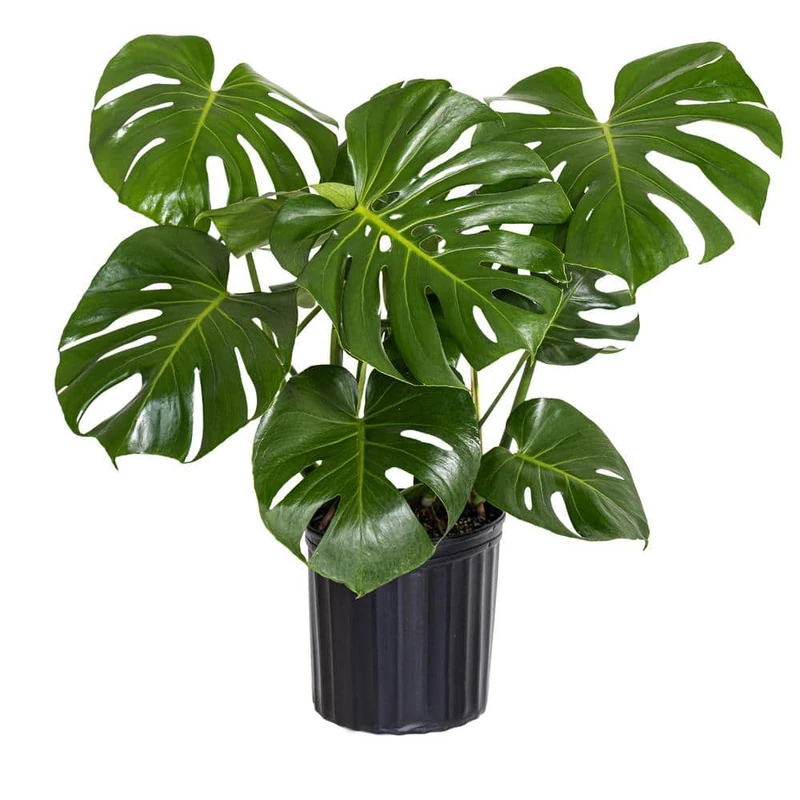
- A standard Monstera deliciosa costs $10–$30 for a small pot at Home Depot and $30–$80 for a medium plant with split leaves in 2026.
- Thai Constellation is the better variegated Monstera buy for most people — more stable variegation and 60% cheaper than Albo since 2022.
- Fenestration stage is the hidden price driver: split leaves add $20–$40 to an otherwise identical plant's price tag.
- Always calculate true delivered cost when buying online — shipping, heat packs, and insulation can add 100%+ to the listed price.
- Facebook Marketplace and seasonal clearance sales at big-box stores are the cheapest ways to get a Monstera, with cuttings often available for $5–$10 or free.
- Budget $20–$50 in first-year setup costs (aroid mix, moss pole, fertilizer, new pot) beyond the plant's purchase price.
Monstera Deliciosa Price by Size (2026 Prices)
A standard Monstera deliciosa — the plant most people mean when they say "Monstera" — costs between $10 and $400 in 2026, depending almost entirely on size and leaf maturity. If you want a quick answer: walk into Home Depot, grab a 6-inch pot for $15–$25, and you've got a perfectly healthy starter plant. Want something that actually looks like the Instagram photos? Budget $50–$80 for a mid-size specimen with split leaves.
| Size Category | Pot Size | Typical Price (2026) | Fenestration Stage | Best Source |
|---|---|---|---|---|
| Small | 4–6 inch | $10–$30 | Juvenile, no splits | Home Depot, Lowe's |
| Medium | 8–10 inch | $30–$80 | Early splits, 2–4 mature leaves | Amazon, local nurseries |
| Large | 12+ inch / 3–5 ft tall | $80–$200 | Full fenestrations with inner holes | Specialty growers |
| Specimen | Floor plant / 6–8 ft | $250–$400+ | Mature with aerial roots | Dahing Plants, local designers |
Small Plants (4–6 Inch Pot): $10–$30
These are the plants you'll find at Home Depot and Lowe's, usually labeled "Swiss Cheese Plant" on a generic tag. As of April 2026, most big-box stores stock 4-inch Monstera deliciosa pots for $10–$15 and 6-inch pots for $18–$30. The leaves are heart-shaped and completely uncut — no fenestrations at all. They're healthy plants. They just don't look like Monsteras yet.
If you're buying your first Monstera and don't want to spend much, this is the right move. But manage your expectations: it'll take 12–18 months of good care before those leaves start splitting.
Medium Plants (8–10 Inch Pot): $30–$80
This is the sweet spot. A medium Monstera deliciosa in an 8–10 inch pot typically has 2–4 leaves with early fenestrations — the signature splits that make people fall in love with this plant. According to botanical references, Monstera deliciosa develops fenestrations as a response to light availability in its native Central American rainforest habitat, and indoor plants begin splitting once they reach sufficient maturity.
Tropical Plants of Florida sells a 24–28 inch Monstera deliciosa on Amazon for roughly $40–$55 with Prime shipping included. That's solid value, because shipping on a plant this size usually runs $15–$25 from independent sellers.
Here's something most guides won't tell you: fenestration stage is the hidden price multiplier. Buyers at plant shops literally pick through identical pots looking for split leaves. A Monstera with two fenestrated leaves commands $20–$40 more than an identical-size plant with plain juvenile foliage. Sellers know this. If you're shopping in person, you're competing with everyone else who knows it too.
Large and Specimen Plants (3–8 Ft): $80–$400+
Large Monsteras with established split leaves and inner holes (the perforations within each leaf lobe) start around $80 and climb fast. Dahing Plants in NYC sells 6–8 foot specimens for $250–$400+, and they're often spoken for before they hit the sales floor. A mature Monstera deliciosa with thick aerial roots and deeply fenestrated leaves is a three- to five-year-old plant — you're paying for time as much as for the pot.
Variegated Monstera Prices: Albo vs. Thai Constellation
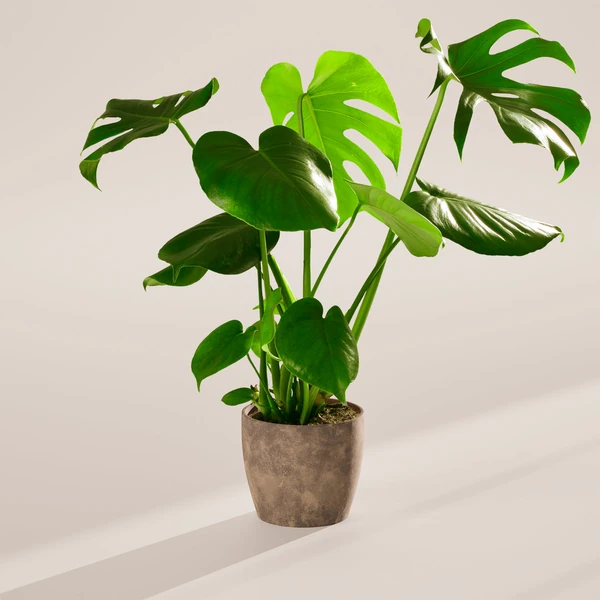
Variegated Monsteras occupy a completely different price tier. A single rooted cutting of Monstera deliciosa 'Albo Variegata' still costs more than a fully grown standard Monstera. But the market has shifted meaningfully since 2022, and one variety has dropped while the other stubbornly holds.
| Variety | Rooted Cutting | Established Plant (3–5 leaves) | Large Specimen | Variegation Type |
|---|---|---|---|---|
| Monstera Albo | $100–$350 | $350–$800 | $800–$2,000+ | Chimeral (unstable) |
| Thai Constellation | $50–$150 | $150–$400 | $400–$800 | Genetic/stable (tissue-cultured) |
Monstera Albo: Why a Single Cutting Can Cost $100+
Monstera Albo variegation comes from a chimeral mutation — certain cell layers lack chlorophyll, creating white sectors on the leaves. The problem: this mutation is inherently unstable. A stem cutting might produce a gorgeous half-moon leaf followed by three entirely green leaves. Or it might push all-white growth that can't photosynthesize and dies. You can't predict it, and growers can't mass-produce consistent results.
That instability is exactly why prices stay high. In 2026, rooted Albo cuttings with one variegated leaf run $100–$350 on Etsy. Half-moon cuttings — where the leaf is split roughly 50/50 white and green — fetch the highest premiums, sometimes $250+ for a single cutting. Established plants with 3–5 well-variegated leaves sell for $350–$800.
Thai Constellation: More Stable Supply, Still Premium
Monstera Thai Constellation is tissue-cultured in labs, primarily in Thailand. Because labs can propagate it at scale, supply has steadily increased since commercial distribution ramped up around 2022. Prices dropped roughly 60% between 2022 and 2026 as a result.
As of April 2026, rooted Thai Constellation cuttings cost $50–$150, and established plants with 3–5 leaves sell for $150–$400. The variegation pattern — creamy yellow speckles and sectors on a dark green background — is genetically encoded, meaning every new leaf will show variegation. It won't revert to solid green the way an Albo can.
Our pick: For most buyers, Thai Constellation is the better purchase. More predictable variegation, lower price, and better long-term leaf stability. Monstera Albo is for collectors chasing rarity, not reliability. If I had $200 to spend on one variegated Monstera, I'd buy an established Thai Constellation every time.
One warning about shopping on Etsy: prices for the same plant vary wildly. I've seen identical-looking Thai Constellation cuttings listed at $65 and $195 on the same day. Always compare 5–10 listings before buying. Sort by "most reviews" rather than "lowest price" to find trustworthy sellers.
Rarest Monsteras and Their Price Ceilings
Monstera Obliqua: Why It Sells for Thousands
Most plants sold as "Monstera obliqua" online are actually Monstera adansonii — a common, $15 houseplant. True Monstera obliqua has paper-thin leaves that are more hole than leaf tissue, and it grows agonizingly slowly. The most coveted form, Monstera obliqua Peru, sells for $3,000–$10,000+ for established specimens in 2026.
The price reflects three compounding problems: obliqua grows extremely slowly, propagates poorly, and dies easily in typical home conditions. You need greenhouse-level humidity (80%+) and precise care to keep it alive. It's not a houseplant. It's a living trophy.
Record Sales and Collector Market Context
According to Gardenista's reporting on the rare plant market, a variegated Monstera sold for roughly $38,000 — the most expensive houseplant sale ever publicly documented. That's the extreme end, driven by collector psychology and social media hype. But it illustrates the ceiling this genus can reach.
According to price-tracking data from the Monstera Plant Resource, rare Monstera values have softened slightly from their 2021–2022 peaks as tissue culture technology improves supply of some varieties. Obliqua remains an exception because no one has cracked reliable mass propagation.
5 Factors That Determine a Monstera's Price
1. Plant Size and Maturity
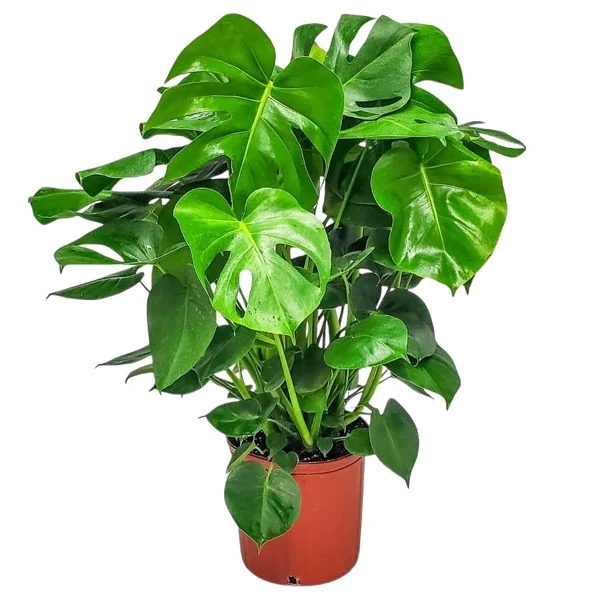
Size is the single biggest price driver for standard Monstera deliciosa. A three-year-old plant with thick aerial roots and established fenestrations is worth 5–10x a six-month-old tissue culture plug. You're paying for time you didn't have to spend.
2. Variegation Type and Stability
Chimeral variegation (Albo) can revert to solid green at any time, which tanks the plant's value instantly. Genetic variegation (Thai Constellation) holds. A reverting Albo is worth maybe $30–$50 — the same price as a regular Monstera deliciosa.
3. Fenestration Stage (Split Leaves)
This is the factor most pricing guides ignore. Plants without splits sell for $10–$20 even in larger pots. Plants with established split leaves command $50–$150. Mature fenestrated specimens with inner holes — those dramatic perforated leaves — hit $150–$400+. Fenestration stage matters more than pot size for determining what buyers will actually pay.
4. Shipping Costs and Seller Location
Here's a worked example that exposes the real cost of buying online:
- Listed plant price: $25
- Standard shipping: $18
- Winter heat pack (October–March): $8
- Insulated box surcharge: $6
- Total delivered cost: $57
That's a 128% markup over the listed price. Always calculate true delivered cost before comparing sellers. A $40 plant with free Prime shipping beats a $25 plant with $25 in shipping fees.
5. Propagation Method: Tissue Culture vs. Cutting vs. Seed
Tissue culture (TC) plugs from growers like Orange Lake Nursery cost $5–$15, but they're tiny — usually a single leaf barely two inches tall. They need 6–12 months to look like a real plant. Rooted stem cuttings ($15–$40) give you a head start. Seed-grown Monstera is the cheapest option but takes years to develop fenestrations.
TC plugs are the best value play if you have patience. You can buy five plugs for the price of one medium plant and have multiple specimens growing out simultaneously.
Where to Buy a Monstera at Every Price Point
Big-Box Retail: Home Depot and Lowe's ($10–$40)
The cheapest brick-and-mortar option in 2026. Plants are often mislabeled or generically tagged as "Swiss Cheese Plant" or "tropical foliage." Quality varies week to week — check the roots through the drainage holes, look for yellow leaves, and squeeze the base of the stem to feel for mushiness (a sign of root rot). A healthy plant from Home Depot is identical to one from a boutique nursery. A neglected one is a liability.
Online Specialty Sellers and Amazon ($20–$200)
Tropical Plants of Florida sells a well-reviewed 24–28 inch Monstera deliciosa on Amazon for approximately $40–$55 with Prime shipping in 2026. That's genuinely good value because the shipping cost is absorbed into the price. Orange Lake Nursery is the go-to for tissue culture plugs and small plants — ideal for buyers who want to grow out a collection on a budget.
Etsy and Collector Marketplaces ($50–$5,000+)
Etsy dominates the rare and variegated Monstera market. Sellers with 500+ reviews and 4.8+ star ratings are generally trustworthy. Sort by "most reviews" rather than "lowest price" — the cheapest listings are often the sketchiest. For big-ticket variegated purchases, look for sellers who photograph every individual plant and offer live-arrival guarantees.
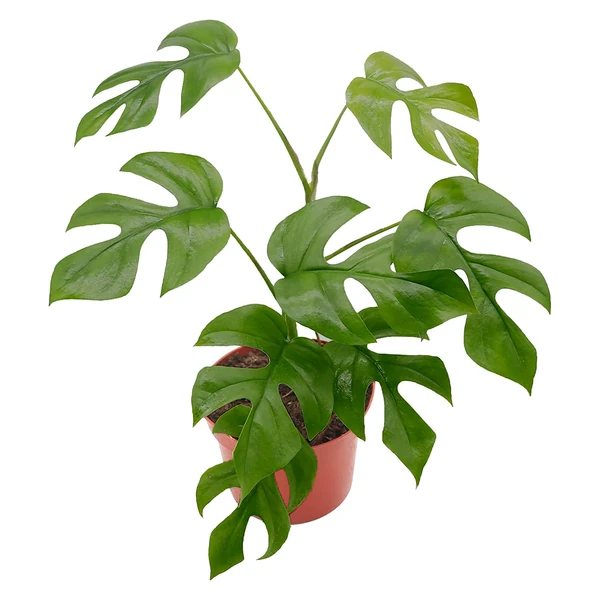
For statement pieces, Dahing Plants in NYC stocks 6–8 foot specimen Monsteras at $250–$400+ for local pickup or delivery. If you want a room-filling plant without growing it yourself for three years, that's where to go.
How to Get a Monstera for Cheap (or Free)
Facebook Marketplace is the single best source for cheap Monsteras in 2026. Sellers frequently list cuttings for $5–$10, and people regularly give them away when pruning. Search "Monstera cutting" within 25 miles of your zip code.
Monstera deliciosa propagates ridiculously easily. According to the University of Wisconsin-Madison's horticulture extension, Monstera can be propagated from stem cuttings containing at least one node and aerial root. One cutting in a jar of water roots in 2–4 weeks. This is exactly why paying $30+ for a small plant feels excessive if you know anyone who owns a mature specimen — just ask for a cutting.
Other ways to score a deal:
- Seasonal clearance at big-box stores: Home Depot and Lowe's mark down tropical inventory 15–30% between August and October as they transition to fall and holiday stock. I've seen 10-inch Monsteras drop from $35 to $22 during these windows.
- Local plant swap groups: Search "[your city] plant swap" on Facebook. Monstera cuttings are among the most commonly traded plants because the parent plant grows so fast.
- Buy-Nothing groups: People give away houseplants constantly when they move or downsize. Set alerts for "plant" or "Monstera" in your local group.
- Propagation stations at coffee shops and co-working spaces: Some community spaces maintain free-cutting stations. It's niche, but it exists in larger cities.
The True Cost: What You'll Spend Beyond the Plant
No pricing guide is complete without accounting for what happens after you bring the plant home. First-year setup costs for a Monstera deliciosa add $20–$50 on top of the purchase price:
- Chunky aroid potting mix (perlite, bark, coco coir blend): ~$12 for a bag that fills 2–3 pots
- Moss pole or coir totem for climbing support: $12–$18
- A larger nursery pot for the first repot (needed within 6–12 months): $5–$10
- Balanced liquid fertilizer (20-20-20 or similar): ~$8
- Cache pot or decorative planter (optional but likely): $10–$25
A $15 Monstera actually costs $35–$65 when properly set up. Skip the decorative ceramic pot at first — use a plastic nursery pot with drainage holes inside a cheap cache pot. Monstera deliciosa grows 2–3 feet per year indoors with decent light. You'll repot within 12 months anyway.
Red Flags When Buying Monstera Online
Scam Signals: A Buyer's Checklist
The variegated Monstera market attracts scammers like few other houseplant niches. As of 2026, fraudulent listings remain common on eBay, Wish, and Alibaba. Variegated Monstera Albo cuttings listed under $20 are almost always mislabeled Monstera deliciosa with light-stressed pale leaves — or outright scams using stolen stock photos.
Unrooted nodes — sometimes called "wet sticks" — deserve special caution. A node with no roots and no leaf is a gamble, not a plant. Expect a 30–50% failure rate on unrooted Monstera nodes, even under ideal conditions. Reputable sellers disclose this. Scammers don't.
Before buying any Monstera online, especially a variegated one, run through this checklist:
- Does the listing show the actual plant you'll receive, not a stock photo?
- Does the seller have 50+ reviews with buyer photos showing plants that arrived healthy?
- Is the price realistic for the variety? (An Albo cutting under $80 in 2026 should raise questions.)
- Does the seller offer a live-arrival guarantee with a clear refund or replacement policy?
- Is the cutting rooted with at least one active growth point visible in the photos?
If a deal on a rare Monstera looks too good to be true, it is. The collector market is small enough that genuine bargains are extremely rare. Underpriced listings are almost always scams, mislabeled plants, or unviable wet sticks that will rot in transit. According to reports from The New York Times, online plant scams have surged alongside the houseplant boom, with rare Monsteras among the most frequently counterfeited species.
Spend ten minutes comparing listings. It could save you $200.
Articles in this series
-
Monstera Plant Benefits You Actually NoticeMonstera plant benefits ranked by real evidence — from stress reduction to humidity. We cut the hype and tell you what a Monstera actually does for your…
-
Monstera: Indoor or Outdoor Plant?Can monstera grow indoors or outdoors? The answer is your USDA zone. We break down exactly where monstera thrives—and where it won't survive.
-
How to Get Rid of Plant Gnats Fast (2026)Kill plant gnats fast with hydrogen peroxide drenches, BTi soil soaks, and sticky traps. Step-by-step protocol that works in under 4 weeks.
-
Plant Pest Identification: A Visual Guide (2026)Identify houseplant pests fast with this visual guide. Covers 12 common pests, misdiagnosis traps, urgency triage, and app testing results.
-
Snake Plant Price Guide: What to Expect in 2026Snake plant prices range from $5 to $150+ in 2026. See our full price table by size and variety, plus red flags to avoid overpaying.
Frequently Asked Questions
How much does a Monstera plant cost at Home Depot?
As of 2026, Home Depot sells small Monstera deliciosa plants in 4–6 inch pots for $10–$30. Larger 8–10 inch pots run $30–$45 when available, though stock varies by location and season. These plants are often labeled "Swiss Cheese Plant" rather than Monstera.
Why are variegated Monstera plants so expensive?
Variegated Monsteras like the Albo are expensive because their white-and-green pattern comes from an unstable chimeral mutation that can't be mass-produced reliably. Each cutting is a gamble — the variegation may revert or produce non-viable all-white growth. Thai Constellation varieties are cheaper ($50–$150 for cuttings) because tissue culture labs can propagate them at scale.
What is the most expensive Monstera ever sold?
According to Gardenista, the most expensive publicly documented Monstera sale was approximately $38,000 for a variegated specimen. Monstera obliqua Peru regularly sells for $3,000–$10,000+ for established plants, making it the consistently priciest species in the genus.
Is it worth paying more for a Monstera with split leaves?
Yes. Fenestration (split leaves) adds $20–$40 to the price of an otherwise identical plant, and it takes 12–18 months for a juvenile Monstera to develop its first splits indoors. Paying a premium for a fenestrated plant saves you over a year of growing time.
Where is the cheapest place to buy a Monstera?
Facebook Marketplace is the cheapest source — cuttings regularly sell for $5–$10 or are given away free during pruning season. For retail, Home Depot and Lowe's offer the lowest brick-and-mortar prices at $10–$30 for small plants, especially during late summer clearance sales when tropical stock is marked down 15–30%.
How can I tell if a variegated Monstera listing is a scam?
Red flags include prices under $20 for Albo cuttings, stock photos instead of photos of the actual plant, unrooted nodes sold as "plants," and sellers with few or no reviews. Legitimate rare-plant sellers always photograph each individual plant, offer live-arrival guarantees, and have hundreds of verified reviews with buyer photos.