Snake Plant Price Guide: What to Expect in 2026
Snake plant prices range from $5 to $150+ in 2026. See our full price table by size and variety, plus red flags to avoid overpaying.
Key Takeaways
- Snake plant prices in 2026 range from $5 for a small 2-inch offset to $150 or more for a large mature specimen in a decorative pot.
- The variety you choose matters: Laurentii is the cheapest and most available, while Moonshine, Boncel, and Fernwood Mikado cost 20–40% more due to slower nursery production.
- Where you buy significantly affects price — Walmart is the price floor, Hey Rooted is the best online value for standard sizes, and Plantshed adds a premium worth paying only for NYC delivery or rare varieties.
- Always budget for hidden first-year costs: pot, cactus soil, and fertilizer can add $30–$55 on top of the plant's sticker price.
- Shop in early spring (March–April) for the lowest prices, and avoid buying around Mother's Day when demand spikes and prices rise 15–25%.
- Propagating a pup from an existing plant costs nearly nothing — a smart option for patient buyers who already own one snake plant.
How Much Does a Snake Plant Cost?
Snake plants — formally known as Sansevieria, now reclassified as Dracaena trifasciata since 2017 — run anywhere from $5 for a 2-inch offset to $150 or more for a large specimen. That's a wide range, so let's break it down fast. A standard 6-inch Laurentii from a local nursery costs $15–$30. A mature 10-inch pot with a decorative ceramic container can clear $100 before delivery. The variety, pot size, retailer, and your zip code all push that number up or down.
On the name confusion: in 2017, the Royal Botanic Gardens at Kew officially moved Sansevieria into the Dracaena genus. As of April 2026, both names still appear on retailer tags and search results because the trade caught up slowly. If you see "Sansevieria trifasciata" and "Dracaena trifasciata" on different listings, they're the same plant.
Price by Pot Size: 2-Inch to 10-Inch and Beyond
Based on pricing pulled from Hey Rooted, Amazon, and Plantshed in April 2026, here's what you should expect to pay at each size tier:
| Pot Size | Fair Price Range | Example Retailer |
|---|---|---|
| 2–4 inch | $5–$15 | Hey Rooted, Amazon (2-pack) |
| 6 inch | $15–$30 | Hey Rooted, Calloway's Nursery |
| 8–10 inch | $30–$60 | Plantshed, local nurseries |
| Specimen / Large | $60–$150+ | Plantshed, specialty plant shops |
Amazon lists a 2-pack of 3-inch pots at a competitive per-plant cost — around $6–$8 each — but factor in shipping stress on live plants. Hey Rooted publishes transparent size-based pricing and packages better for transit. Plantshed, based in New York City, serves the large-specimen market well but charges a delivery premium that we'll cover shortly.
One timing note: spring (March through May) is consistently the cheapest window to buy. Wholesale supply peaks, and retailers discount to move volume. Buy the same plant the week before Mother's Day in mid-May, and you may pay 15–25% more. Valentine's Day causes a smaller but real spike for gift-sized plants. If you're not on a deadline, shop in early April.
Price by Variety: Common vs. Rare Snake Plants
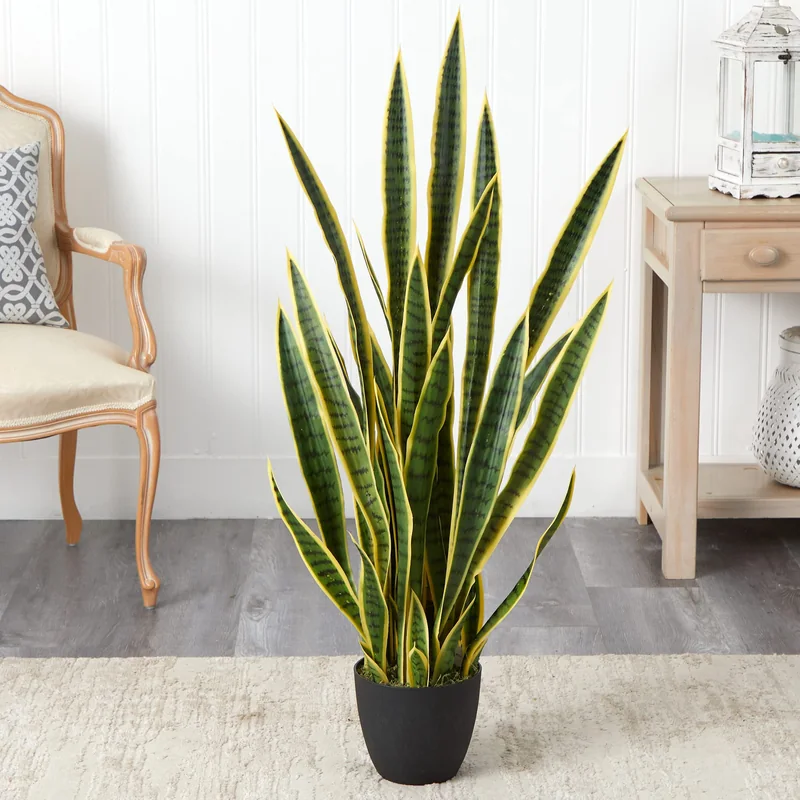
Variety matters almost as much as size. The Snake Plant Laurentii — the classic dark green leaf with yellow-gold margins — is the cheapest and most available form. It's the one you'll find at Walmart, Home Depot, and virtually every garden center in the country. Use it as your price anchor.
From there, premiums stack up:
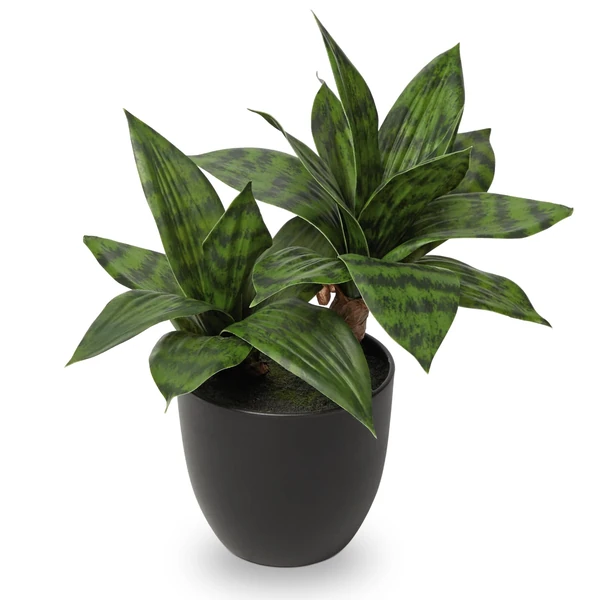
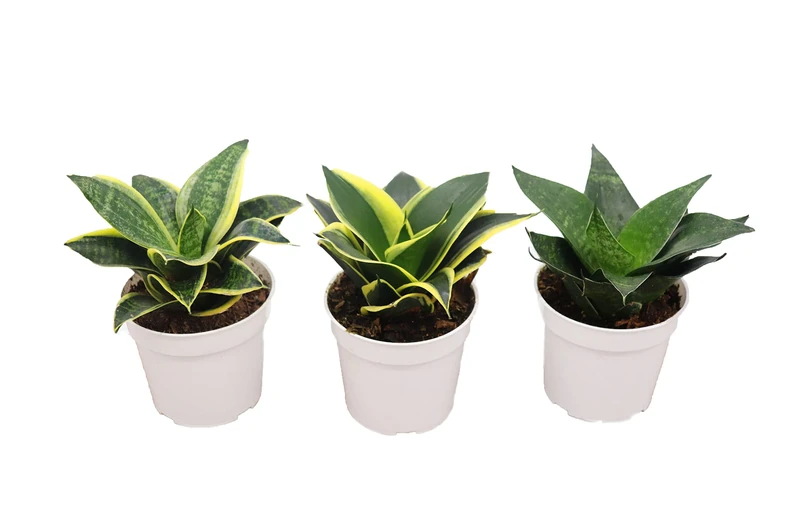
- Moonshine Snake Plant: Pale silver-green leaves. Commands $5–$10 more per size tier than a same-size Laurentii at Hey Rooted and Pettiti Garden Center. Worth it for the look — nothing else in the genus has that tone.
- Boncel (Starfish Snake Plant): A compact rosette form with cylindrical leaves fanning outward. Priced 20–40% higher than a same-size Laurentii. Pettiti Garden Center stocks it; Hey Rooted lists it intermittently.
- Fernwood Mikado: Narrow, arching cylindrical leaves. Listed at both Hey Rooted and Pettiti Garden Center as a mid-range specialty option — expect to pay 20–35% above a standard Laurentii in the same pot size.
- Cylindrical Snake Plant: The 6-inch version at Pettiti Garden Center costs noticeably more than a 6-inch Laurentii, simply because the growth form is less common and slower to propagate at nursery scale.
The premiums on Moonshine, Boncel, and Fernwood Mikado are legitimate — these varieties are genuinely slower-growing and harder to produce at volume. We'll dig into why in the next section.
Where You Buy Affects What You Pay
Local Nurseries and Garden Centers
Local nurseries are the best default for most buyers. Plants are better conditioned, staff can answer care questions, and you can inspect root health before paying. Calloway's Nursery, with locations across Texas, is a solid regional example of mid-range nursery pricing — 6-inch Laurentii plants typically fall in the $18–$25 range. The real advantage isn't price; it's seeing the plant before you own it.
Big-Box Retailers (Walmart, Home Depot, Lowe's)
Walmart is the price floor. A 4-inch Laurentii runs $8–$12 there, and that's genuinely cheap. The problem is consistency. Plant health at big-box stores varies dramatically by location and by how recently the delivery truck came through. Root rot and root binding are common finds. Home Depot and Lowe's sit slightly above Walmart on price and slightly above on average plant quality, but neither is reliable enough to buy from without careful inspection.
If you find a healthy plant at Walmart for $9, buy it. But don't assume the one next to it is equally healthy.
Online Plant Shops and Amazon
Online buying makes the most sense at the extremes: very small starter plants or rare specialty varieties that local nurseries don't stock.
Amazon's 2-pack of 3-inch pots is a reasonable budget entry point, but shipping stress on live plants is a real risk — leaves arrive bent or yellowed more often than they should. Hey Rooted is the better online choice for small-to-mid sizes: transparent pricing, better packing, and clearer descriptions of what you're actually getting. Plantshed adds a New York City delivery premium that's hard to justify unless you're in the metro area — the same 6-inch Laurentii that costs $22 locally can run $45 or more through Plantshed after delivery fees.
Watch for "free shipping" thresholds. Several online plant shops set their threshold at $75 or $100, which nudges buyers into ordering three plants when they needed one. That's not a deal — it's a spend trigger.
Our recommendation: For plants under 6 inches, buy locally or from Hey Rooted. For large specimens or specialty varieties like Moonshine, Boncel, or Fernwood Mikado that aren't available within driving distance, specialty online shops are often your only realistic source. Just price-check shipping before you commit.
What Makes a Snake Plant More Expensive?
Rare Varieties and Variegation
The Boncel and Moonshine are slower-growing than the Laurentii. That's not marketing language — it's biology. According to the University of Maryland Extension, Dracaena trifasciata propagates readily via leaf cuttings, but certain variegated forms don't reliably transfer their patterning through that method. Nurseries have to use offset division or carefully selected cuttings, which slows production and keeps supply tighter. That cost passes to you.
The Moonshine's silver-green pattern is the result of reduced chlorophyll density. Propagating true-to-form specimens requires selection during propagation — tissue culture isn't the standard approach for these varieties. Smaller batch sizes mean higher prices.
Pot Material and Premium Packaging
A plain nursery grow pot vs. a glazed ceramic pot can add $10–$30 to a listing price without adding a dollar of plant value. Separate those costs in your head when comparing listings. A $45 snake plant in a ceramic pot may have a $20 plant inside it.
Services like Plantshed include branded wrapping, heat packs in winter, and printed care cards. That packaging experience is genuinely nice for a gift — but it adds $5–$15 to the effective cost. Decide whether you're buying plant value or presentation value.
Delivery Fees and Regional Markups
Geography is a significant price driver. A 6-inch Laurentii in rural Texas costs around $18 at a local nursery. The same plant delivered to Manhattan through Plantshed runs $45–$55. Neither price is wrong — delivery logistics for live plants in variable weather are genuinely expensive. But the comparison makes clear why buying locally, when possible, saves real money.
In cold months, expedited shipping for live plants adds $8–$20 on top of standard shipping rates. A $25 plant with $18 cold-weather shipping costs more than a $38 plant from a local shop. Do the full math.
Red Flags: How to Spot an Overpriced or Unhealthy Plant
Every top competitor in this space is essentially a sales page. None of them tell you what to avoid. Here's what to check before you hand over money — in person or from product photos online.
- Yellowing leaves at the base: This almost always means overwatering in the store. The plant is already stressed. A dying plant at any price is a bad deal.
- Mushy or soft stem base: Press gently at the base near the soil. Any give or mushiness is early-stage root rot. Skip it, regardless of price.
- Roots visibly circling out of drainage holes: Severe root binding means you're paying for immediate repotting costs on top of the sticker price. Factor $5–$20 in pot and soil into what you're really spending.
- Wobbly stem that rocks when touched: The root system is compromised — either rot or a bare-rooted cutting stuck in soil with no real establishment. It may survive; it may not. Don't pay nursery prices for that uncertainty.
- Suspiciously high online pricing without provenance: A 2-inch Moonshine listed at $40+ without a clear nursery reputation behind the listing is a red flag. Use Hey Rooted's published pricing tiers as a sanity check. If a listing is 2–3× Hey Rooted's price for the same size, you need a very good reason to proceed.
Hidden Costs and the Buy-vs-Propagate Decision
Budget for the Full First Year
The sticker price is rarely the real price. Here's an honest first-year cost breakdown for a mid-size snake plant:
- 6-inch Laurentii from a local nursery: $22
- Ceramic or terracotta pot upgrade: $10–$20
- Cactus/succulent soil mix (or a standard mix amended with perlite): $8–$15 — Calloway's sells these as checkout add-ons, and they're worth it
- Slow-release fertilizer for the season: $10–$18
Realistic total: $50–$75, not $22. That's not a gotcha — snake plants are slow growers that won't need repotting for 2–3 years, so most of those costs are one-time. But if you're comparing a $22 bare-nursery-pot plant to a $45 plant that comes in a ceramic pot with soil already in it, the actual price gap is much smaller than it looks.
Propagation as a Zero-Cost Alternative
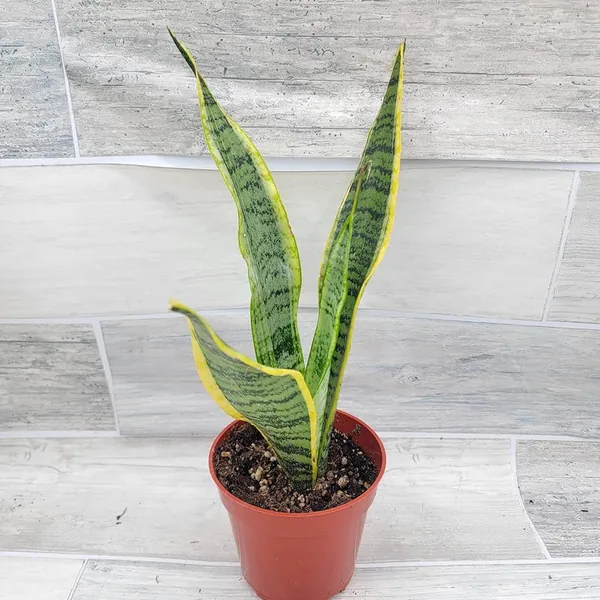
Snake plants propagate easily via leaf cuttings or offset (pup) division. A free pup from a friend's established plant replaces a $40 nursery purchase outright. The math is hard to argue with.
The timeline is the trade-off. An offset pup takes 6–12 months to reach 4-inch pot size. A leaf cutting roots in 2–4 months but produces a smaller, slower-establishing plant. If you need a mature, decorative plant for a specific space right now, buy a 6–10 inch plant. If you're patient and have access to an established plant, propagate — the per-plant cost drops to nearly zero.
Facebook Marketplace and local plant swaps are genuinely underused. A rooted 4-inch Laurentii pup for $3–$5 is common in local plant communities. For reference on what a comparable monstera plant price looks like using this same buy-vs-propagate logic, the math runs similarly — pups and cuttings dramatically undercut retail on any slow-growing tropical.
The propagation route makes the most sense for your second or third snake plant. First-timers who need an established plant with predictable size and shape should just buy one.
Is the Price Fair? How to Evaluate Value Before You Buy
Use the consolidated price table above as your benchmark. If a retailer is charging $35 for a 4-inch Laurentii, that's a 130% markup above the top of the fair range — you need a compelling reason (fancy pot, branded experience, rare variety) to justify it.
According to Hey Rooted's published size-based pricing tiers as of April 2026, a 4-inch snake plant should land in the $12–$18 range for standard varieties. Cross-reference any competitor against that baseline. It's transparent, it's publicly available, and it's updated regularly.
Before comparing online vs. local pricing, add shipping. A $15 plant with $12 shipping costs $27. A $22 plant from Calloway's costs $22, and you can inspect it first. The local option wins unless the variety isn't available within driving distance.
Rare variety premiums are legitimate. Paying 30–40% more for a Moonshine or Fernwood Mikado over a standard Laurentii reflects real supply constraints — slower growth rates, limited propagation methods, tighter nursery output. That's not gouging. The USDA PLANTS Database confirms Dracaena trifasciata's classification, for buyers who want to verify what they're purchasing across differently-labeled listings.
Snake Plant Care Basics
Since you're spending real money on this plant, a quick rundown on keeping it alive.
Light Requirements
Snake plants tolerate low light. They grow fastest in bright indirect light. Direct afternoon sun bleaches the leaves and causes tip burn. A north or east-facing window is ideal. Don't put it in a dark hallway and wonder why it's not thriving — it'll survive, but growth will be almost imperceptibly slow.
Watering Frequency
Water every 2–6 weeks depending on season and pot size. The single most common cause of snake plant death is overwatering. Let the soil dry out completely between waterings — not mostly dry, fully dry. As noted by UW-Madison Horticulture Extension, Dracaena trifasciata stores water in its leaves and rhizomes, making it exceptionally drought-tolerant but vulnerable to waterlogged soil.
Soil and Repotting Needs
Standard potting mix holds too much moisture for snake plants. Use a cactus/succulent blend, or amend a standard mix with perlite at a 50:50 ratio. This is the same bag Calloway's upsells at checkout — it's worth adding to your cart.
When repotting, go up only one pot size at a time. Snake plants tolerate being root-bound well and actually tend to bloom more reliably when slightly cramped. Don't rush to size up.
Frequently Asked Questions
Why do some retailers call it Sansevieria and others say Dracaena trifasciata?
In 2017, the Royal Botanic Gardens at Kew officially reclassified Sansevieria into the Dracaena genus, making Dracaena trifasciata the accepted scientific name. Both names refer to the exact same plant. As of 2026, many retailers still use the old Sansevieria name on tags and listings because the horticultural trade is slow to update. If you see both names while shopping, don't worry — you're looking at the same species.
What's a fair price for a snake plant in 2026?
A fair price depends on pot size. For a 2–4 inch plant, expect to pay $5–$15. A 6-inch plant should cost $15–$30. An 8–10 inch plant runs $30–$60 from reputable retailers. Large specimen plants in decorative containers can reach $60–$150 or more. Use Hey Rooted's published pricing tiers as a reliable market baseline when comparing other retailers.
Are snake plants at Walmart lower quality?
Often yes, but not always. Walmart is the price floor — you can find a 4-inch Laurentii for $8–$12 there — but plant health varies significantly by store and delivery timing. Before buying, check for yellowing leaves at the base (overwatering), mushy stem bases (root rot), and visible root circling out of drainage holes. A healthy Walmart plant is a genuine deal. An unhealthy one at any price is a waste of money.
Is it worth buying a rare variety like the Boncel or Moonshine?
Yes, if you want something visually distinct from the standard Laurentii. The Moonshine's silver-green coloration and the Boncel's rosette form are genuinely different and won't be found at big-box stores. Expect to pay 20–40% more than a same-size Laurentii. Care is identical — same watering cadence, same light requirements, same soil preference. The premium reflects slower nursery production, not higher maintenance on your end.
When is the cheapest time to buy a snake plant?
Early spring — March through April — is consistently the best window. Wholesale supply peaks as nurseries move winter greenhouse stock, and retailers run volume promotions. Avoid shopping around Mother's Day (mid-May), which drives a 15–25% price spike on gift-sized plants. Valentine's Day causes a smaller but real demand surge as well.
Can I get a snake plant for free by propagating one?
Yes. Snake plants propagate readily from leaf cuttings or offset pups. A pup from a friend's established plant takes 6–12 months to reach 4-inch pot size. Local plant swaps and Facebook Marketplace regularly list rooted 4-inch Laurentii pups for $3–$5. Propagation makes the most sense for your second or third snake plant — first-timers who need an established plant with predictable size should buy rather than wait.