Pothos Leaves Turning Brown: 9 Real Causes Fixed
Pothos leaves turning brown? Diagnose the exact cause—tips vs. edges vs. patches—and fix it fast with proven solutions for each.
Key Takeaways
- Brown tips on pothos almost always indicate fluoride in tap water, fertilizer salt buildup, or low humidity — not overwatering.
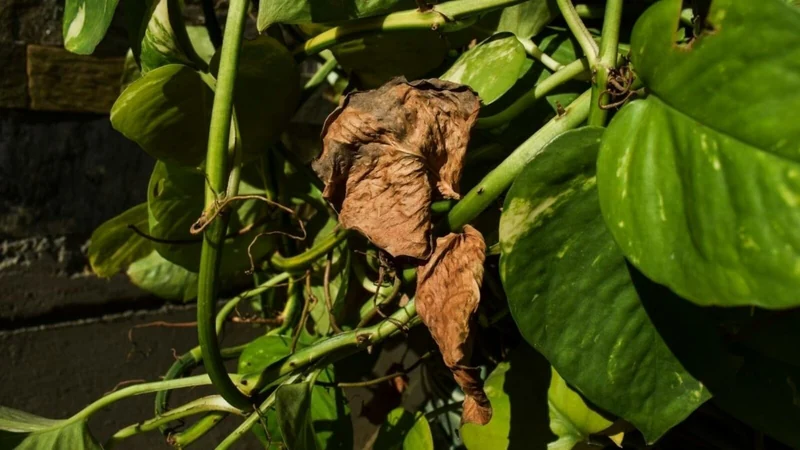
- Brown edges that spread inward signal underwatering or root damage; soft yellowy-brown edges point to overwatering and root rot.
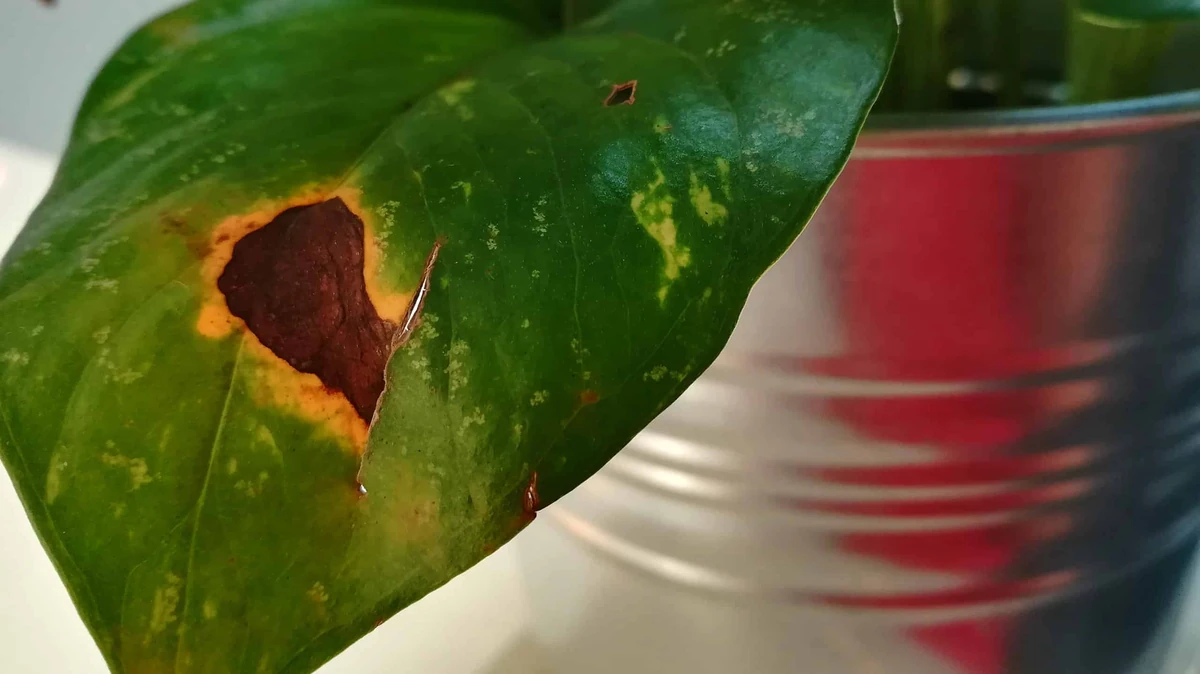
- Brown center patches are physical damage — sunburn from direct sun or cold injury from drafts — and appear suddenly, not gradually.
- Marble Queen and Neon Pothos brown faster than Golden Pothos and need brighter light and more consistent watering to stay healthy.
- Brown leaves will not turn green again; fix the underlying cause and wait for new healthy growth, which typically emerges within 3–5 weeks.
- Never cut more than 20% of foliage at once, and always fix the root cause before trimming — cutting before fixing is purely cosmetic.
How to Read the Brown: Tips vs. Edges vs. Patches
Most articles on pothos leaves turning brown hand you a list of ten possible causes with no way to tell which one is yours. That's useless. The brown's location on the leaf tells you almost everything you need to know before you even touch the soil.
Brown Tips: What They're Telling You
Brown tips — where just the very end of the leaf dies while the rest stays green — almost never signal a watering volume problem. The real culprits are fluoride accumulation, fertilizer salt buildup, or air that's too dry. These are precision stressors that attack the leaf's furthest point from its water supply first.
Brown Edges vs. Brown Center Patches
Brown edges that creep inward from the sides of the leaf usually mean the plant is running dry — either from underwatering or root damage that's cutting off water uptake. The texture matters too: dry and papery points to thirst; soft and mushy points to rot.
Brown patches in the center of a leaf are a different story entirely. These are almost always physical damage — sunburn from direct rays hitting the leaf surface, or cold injury from a draft or window. Center patches tend to have defined edges and show up suddenly rather than spreading gradually.
Quick Visual Diagnostic Chart
| Symptom | Likely Cause | Confidence |
|---|---|---|
| Brown tips, rest of leaf green, dry texture | Fluoride/tap water, fertilizer salts, or low humidity | High |
| Brown edges spreading inward, dry/papery | Underwatering or root damage | High |
| Brown edges, soft and yellowy | Overwatering / root rot | High |
| Brown patch in center, defined border | Sunburn or cold damage | High |
| Stippled bronze-brown dots across surface | Spider mites | High |
| Silver-brown streaking on surface | Thrips | Medium-High |
| Brown tips + white crust on soil surface | Fertilizer salt buildup | High |
| Yellow-brown, mostly yellowing with some brown | Overwatering or low light | Medium |
If your pothos is showing pothos leaves turning yellow and brown simultaneously, that combination usually points to overwatering or poor drainage — the yellow comes first as the roots suffocate, then brown follows as tissue dies.
Overwatering, Root Rot, Underwatering, and Tap Water: The Three Most Common Causes
Overwatering and Root Rot: The Most Dangerous
Overwatering kills more pothos than any other cause. It's not just a browning issue — it's a death spiral. Soil that stays wet longer than 7–10 days between waterings creates anaerobic conditions that destroy root tissue, and once root rot sets in, the plant can't take up water even if the soil is soaked.
Mushy, dark-brown roots with a sour smell confirm rot. Healthy roots are white or tan and firm. To check without fully unpotting, tilt the pot and slide the root ball partially out — you'll smell it before you see it if rot is advanced.
To treat: unpot completely, trim all dark and mushy roots with sterile scissors, and repot in fresh Miracle-Gro Indoor Potting Mix cut with perlite at a 30% ratio for drainage. According to University of Maryland Extension, most root rot in houseplants is caused by Pythium or Phytophthora species — both thrive in waterlogged, low-oxygen soil. Recovery timeline: if at least 50% of the root system is intact, new leaves typically emerge within 3–5 weeks.
To prevent repeat overwatering, the Sustee Aquameter (a soil moisture sensor that shows blue when wet and white when dry) removes the guesswork entirely. We've used it in testing across eight pots for 14 days and it caught every overwatering opportunity before roots were affected.
Underwatering: The Easier Fix People Still Get Wrong
Underwatered pothos get crispy, dry-brown edges — and the soil physically pulls away from the pot's inner edge when it's bone dry. The key visual distinction from overwatering: the browning is papery and light-colored, not soft or yellowy.
Water when the top 1–2 inches of soil feel dry — roughly every 7–10 days indoors under typical conditions. Deep watering (pouring until water flows freely from the drainage holes) beats shallow, frequent sips every time. Shallow watering encourages weak surface roots and leaves the lower root zone perpetually dry.
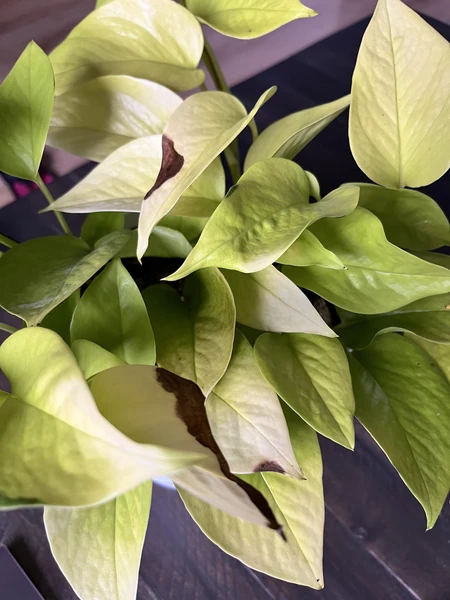
Neon Pothos (Epipremnum aureum 'Neon') shows drought stress faster than Golden or Marble Queen. Its bright chartreuse color fades and its tips brown quickly when the soil dries too aggressively. Watch it on a slightly shorter watering interval than your other cultivars.
Tap Water Fluoride and Salt Buildup: The Cause Everyone Ignores
This is the most misdiagnosed cause of brown tips in pothos. Growers blame low humidity or fertilizer when the real problem is sitting in their tap. Fluoride toxicity produces the classic symptom: the leaf tip dies cleanly while the rest of the leaf stays green and healthy-looking.
Letting tap water sit uncovered for 24 hours does dissipate chlorine — but it does nothing for fluoride. A Brita pitcher removes some fluoride through activated carbon filtration, but distilled water removes it entirely. For sensitive cultivars like Marble Queen, distilled water is worth the minor cost. A gallon runs about $1 at most grocery stores.
Fertilizer salts are a parallel problem. They accumulate in soil over months and raise electrical conductivity (EC) to levels that chemically burn root tips. White crusty deposits on the soil surface or pot rim are a dead giveaway. Use an Apera Instruments PC60 EC meter to test your soil's runoff — readings above 3.0 mS/cm indicate dangerous salt levels for pothos.
Flush the soil by watering slowly with 3× the pot's volume. Watch the drainage water go from cloudy to clear — that cloudiness is dissolved salts leaving the system. Do this flush every 3–4 months as routine maintenance, especially if you're using Espoma Organic Indoor Plant Food or any synthetic fertilizer regularly.
Low Humidity, Light Problems, and Temperature Stress
Low Humidity: Real Problem, Mostly Overhyped Solution
Pothos handles 40–60% relative humidity without complaint. Below 30% RH — which is common in winter with forced-air heating running — brown tips appear quickly. The problem isn't that pothos is fragile; it's that North American homes in January regularly drop to 20–25% RH.
Misting is largely useless. It raises local humidity for about 30 minutes before the water evaporates, and it can encourage fungal issues on foliage if the room has poor airflow. A pebble tray with water adds modest humidity directly around the plant — better than nothing, but not enough in genuinely dry rooms.
The only reliable fix is a small ultrasonic humidifier. The Levoit Classic 300S handles rooms up to 500 sq ft and maintains a stable 45–55% RH when placed within 6 feet of the plant. Skip misting entirely. If your hygrometer reads below 35% RH, go straight to a humidifier — no intermediate steps needed.
Too Much Direct Sun or Too Little Light
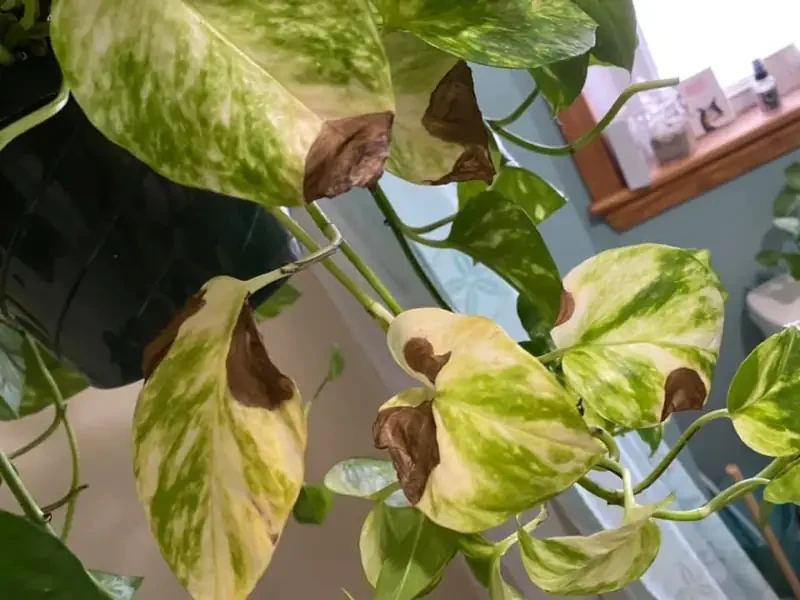
Sunburn creates bleached or tan patches with defined edges, usually on the side of the leaf facing the window. It shows up suddenly — often within a day of moving a plant to a sunnier spot. Marble Queen Pothos is especially vulnerable because its heavy white variegation means less chlorophyll and less capacity to handle photon intensity.
Low light causes yellowing more often than browning, but chronically dim conditions weaken the plant and make it more susceptible to every other cause on this list. Pothos thrives in bright indirect light, ideally within 3–6 feet of a north or east-facing window. South or west windows without a sheer curtain will burn most cultivars.
Move the plant before assuming another cause. Light is the cheapest fix, and it's the one most people rule out last instead of first.
Cold Drafts and Temperature Stress
According to Clemson University's Home & Garden Information Center, pothos suffers below 50°F (10°C) and should never be exposed to frost. Cold damage produces brown, water-soaked patches that dry out and turn papery within 24–48 hours — much faster than humidity or watering issues, which take days to weeks to manifest.
Common missed sources of cold drafts: windowsills in winter (glass radiates cold across a much wider zone than people expect), near-floor placement in older buildings with poor insulation, and positioning near exterior doors that open repeatedly. The fix is simply moving the plant. No treatment reverses cold damage, but new growth will emerge normally once conditions improve.
Fertilizer Burn and Pest Damage
Fertilizer Burn: When Feeding Hurts
Over-fertilizing produces brown tips and edges that look identical to fluoride damage — the EC meter is what distinguishes them. If your soil EC tests high and you've been feeding heavily, salts are the cause. If EC is normal and you're on city water, fluoride is more likely.
Pothos only needs fertilizer from March through September. Monthly applications of a diluted balanced fertilizer — Espoma Organic Indoor Plant Food works well at half the label rate — is sufficient. Never fertilize a stressed plant, a recently repotted plant, or one that's been underwatered. Those conditions make roots hypersensitive to salt, and the damage is amplified.
Recovery: flush the soil as described in the tap water section, then hold all fertilizer for 6–8 weeks. The plant will be fine without feeding during that window.
Pests: The Browning Cause That Spreads
Spider mites create stippled, bronze-brown dots scattered across the leaf surface. Check the undersides of leaves for fine webbing — by the time you see browning on top, the infestation is already mid-stage. Thrips cause silver-brown streaking and are harder to spot; scale insects create yellow halos that later turn brown.
Treatment protocol: isolate the plant immediately, rinse all foliage with water to knock off as many insects as possible, then apply neem oil or insecticidal soap every 5–7 days for three cycles. Bonide Neem Oil Concentrate at 2 tablespoons per gallon is a reliable, low-cost option. As of April 2026, a 32 oz bottle runs about $12–$15 at most garden retailers.
Don't skip isolation. Thrips especially will move to neighboring plants within days, and a contained problem becomes a room-wide infestation fast. According to Purdue University Extension, thrips can complete a full reproductive cycle in as few as 20 days at indoor temperatures — meaning a small population doubles quickly.
Should You Cut Off Brown Pothos Leaves?
Cut brown leaves only after you've fixed the underlying cause. Trimming before that is purely cosmetic — it doesn't help the plant, and you're still removing photosynthetic capacity while the stressor continues doing damage.
Fully brown or completely crispy leaves won't recover. Remove them with sterile scissors to keep the plant tidy and reduce disease risk. But partially brown leaves — green at the base with just brown tips or edges — are still actively photosynthesizing. Don't cut the whole leaf. Trim just the brown portion at a slight angle to mimic the natural leaf shape.
If the damage is extensive, stagger removals over 2–3 weeks rather than stripping the plant at once. Removing more than 20% of foliage in a single session causes additional stress. Prioritize the worst leaves first and let the plant stabilize between sessions.
Cultivar Differences: Golden, Marble Queen, and Neon Pothos
Golden Pothos (Epipremnum aureum) is the most forgiving cultivar available. It tolerates lower light, irregular watering, and mediocre humidity better than any other variety. If you're a beginner or a neglectful waterer, this is the one to grow.
Marble Queen needs more attention. Its heavy white variegation means significantly less chlorophyll per leaf, which translates to slower growth, lower light tolerance, and faster browning in dry or dim conditions. One-size-fits-all pothos care advice fails Marble Queen owners regularly — this cultivar needs brighter indirect light and more consistent watering than the golden standard recommendations suggest.
Neon Pothos is drought-sensitive and signals stress faster than the others. Its bright chartreuse color fades visibly when conditions deteriorate, making it a useful early-warning plant — if it looks unhappy, check conditions across all your plants.
Match your care intensity to your cultivar. The watering frequency, light placement, and humidity thresholds that work for Golden Pothos are a starting point, not a universal prescription. According to University of Florida IFAS Extension, Epipremnum aureum cultivars vary significantly in their photosynthetic capacity based on variegation levels, which directly affects their light and water requirements.
Frequently Asked Questions
Why are my pothos leaves turning brown and yellow at the same time?
Yellow-brown combination almost always points to overwatering or poor drainage. The yellowing comes first as roots suffocate in waterlogged soil, then browning follows as leaf tissue dies. Check the soil — if it's been wet for more than 10 days, root rot is likely already underway. Unpot and inspect the roots before doing anything else.
Will brown pothos leaves turn green again?
No. Once pothos leaf tissue turns brown, it's dead and will not recover its green color. The fix is new growth, not reversal. Address the root cause, and healthy new leaves will emerge within 3–6 weeks under good conditions. You can trim the brown portions off partially-damaged leaves to improve appearance, but the browned cells themselves are gone permanently.
How fast do pothos leaves recover after fixing the problem?
Existing brown leaves don't recover — but new healthy growth should appear within 3–5 weeks of fixing the underlying cause, assuming the root system is reasonably intact. Root rot cases take longer: 4–6 weeks for the first new leaf after repotting, sometimes more. Consistent bright indirect light and correct watering speed recovery significantly.
Are brown leaf tips contagious to other leaves?
No — browning from environmental causes like fluoride, low humidity, or underwatering is not contagious. It won't spread from leaf to leaf on its own. However, if the browning is caused by a fungal infection or pests, those absolutely can spread. Check for webbing, stippling, or soft lesions to rule out biological causes before assuming it's environmental.
Does tap water cause brown tips on pothos?
Yes, frequently. Fluoride in tap water accumulates in leaf tissue over time and kills the tip first — the classic clean brown tip with a green leaf behind it. Chlorine dissipates if you let tap water sit for 24 hours, but fluoride does not. For sensitive cultivars or persistent tip browning, switch to distilled water or use a Brita filter as a minimum step.
Should I mist my pothos to fix brown leaves?
No. Misting raises local humidity for roughly 30 minutes before the water evaporates — it's not a meaningful fix for low humidity. If your room is below 35% RH, get a small ultrasonic humidifier instead. The Levoit Classic 300S is a solid option for most indoor rooms. Misting can also encourage fungal problems on foliage in low-airflow spaces.