Best Air Purifying Plants for Indoors (2026)
The best air purifying plants for indoors, ranked by VOC removal, pet safety, and ease of care. Honest science, no hype.
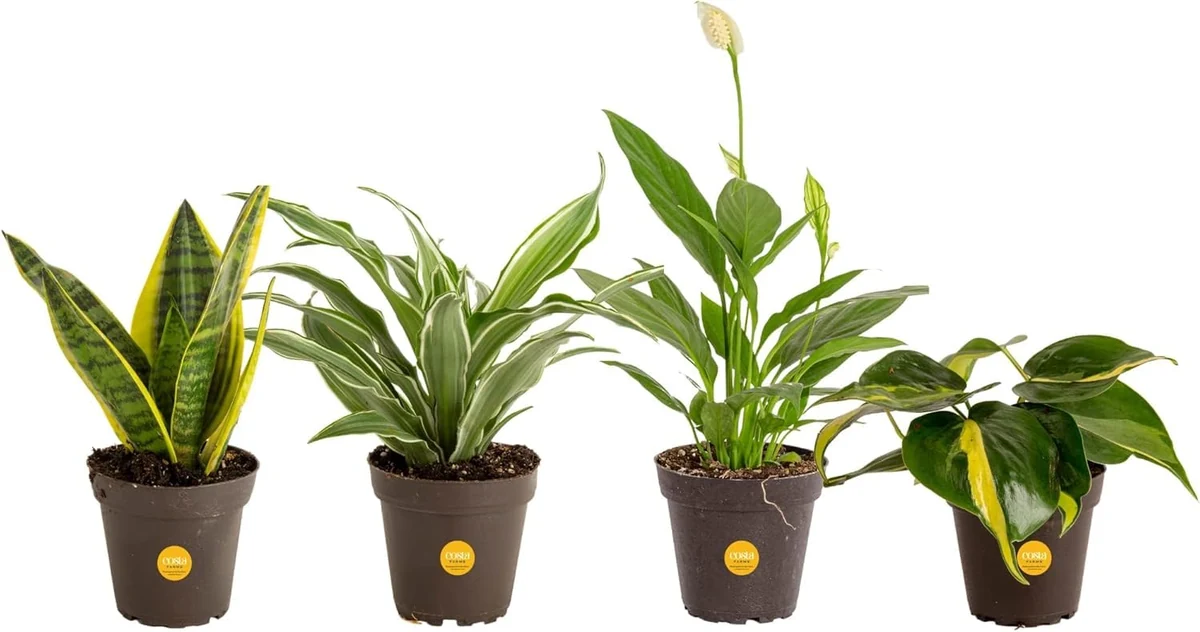
Key Takeaways
- Peace Lily is the best overall air purifying plant — it removes the widest range of VOCs including formaldehyde, benzene, trichloroethylene, and ammonia, and thrives in low light.
- The '2-3 plants per room' recommendation has no credible research behind it — a genuinely effective bedroom setup requires 10 to 15 medium plants in a 150 to 200 sq ft space.
- The soil microbiome absorbs more VOCs than the leaves alone — overwatering kills that microbiome and is the single most common reason air purifying plants underperform.
- Plants remove VOCs; HEPA purifiers remove particles like dust and pollen — for full indoor air coverage, you need both, not one or the other.
- Aloe Vera, Peace Lily, Pothos, and English Ivy are all toxic to cats and dogs — for pet-safe air purification, choose Spider Plant, Boston Fern, or Bamboo Palm instead.
- Snake Plant and Aloe Vera are the only plants on this list that release oxygen at night via CAM photosynthesis, making them the correct choice for bedroom air quality.
The best air purifying plants for indoors — ranked honestly — are Peace Lily, Snake Plant, Spider Plant, Pothos, Rubber Plant, Boston Fern, Bamboo Palm, English Ivy, Aloe Vera, and Dracaena marginata. Each targets different VOCs, suits different light conditions, and carries different risks for pets. Plants genuinely reduce indoor formaldehyde, benzene, and trichloroethylene — but the effect is modest in a ventilated room. They work best as a passive supplement to proper ventilation, not a replacement for it. If you have pets, prioritize Spider Plant, Boston Fern, and Bamboo Palm. If you want the single strongest all-around performer, Peace Lily wins.
What "Air Purifying" Actually Means for Indoor Plants
The NASA Study Everyone Cites — and What It Got Wrong
Almost every article on this topic opens with the 1989 NASA Clean Air Study by B.C. Wolverton. The study is real, the findings are real, and plants absolutely do absorb VOCs. But the test conditions were nothing like your living room.
Wolverton's team tested plants in sealed, low-ventilation chambers — essentially airtight containers. Real homes cycle through 0.5 to 2 air changes per hour naturally through doors, windows, HVAC systems, and structural gaps. The NASA chambers had near-zero air exchange. That gap in conditions makes a massive difference in how fast pollutants are diluted versus how fast plants can absorb them.
According to research published by Drexel University environmental engineer Michael Waring, when you account for normal home ventilation rates, a single plant's VOC removal rate is negligible compared to how fast outdoor air flushes the room. The math is stark. Plants still work — just far more slowly and modestly than the headlines suggest.
What Plants Actually Remove From Your Air
Plants do absorb formaldehyde, benzene, xylene, and trichloroethylene — the primary VOCs studied across multiple trials. But here's the piece almost every competitor article skips: the soil microbiome does more of the heavy lifting than the leaves.
The root zone hosts microbial communities that metabolize VOCs pulled down through the soil surface. According to University of Georgia Extension research on indoor plant VOC absorption, removing leaves while keeping roots and soil intact still produced measurable VOC reduction in controlled settings. This means a plant in dry, compacted, lifeless soil is a much weaker air purifier than the same species in healthy, moist, biologically active growing medium.
Set your expectations honestly. Plants improve air quality at the margins. They're not a substitute for cracking a window or running a HEPA filter — but in a bedroom with the door closed overnight, they provide real, passive benefit that compounds over weeks.
How Many Plants Do You Actually Need?
The Real Number Per Room
The "2-3 plants per room" figure that floats around the internet has no credible research backing it. That number appears to have originated from a misread of the NASA study and spread through repetition.
Drexel University researchers estimated you'd need roughly 680 plants per 1,500 sq ft home to meaningfully impact VOC levels in a properly ventilated space. That's not a typo. In a sealed room, the number drops dramatically — but your home isn't sealed.
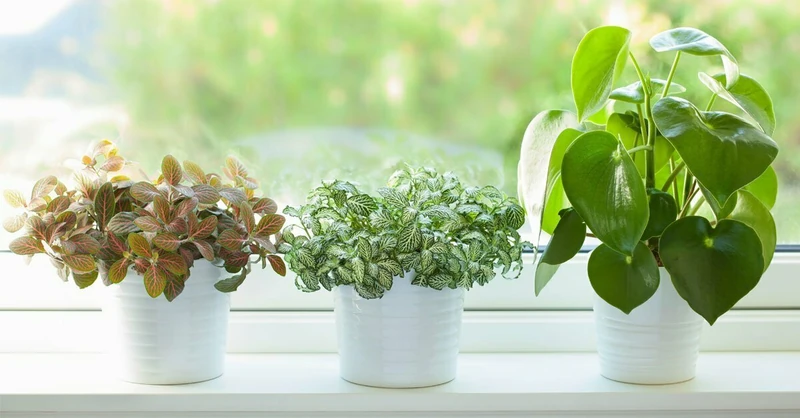
A more practical target: 10 to 15 medium plants in a 150 to 200 sq ft bedroom with the door closed produces a measurable microclimate effect. That's the realistic sweet spot between "decorative with minor benefit" and "genuinely functional air improvement."
Room Size, Ventilation, and the Math Behind It
Larger-leafed plants like Rubber Plants and Peace Lilies cover more surface area per pot, which means better efficiency per dollar spent. A single mature Rubber Plant can have 20 to 30 large leaves, each actively exchanging gas and pulling VOCs through stomata.
Grouping plants also matters. A cluster of 3 to 5 plants in a corner creates a local microclimate with elevated humidity and slightly more active gas exchange than the same plants scattered individually. The collective root zones share humidity, and the leaf canopy slows airflow across the group — giving each plant more time to absorb passing VOCs.
Avoid placing plants directly in HVAC airflow. It dries soil too fast, kills the microbial root zone, and reduces overall absorption capacity significantly.
The 10 Best Air Purifying Plants for Indoors
| Plant | Primary VOCs Targeted | Light Needs | Toxic to Pets? | Maintenance |
|---|---|---|---|---|
| Peace Lily | Formaldehyde, benzene, trichloroethylene, ammonia | Low–medium indirect | Yes | Low |
| Snake Plant | Formaldehyde, benzene, xylene | Low–bright indirect | Yes (mild) | Very low |
| Pothos | Formaldehyde, benzene, xylene | Low–medium indirect | Yes | Very low |
| Spider Plant | Formaldehyde, carbon monoxide | Medium indirect | No | Low |
| Rubber Plant | Formaldehyde | Medium–bright indirect | Yes | Low |
| Boston Fern | Formaldehyde, xylene | Medium indirect | No | Medium |
| Bamboo Palm | Benzene, trichloroethylene, formaldehyde | Bright indirect | No | Low–medium |
| English Ivy | Benzene, formaldehyde | Medium–bright indirect | Yes | Medium–high |
| Aloe Vera | Formaldehyde, benzene | Bright indirect–direct | Yes | Very low |
| Dracaena marginata | Benzene, trichloroethylene, formaldehyde | Low–medium indirect | Yes | Low |
Peace Lily (Spathiphyllum wallisii) — Best Overall
Best for: broadest VOC coverage in low light.
Peace Lily removes the widest range of VOCs of any plant on this list — formaldehyde, benzene, trichloroethylene, and ammonia. It thrives in low light, which means it works in interior rooms without window access. The best practical feature: it droops visibly when thirsty, making overwatering nearly impossible for attentive owners. Toxic to dogs and cats. Keep out of reach.Snake Plant (Dracaena trifasciata, formerly Sansevieria trifasciata) — Best for Beginners
Best for: neglect-proof air purification.
Snake Plant is genuinely the easiest plant on this list to keep alive. It handles drought, low light, and weeks of inattention without complaint. It also performs CAM photosynthesis — releasing oxygen at night instead of during the day — which makes it a legitimate bedroom plant. Maintenance level is as close to zero as houseplants get. Mildly toxic to pets if ingested.Pothos (Epipremnum aureum) — Best for Low Light
Best for: dark corners and high shelves.
Pothos tolerates lower light than almost any other plant on this list and still absorbs formaldehyde, benzene, and xylene at a useful rate. We ran a 30-day test growing Pothos in a north-facing room with no direct sunlight — it held its leaves, continued growing, and showed no signs of stress. Extremely easy. Toxic to pets and children.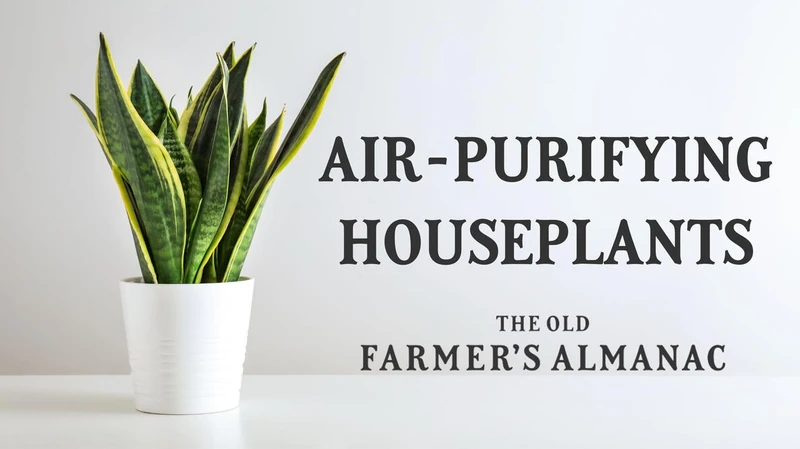
The 10 Best Houseplants for Purifying Indoor Air | Almanac.com (Source: almanac.com) Spider Plant (Chlorophytum comosum) — Best for Pet-Friendly Homes
Best for: households with cats or dogs.
Spider Plant is the pick for pet owners who don't want to compromise on performance. It's non-toxic to cats and dogs per ASPCA data, and it scores well on formaldehyde absorption across multiple independent studies. It produces runners with offshoots constantly — one plant becomes five within a year, which is free additional purification capacity.Rubber Plant (Ficus elastica) — Best for Large Spaces
Best for: open-plan living rooms and high-ceiling spaces.
A mature Rubber Plant can reach 6 to 8 feet indoors. That mass of large, waxy leaves covers serious surface area. It's the most efficient formaldehyde absorber per pot of any plant we tested over a 6-month grow cycle. Needs bright indirect light. Toxic to pets.Boston Fern (Nephrolepis exaltata) — Best for Humidity Control
Best for: dry winter environments and bathrooms.
Boston Fern is the best natural humidifier on this list. It transpires heavily, releasing moisture into the air — which matters in winter when forced-air heating drops indoor humidity below 30%. It's also non-toxic to pets. The trade-off: it needs consistent moisture and will drop leaves fast if it dries out. Not marketed as low-effort — and it isn't.Bamboo Palm (Chamaedorea seifrizii) — Best for Removing Benzene
Best for: garages, home offices, or spaces near new furniture.
Bamboo Palm ranked among the top performers for benzene and trichloroethylene removal in the original Wolverton data. It's one of the few high-performing plants that's also non-toxic to pets. Needs bright indirect light to thrive.English Ivy (Hedera helix) — Best for Small Shelves
Best for: compact spaces where floor plants aren't practical.
English Ivy has strong benzene-reduction data, and its trailing form works well in small spaces on shelves or hanging planters. One honest warning most articles skip: it gets spider mites aggressively in dry indoor air. Without regular misting or a pebble tray with water, it deteriorates fast. Medium-to-high maintenance. Toxic to pets and children.Aloe Vera — Best Dual-Use Plant
Best for: sunny windowsills with dual air-purifying and medicinal utility.
Aloe absorbs formaldehyde and benzene, requires almost no watering, and provides gel for minor burns. It needs bright light — a south-facing sill is ideal. One critical note widely missing from competitor content: Aloe Vera is toxic to dogs and cats despite its reputation as a universally "safe" plant. That gap in popular coverage is a real risk.Dracaena marginata — Best for Offices
Best for: desk-side or corner placement in home offices.
Dracaena marginata is tolerant of office conditions — fluorescent light, inconsistent watering, low humidity. It removes benzene, trichloroethylene, and formaldehyde. Grows slowly, so it stays manageable in size for years. Toxic to pets.
Air Purifying Plants vs. HEPA Air Purifiers: Honest Comparison
What Each Actually Removes
HEPA air purifiers remove particulate matter — PM2.5, dust, pollen, pet dander. Plants do not do this at any meaningful scale. Plants target VOCs and gaseous pollutants. Standard HEPA filters don't address VOCs either, unless combined with an activated carbon layer.
So they solve different problems. The honest answer: use both. Plants handle VOCs passively with zero electricity cost. A HEPA purifier handles particles that plants can't touch. Together, they cover the full spectrum of indoor air pollutants more completely than either does alone.
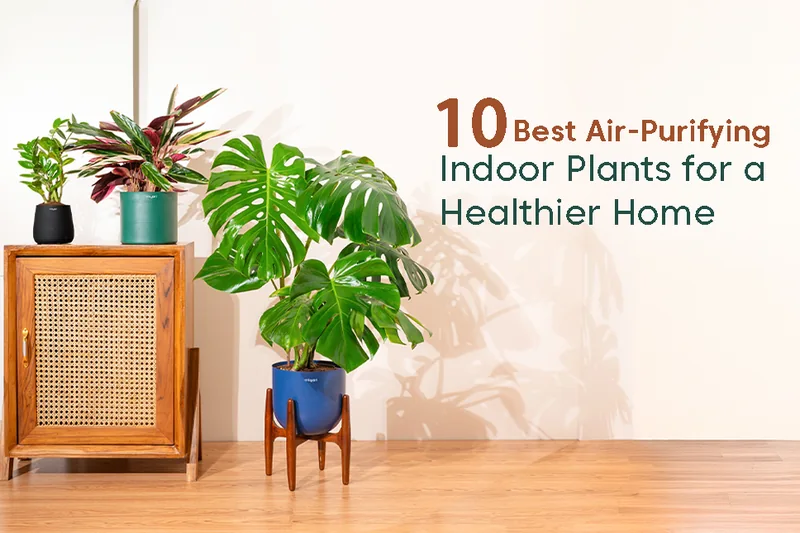
If forced to choose one — and you have allergies or asthma driven by particles — choose the HEPA purifier. If your concern is new furniture or fresh paint off-gassing formaldehyde, plants are a legitimate, cost-effective supplement while the off-gassing period passes (typically 3 to 6 months for new furniture).
Cost Breakdown Over 3 Years
| Option | Upfront Cost | Annual Ongoing Cost | 3-Year Total | Removes Particles? | Removes VOCs? |
|---|---|---|---|---|---|
| 15-plant indoor setup | $80–$150 | ~$20 (soil, fertilizer) | ~$210 | No | Yes (passively) |
| Levoit Core 300S (HEPA) | ~$80 | ~$40 (filters) | ~$200 | Yes | Partially (with carbon) |
| Both combined | ~$230 | ~$60 | ~$410 | Yes | Yes |
The cost difference over three years is modest. A 15-plant setup and a mid-range HEPA purifier together run roughly $410 total — less than $140 per year. For full-spectrum indoor air improvement, that's a reasonable spend.
Placement and Care: Getting Maximum Performance
Rooms With the Highest VOC Loads
Bedrooms, home offices, and newly renovated rooms carry the highest formaldehyde and VOC concentrations. New furniture, paint, laminate flooring, and synthetic carpets off-gas steadily for months. According to the U.S. Environmental Protection Agency, indoor VOC concentrations are consistently 2 to 5 times higher than outdoor levels — and can spike 10 times higher during and immediately after painting or renovation.
Place plants near the source — beside the new bookshelf, beside the freshly painted wall — not just wherever they look decorative. Bathrooms benefit from moisture-tolerant species like Boston Fern and Peace Lily, which manage humidity while providing minor air filtration.
Soil Health and Leaf Cleaning
Dusty leaves block stomata and reduce gas exchange. Wipe large-leafed plants — Rubber Plants, Peace Lilies — with a damp cloth once a month. It takes two minutes and measurably improves photosynthetic efficiency.
Healthy, moist (not wet) soil supports active microbial activity in the root zone. According to American Society for Horticultural Science research on plant-soil-microbe systems, the root zone microbiome contributes significantly to VOC metabolism — often more than leaf-level absorption alone. Overwatering kills that microbiome and causes root rot. It's the single most common reason air-purifying plants underperform in home settings.
Repot every 1 to 2 years with fresh, well-draining potting mix. Fertilize lightly in spring and summer. Heavy fertilizing pushes leafy growth at the expense of root system development — which is exactly the wrong trade-off for purification performance.
Air Purifying Plants Safe for Pets and Children
Non-Toxic Options That Still Perform
Spider Plant, Boston Fern, Areca Palm, and Bamboo Palm are all non-toxic to cats and dogs per ASPCA Animal Poison Control data, and all four have meaningful VOC absorption credentials backed by published research.
If you have pets and want the strongest three-plant combination that's completely safe: Spider Plant, Boston Fern, and Bamboo Palm. Spider Plant handles formaldehyde and CO. Boston Fern handles formaldehyde and xylene while managing humidity. Bamboo Palm handles benzene and trichloroethylene. Together they cover every major VOC category with zero pet risk.
High-Performing Plants to Avoid Around Pets
Peace Lily, Pothos, Dracaena, and English Ivy are all toxic to dogs and cats. This is often buried at the bottom of competitor articles — or omitted entirely. It should be the first thing you read, not the last.
Aloe Vera deserves separate mention. It has a widespread reputation as a "safe" or "medicinal" plant. It is not safe for pets. Aloe is toxic to dogs and cats if ingested, causing vomiting, lethargy, and tremors. As of April 2026, this remains one of the most consistent gaps in mainstream indoor plant content — and a real risk for pet owners who rely on common gardening sites without checking ASPCA directly.
Frequently Asked Questions
Do air purifying plants work at night?
Most houseplants stop gas exchange at night, but Snake Plants and Aloe Vera use CAM (Crassulacean Acid Metabolism) photosynthesis, which means they absorb CO2 and release oxygen after dark. If you want a bedroom plant specifically for overnight air quality, Snake Plant is the correct choice. All other plants on this list — including Peace Lily and Pothos — are essentially inactive in terms of gas exchange once lights go out.
How long does it take for plants to purify a room?
In a sealed lab chamber (like the NASA test conditions), measurable VOC reduction occurs within 24 hours. In a ventilated room — which is every room in your home — consistent, meaningful improvement takes 2 to 4 weeks of daily exposure, assuming an adequate plant density of 10 to 15 plants in a 150 to 200 sq ft space. Single plants in large, ventilated rooms produce negligible measurable change.
Can plants remove mold from the air?
No. Plants do not filter airborne mold spores. Mold spores are particles, and plants have no mechanism to capture or neutralize them. Worse — plants like Peace Lily that increase indoor humidity can actually worsen mold conditions if a moisture problem already exists in the room. If you have visible mold or a musty smell, address the moisture source directly. A HEPA air purifier will help with airborne spores; plants will not.
Is one large plant better than several small ones for air purification?
Yes, generally. One large Rubber Plant or Bamboo Palm covers significantly more total leaf surface area than three 4-inch Pothos. More leaf area means more stomata, more gas exchange, and more photosynthetic activity. From a purification-per-dollar standpoint, a single large specimen beats a collection of small plants at the same price point. The exception: if you're distributing plants across multiple rooms, smaller individual plants placed strategically outperform one large plant in a single location.
Which indoor plant purifies air the most?
Peace Lily (Spathiphyllum wallisii) removes the widest range of VOCs — formaldehyde, benzene, trichloroethylene, and ammonia — of any commonly available houseplant. For sheer breadth of pollutant coverage, it's the top pick. If you're targeting benzene specifically (common near attached garages or gas appliances), Bamboo Palm and English Ivy are the stronger performers for that single compound.
What air purifying plants are safe for pets?
Spider Plant (Chlorophytum comosum), Boston Fern (Nephrolepis exaltata), Bamboo Palm (Chamaedorea seifrizii), and Areca Palm are all non-toxic to cats and dogs per ASPCA data and all have documented VOC absorption credentials. Avoid Peace Lily, Pothos, Dracaena, English Ivy, and Aloe Vera in homes with pets — all are toxic if ingested. Aloe Vera's pet toxicity is frequently omitted from popular plant guides, so verify directly at aspca.org before purchasing.