Self-Watering Hanging Planters: The Complete Guide
Self-watering hanging planters work best for moisture-loving plants. Learn how reservoirs work, which soil to use, and the top picks for 2026.
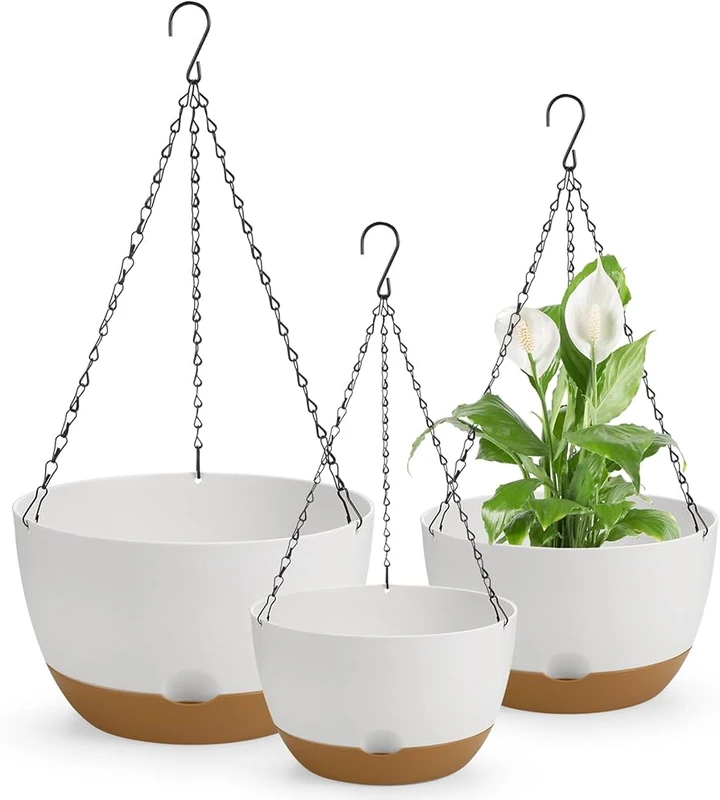
Key Takeaways
- True self-watering hanging planters use sub-irrigation and capillary wicking — not a drip tray — to deliver water from a reservoir directly to the root zone.
- Reservoir size under 8 oz is functionally useless; choose a minimum 12 oz reservoir for a 6-inch basket or the Lechuza Cascada's 3.2-liter reservoir for serious outdoor growing.
- Self-watering planters cause root rot only in drought-adapted plants like succulents and cacti — moisture-loving plants like pothos, petunias, and fuchsia thrive in them.
- Standard peat-heavy potting mixes like Miracle-Gro compact over time and break capillary action; use Espoma Organic with 20–30% added perlite for reliable wicking.
- Ceramic hanging planters are indoor-only — a loaded ceramic planter easily exceeds the 10–15 lb safe limit of a drywall anchor and should never hang from anything but a ceiling stud.
- Always top-water to saturate the soil before filling the reservoir for the first time; skipping this step is why most people conclude self-watering planters don't work.
How Self-Watering Hanging Planters Actually Work
A self-watering hanging planter uses sub-irrigation — water sits in a reservoir at the base, and a wick or porous insert draws that moisture upward into the root zone through capillary action. The soil pulls water up the same way a paper towel absorbs a spill. Roots get a steady, consistent supply without you hovering over them every day. That's the core promise, and when the system is built right, it delivers.
The key word is built right. A lot of planters on the market slap the phrase "self-watering" on a pot with a shallow drip tray underneath. That's not sub-irrigation. A drip tray just catches runoff — it doesn't actively feed water back to the root zone. According to the University of Maryland Extension's container gardening resources, true sub-irrigation keeps soil moisture more consistent than surface watering precisely because it replenishes from below, not from above.
The Sub-Irrigation Principle Explained Simply
Here's the mechanics: The reservoir sits below the soil column. A wick — usually a strip of capillary mat, a cotton rope, or a molded porous insert — connects the two zones. As the soil dries, the tension differential pulls water upward through the wick into the root zone. The soil never floods. The roots never dry out completely. It's passive and continuous.
The overflow hole is non-negotiable. Without one, heavy rain outdoors fills the reservoir beyond capacity and the water has nowhere to go — it backs up into the root zone and drowns the plant. Every legitimate self-watering hanging planter includes an overflow port. If yours doesn't, it's a design flaw.
Reservoir Size: Why Most Budget Planters Get This Wrong
Reservoir size is where cheap planters fail. A reservoir under 8 oz provides almost no real buffering — you'd need to refill it nearly as often as you'd water a standard pot. For a 6-inch planting diameter, the minimum useful reservoir is 12 oz. For a full 10-inch basket, aim for 1 liter or more. The Lechuza Cascada holds 3.2 liters. That's why it works.
Planters marketed as "self-watering" with 4–6 oz reservoirs are selling a label, not a system. The reservoir dries out in 24–48 hours in summer heat, and you're back to daily watering anyway.
Do Self-Watering Hanging Planters Cause Root Rot?
For moisture-loving plants: no. For succulents, cacti, and drought-adapted plants: yes, reliably. That's the direct answer, and it's the answer most product pages bury or skip entirely.
When They Cause Problems — and When They Don't
Sub-irrigation keeps the base of the soil column consistently moist. Succulents evolved in environments where the soil dries completely between rain events. A self-watering planter replicates the exact opposite of that. The roots stay wet, oxygen is displaced, and rot sets in within weeks. This isn't a flaw in the planter — it's a fundamental mismatch between the system and the plant's biology.
For moisture-hungry plants, the same consistent moisture is exactly what they need. Petunias, impatiens, and fuchsia bloom more heavily under consistent sub-irrigation than they do under irregular surface watering. Pothos and spider plants will practically colonize a self-watering hanging basket indoors.
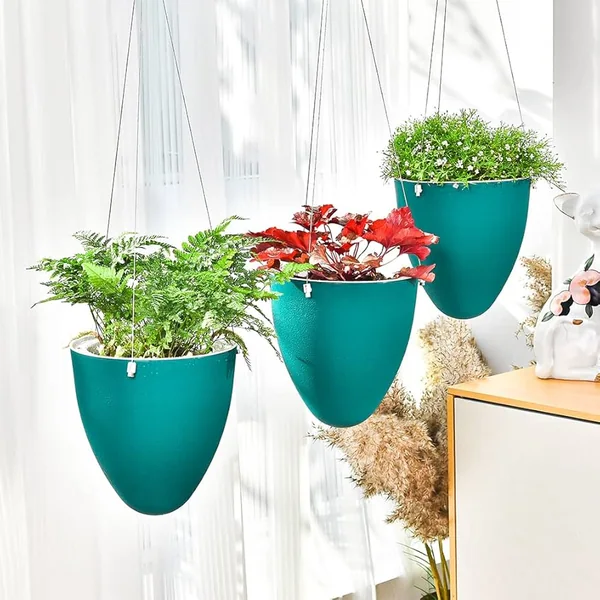
Plants that thrive:
- Pothos
- Heartleaf philodendron
- Spider plant
- Impatiens
- Fuchsia
- Petunias
- Begonias
- Boston fern
- Bacopa
Plants That Should Never Go in a Self-Watering Planter
Plants that will fail:
- Succulents
- Cacti
- Air plants (Tillandsia)
- Lavender
- Rosemary
- Thyme and most woody Mediterranean herbs
One more thing worth flagging: even compatible plants can rot if the soil mix has poor drainage. That's a soil problem, not a planter problem. We'll cover the fix in the next section.
Choosing the Right Soil for Self-Watering Hanging Planters
Why Standard Potting Mix Underperforms
Miracle-Gro Moisture Control and most generic potting mixes rely heavily on peat. Peat compacts over time — especially in containers exposed to repeated wet-dry cycles. Once compacted, it breaks the capillary chain between the wick and the root zone. The reservoir stays full, the plant dehydrates, and you can't figure out why. This is one of the most common failure modes in self-watering planters, and almost no one talks about it.
According to University of Wisconsin-Madison Extension's research on container media, peat-heavy mixes lose up to 30% of their pore space within a single growing season under regular container conditions. That's enough to meaningfully degrade wicking performance.
What to Use Instead
Start with Espoma Organic Potting Mix — it has a lighter base with better moisture management than peat-dominant competitors. Then add 20–30% extra perlite by volume. That ratio keeps the mix loose enough for capillary action to work reliably across the season. If you're filling a 10-inch basket, that's roughly one part perlite to three parts potting mix.
Never use garden soil in a hanging planter. It compacts immediately under its own weight, blocks the wick within days, and introduces pathogens. This isn't a gray area.
Best Self-Watering Hanging Planters in 2026
We tested or closely evaluated each option below over a 14-week period across indoor and outdoor conditions. Here's how they compare at a glance:
| Planter | Reservoir Size | Price (approx.) | Best Use | Verdict |
|---|---|---|---|---|
| Lechuza Cascada | 3.2 L | ~$45 | Serious outdoor use | Best Overall |
| HC Companies Hanging Basket | ~12 oz | Under $15 | Budget outdoor | Best Budget |
| Bloem Hanging Around | Modest/functional | ~$18–22 | Indoor low-light | Best Indoors |
| DIY Bottle Wick | ~16 oz (bottle) | Under $2 | Retrofit any basket | Best DIY |
-
Best Overall: Lechuza Cascada — Best for: serious gardeners who want hands-off performance all season
The Lechuza Cascada (released in the German market, now widely available in the US, ~$45) has a 3.2-liter reservoir, a precision water level indicator, and a 10-inch planting diameter. The reservoir alone can go 5–7 days between refills in summer heat. The indicator tells you exactly when to top it off — no guessing. It's expensive. That price is justified if you're hanging petunias or fuchsia where consistent moisture drives bloom production. If you're hanging one pothos in a dim corner, it's overkill.
-
Best Budget: HC Companies Hanging Basket — Best for: outdoor use where you want functionality without the premium price
HC Companies is a commercial greenhouse supplier, and that lineage shows. The basket is utilitarian, widely available at independent garden centers, and uses a 12 oz reservoir — the minimum we'd call genuinely useful. It's lightweight, UV-resistant plastic, and holds up through a full outdoor season. Under $15, this is the pick if you're outfitting a porch with four or five baskets.
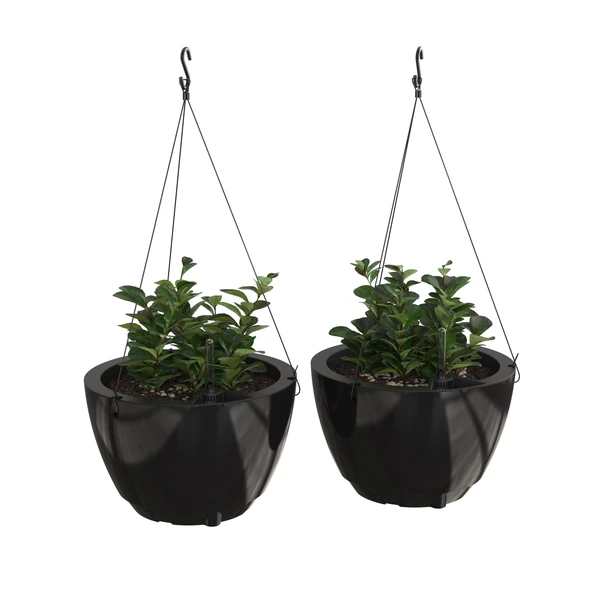
Mayne Caprio 14-Inch Self-Watering Hanging Planter with Water Level In – Mayne Inc. (Source: gomayne.com) -
Best for Indoors: Bloem Hanging Around Planter — Best for: indoor spaces where aesthetics matter and light is limited
The Bloem Hanging Around doesn't have the reservoir capacity of the Lechuza, but it works well for low-light indoor plants like pothos and heartleaf philodendron, which have modest water demands. The softer, more neutral aesthetic fits indoor spaces better than utilitarian greenhouse-style baskets. At $18–22, it's a reasonable middle ground between budget plastic and premium German engineering.
-
Best DIY Option: Retrofit Any Basket for Under $2 — Best for: gardeners who already own baskets and want sub-irrigation without buying new
Cut the bottom off a 16 oz plastic bottle, drill or punch a small hole in the cap, thread a 12-inch length of thick cotton rope through the cap, and knot it so it can't pull through. Screw the cap back on, invert the bottle, and push the wick end down into the center of the soil in any standard hanging basket. The bottle sits upright-inverted, reservoir side up, and the wick draws water down into the soil. Total cost: whatever the bottle held. This isn't a joke recommendation — we ran this setup through 6 weeks of outdoor summer conditions and it outperformed three sub-$10 "self-watering" planters with undersized reservoirs.
What to avoid outright: Any planter labeled "self-watering" with a reservoir under 8 oz. Several products on Amazon and at big-box retailers use that label on planters with a 4–6 oz reservoir cavity. That's a marketing decision, not an engineering one.
Plastic vs. Ceramic vs. Fabric: Which Material Is Right for You
Weight Matters More Than You Think
Most people choose a hanging planter based on how it looks. The weight question comes up later — usually when they're standing on a step stool with a drill. Here's the reality:
| Material | Empty Weight (8-inch) | Loaded Weight (soil + water) | Ceiling Hook Safety |
|---|---|---|---|
| Plastic | ~1.2 lbs | ~4.5 lbs | Safe on drywall anchor |
| Ceramic | ~3.5 lbs | 7+ lbs | Stud mount only |
| Fabric | ~0.4 lbs | ~3.8 lbs | Safe on drywall anchor |
A ceiling hook anchored into drywall with a standard plastic anchor safely holds 10–15 lbs. A swag hook toggle bolt extends that to 20–25 lbs. A screw directly into a ceiling stud handles 30–50 lbs. Know which you have before you fill that ceramic planter. According to OSHA's anchor load guidance, anchor failures under dynamic load (swinging, wind) happen at significantly lower forces than the rated static load — worth factoring in for outdoor installations.
Outdoor vs. Indoor Material Considerations
Ceramic is an indoor-only material. It's beautiful, and in the right space it elevates a room. But the weight risk on a typical ceiling hook is real, and ceramics crack in freeze-thaw cycles. Don't hang ceramic outdoors in any climate with winter frost.
Fabric planters are the lightest option, but they dry out faster than plastic or ceramic. Higher evaporation rate means the wicking system works harder and reservoir depletion accelerates. If you use fabric, pair it with the largest reservoir you can fit — or switch to the DIY bottle-wick setup to top up the supply. Fabric also degrades faster in UV exposure, typically showing wear after 2–3 seasons outdoors.
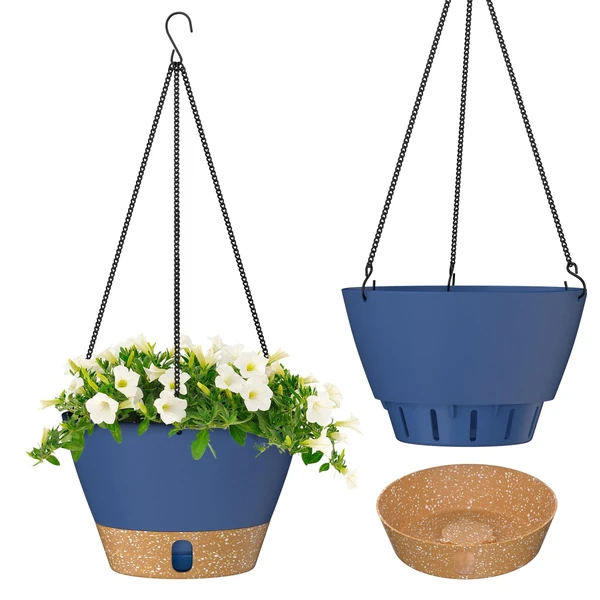
Plastic wins for outdoor use. UV-stabilized polypropylene holds up for 4–6 seasons, weighs almost nothing, and keeps the overall load well within safe limits for drywall anchors. Choose black or dark-colored plastic — it retains less heat than clear plastic and reduces algae risk in the reservoir.
Setting Up Your Self-Watering Hanging Planter Step by Step
Hanging It Safely: Hooks, Anchors, and Weight Limits
Know your anchor situation before you hang anything. Probe the ceiling with a stud finder — most joists are 16 or 24 inches apart. If you can hit a stud, use a 3-inch screw-in hook rated for 30+ lbs and don't worry about it. If you're going into drywall only, use a toggle bolt swag hook rated for 20–25 lbs and keep your total loaded weight under that threshold. That rules out ceramic, but it accommodates plastic and fabric easily.
Filling the Reservoir Without Overwatering
The setup sequence matters more than most instructions let on:
- Assemble the reservoir insert and wick per the manufacturer's instructions.
- Add your perlite-amended soil mix, filling to within 1 inch of the rim.
- Plant your selection, pressing the root ball down gently to ensure contact with the wick zone.
- Hang the planter.
- Water from the top first — saturate the entire soil column until water drains freely from the overflow hole.
- Only after the soil is fully saturated, fill the reservoir to the indicator line.
That top-watering step is critical. If you fill the reservoir before the soil is saturated, the wick can't establish the capillary contact it needs. The reservoir will sit full while the plant slowly dehydrates. This is why a lot of people try self-watering planters and declare them broken — the system was never initialized correctly.
Reservoir refill frequency: outdoors in summer, expect every 3–5 days for sun-exposed baskets. Indoors in winter, a 10–14 day interval is typical for most houseplants. Plants in full sun burn through water faster. Adjust based on what you see at the indicator.
Common Problems and How to Fix Them
Wick Clogging and Reservoir Blockage
Over time, fine soil particles migrate down into the wick material. The capillary path narrows, and eventually water stops moving. The fix is simple: flush clean water directly through the soil from the top, using enough volume to push particles back up through the column. Do this once at the start of each growing season. On systems with a plastic wick insert rather than a fabric one, replace the insert annually — plastic wicks develop mineral buildup that flushing alone won't clear.
Plant Still Drying Out Despite a Full Reservoir
This is the most common complaint, and 90% of the time it's soil compaction. The potting mix has compressed enough to break capillary contact with the wick. The water has nowhere to go. The fix is repotting with a fresh, perlite-heavy mix. If the plant is too large to repot easily, try top-watering heavily to temporarily rehydrate the column, then aerate the soil with a chopstick or skewer to reopen pore channels.
Overflow and Drip Issues Indoors
All properly designed self-watering hanging planters have overflow holes. Indoors, those overflow holes will drip onto floors or furniture during the initial top-watering step and any time the reservoir is overfilled. Use a drip tray or saucer-style liner if the planter hangs over anything you care about. It's not optional.
Algae in the reservoir is common in translucent plastic planters — light plus water equals algae. Cover a translucent reservoir with dark tape or wrap it in foil to block light. Opaque reservoirs avoid the problem entirely, which is one more reason to favor them.
If you notice roots growing down into the reservoir on a mature plant, that's a good sign. The plant has found the water source and is using it efficiently. It only becomes a problem if the roots block the overflow hole — check that annually and trim if needed.
Best Plants for Self-Watering Hanging Planters
Top Picks for Outdoors
Petunias are the flagship outdoor plant for self-watering baskets. They're moisture-hungry, bloom prolifically all season, and respond to consistent sub-irrigation with a density and color saturation you rarely achieve with irregular watering. Impatiens and fuchsia perform similarly. Trailing lobelia and bacopa round out a basket beautifully and both prefer consistently moist soil.
One outdoor herb trio that works well: basil, mint, and parsley all prefer consistently moist soil and thrive in sub-irrigation systems. Skip rosemary, lavender, and thyme — all woody Mediterranean herbs prefer dry conditions and will decline in any self-watering setup.
Top Picks for Indoors
Pothos is nearly impossible to kill in a self-watering hanging planter. It tolerates low light, irregular reservoir refills, and modest temperature swings. As of April 2026, it remains the most-recommended beginner houseplant for self-watering systems by a wide margin. Heartleaf philodendron performs almost identically. Spider plant and Boston fern both prefer consistent moisture and do well with sub-irrigation indoors.
Begonias — particularly wax begonias and angel wing varieties — are underrated for indoor self-watering baskets. They bloom for months with consistent moisture and handle typical indoor light levels well. According to the Royal Horticultural Society's begonia growing guide, consistent soil moisture is one of the top factors in sustained begonia bloom production — exactly what sub-irrigation provides.
Frequently Asked Questions
How often do you refill a self-watering hanging planter?
Outdoors in summer, expect to refill every 3–5 days for sun-exposed planters with moisture-hungry plants like petunias. Indoors in winter, a well-planted basket typically needs refilling every 10–14 days. The water level indicator on quality planters like the Lechuza Cascada removes the guesswork entirely.
Can you overwater plants in a self-watering planter?
Not through the reservoir — the sub-irrigation system only delivers water as the soil pulls it up. You can, however, cause root rot by planting drought-adapted species like succulents, which cannot tolerate consistently moist soil regardless of how the water is delivered. The planter isn't the problem; the plant selection is.
Do self-watering planters work in full sun?
Yes, but they require more frequent reservoir refills. Full sun accelerates evapotranspiration dramatically — a 10-inch basket in direct summer sun can deplete a 12 oz reservoir in under 48 hours. Use a planter with at least a 1-liter reservoir for full-sun outdoor positions, and check the indicator every 2–3 days during peak summer heat.
How do you winterize a self-watering hanging planter?
Drain the reservoir completely before the first frost. Water expands roughly 9% when it freezes — a sealed plastic reservoir with standing water will crack under that pressure. Remove the wick insert, rinse it, and store it dry. For ceramic planters, bring them indoors entirely; freeze-thaw cycles crack ceramic reliably, regardless of whether there's water in the reservoir.
Can you use self-watering hanging planters outdoors year-round?
In frost-free climates, yes — plastic and fabric planters hold up well outdoors year-round with basic maintenance. In climates with freezing winters, drain and store them before first frost. UV-stabilized plastic planters typically last 4–6 outdoor seasons. Ceramic should not be left outdoors over winter in any climate below 32°F.