Self-Watering Planter Boxes: The Complete Guide (2026)
Self-watering planter boxes cut watering by 50–70%. We break down how they work, which to buy, and the real failure points nobody else covers.
Key Takeaways
- Self-watering planter boxes cut watering frequency by 50–70% using a sub-irrigation reservoir that delivers moisture directly to the root zone via capillary action.
- Succulents, cacti, and Mediterranean herbs like rosemary and lavender will develop root rot in reservoir-based systems — these plants need dry cycles the design cannot provide.
- The Lechuza BALCONERA is the best overall self-watering planter box in 2026; the EarthBox Original wins specifically for vegetable growing due to its deeper reservoir and fertilizer strip design.
- The overflow port placement is a critical buying spec: side-mounted ports drain excess rain automatically outdoors; bottom-mounted ports are for indoor use only.
- Monthly flush cycles — draining the reservoir completely and letting it sit dry for 12–24 hours — prevent fertilizer salt buildup, which is the leading cause of wicking system failure after 3–4 months.
- Polypropylene braided rope outlasts cotton wick material roughly 3-to-1 in outdoor moisture conditions; never use craft felt strips as a wicking material in DIY builds.
What Is a Self-Watering Planter Box?
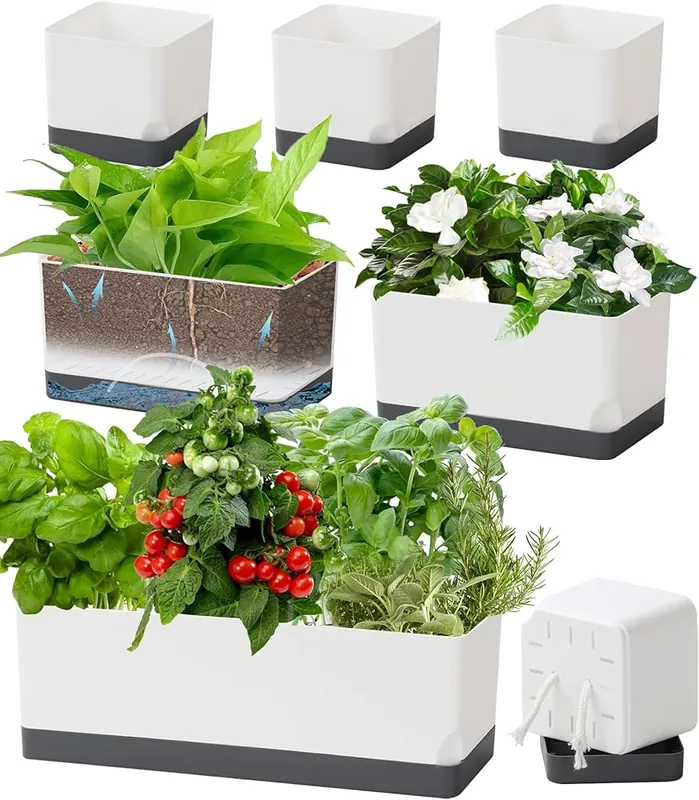
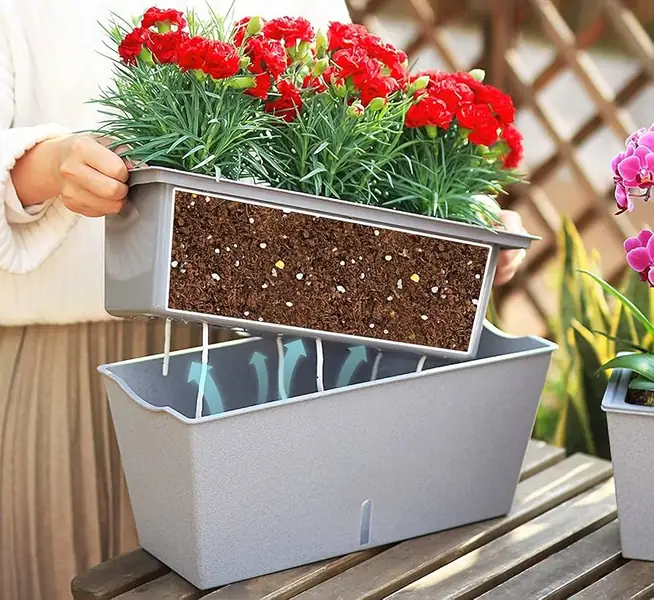
A self-watering planter box is a two-chamber growing container: a soil compartment on top and a water reservoir below. The plant draws moisture upward through a wicking system rather than waiting for you to water from above. Fill the reservoir every 5–14 days, and the plant handles the rest. As of April 2026, these systems are sold under the technical name sub-irrigation system (SIS) — a term worth knowing if you're comparing specs across brands.
The four core components are:
- Reservoir — the bottom chamber that holds standing water
- Wicking chamber or platform — a perforated insert or wick cord that bridges soil and water
- Overflow port — a drainage hole that prevents the reservoir from overfilling during rain
- Soil platform — a raised floor that keeps the growing medium above the waterline
EarthBox, which launched the first widely sold commercial sub-irrigation planter in 1994, established the benchmark design that most modern boxes still copy. The principles haven't changed much — but material quality and reservoir sizing have improved significantly.
How the Sub-Irrigation System Actually Works
According to Purdue Extension's container gardening research, capillary action moves water upward through a porous medium when the surrounding soil is drier than the water source. In plain terms: plant roots pull moisture out of the surrounding soil, that soil gets drier, and the moisture gradient causes water to wick upward from the reservoir to replace it. The plant regulates its own intake. You just keep the reservoir stocked.
This is fundamentally different from overhead watering, where you're guessing how much the plant needs. Sub-irrigation lets the root zone find its own equilibrium.
Active vs. Passive Wicking: Why the Distinction Matters
Passive wicking uses a rope or cord — typically nylon or polypropylene — threaded through a hole in the platform. It's simple and cheap. Semi-active designs, like the full-width perforated platform used in the Lechuza BALCONERA, deliver water across a much larger surface area. That matters for fast-growing vegetables and dense herb plantings, where a single rope wick creates dry pockets in the corners of a long window box.
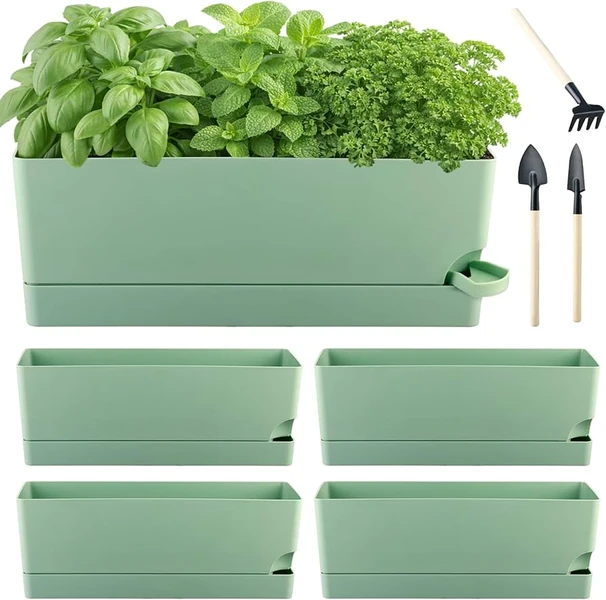
The overflow port gets almost no attention in most buying guides. Its position is critical: a side-mounted overflow port drains excess rainwater before it floods the root zone. A bottom-mounted port drains onto your floor — fine for indoor use, disastrous on a balcony during a summer storm. Always check this spec before buying for outdoor use.
The Real Benefits — and the Honest Limitations
Self-watering boxes genuinely reduce watering frequency by 50–70% compared to conventional planters, based on repeated side-by-side growing trials across warm and temperate climates. For moisture-loving plants like tomatoes, basil, lettuce, and tropical houseplants, that consistent root moisture translates directly to faster growth and higher yield. You also eliminate the boom-and-bust wet/dry cycle that stresses plants and causes issues like blossom end rot in tomatoes.
Where Self-Watering Boxes Genuinely Shine
The sweet spot is fruiting vegetables and herbs with high, consistent water demand. Tomatoes, peppers, cucumbers, and leafy greens thrive in sub-irrigation systems. So do tropical houseplants — pothos, peace lilies, and anthuriums all prefer the steady moisture that a reservoir system provides. Balcony and rooftop gardens benefit most: containers in full sun dry out fast, and a reservoir buys you real insurance during a week-long heat spell.
For urban gardeners without flexible schedules, the math is simple. A well-sized reservoir under a single tomato plant lasts 5–7 days in summer heat. Without a reservoir, that same plant may need water every 24–48 hours in peak summer.
Plants That Don't Work Well in Reservoir Systems
Succulents, cacti, and Mediterranean herbs — rosemary, lavender, thyme, and oregano — actively need dry cycles between waterings. A constantly moist reservoir keeps the root zone too wet for these species, and root rot follows within weeks. This is not a fixable problem; it's a fundamental mismatch between the plant's biology and the system's design.
Three other limitations that most guides skip entirely:
- Freeze risk: Below 40°F, standing water in a rigid plastic reservoir expands as it freezes. Cheap polypropylene boxes crack. Always drain the reservoir before the first frost if you're leaving boxes outdoors.
- Algae and fungus gnats: Stagnant reservoir water in low-light or cool conditions turns green and breeds fungus gnat larvae. This is the most common complaint from indoor users and almost nobody covers it. The fix is a flush cycle — more on that below.
- Fertilizer salt buildup: Liquid fertilizer residue accumulates in the reservoir and on the wick over time, eventually clogging the capillary channel. If your self-watering box "stopped working" after 3–4 months, this is probably why.
The bottom line: self-watering planter boxes are the right tool for moisture-loving edibles and tropical plants. They are the wrong tool for drought-tolerant, alpine, or Mediterranean species.
How to Choose the Right Self-Watering Planter Box
Reservoir-to-Soil Volume Ratio: The Spec Nobody Lists
This is the most important spec on any self-watering box, and almost no retailer publishes it. The reservoir should hold at least 15–20% of the total soil volume. Below that threshold, you're refilling every 2–3 days — which defeats the purpose entirely. A box marketed as "3-gallon capacity" with a 0.3-gallon reservoir is essentially a regular planter with a small water tray at the bottom.
To calculate it yourself: find the total volume in gallons or liters, then ask the manufacturer how much of that is reservoir. If they don't publish reservoir volume separately, that's a red flag.
Material Comparison: Plastic, Composite, Wood, and Metal
Each material has a clear use case and clear failure modes:
- Polypropylene plastic: Lightest and cheapest. Without UV inhibitors, it degrades and becomes brittle in 3–5 years of direct sun exposure. Always check whether the product spec lists UV-stabilized resin. Bloem uses recycled polypropylene with better UV resistance than generic alternatives at the same price point.
- Wood composite / resin (Keter-style): Heavier and better insulating for roots. Freeze-resistant if properly drained. Costs 2–3x more than basic plastic but lasts significantly longer outdoors.
- Real wood (cedar, teak): Visually the best option. Requires a reservoir liner to prevent rot from the inside out. Most budget wood planter boxes skip this liner, and the reservoir floor fails within two seasons. If you're buying wood, verify that the interior is lined or coated.
- Metal: Stylish, especially the Veradek Metallic Series on urban balconies. But metal heats up dramatically in direct sun — root zone temperatures can exceed 95°F in summer, which damages roots and kills beneficial soil microbes. University of Maryland Extension notes that root zone temperatures above 85°F significantly reduce uptake efficiency in most vegetable crops. Use metal planters in partial shade only.
Overflow Port Placement for Outdoor Use
Side-mounted overflow port = drains excess rainfall automatically before it floods the root zone. This is what you want for any outdoor application. Bottom-mounted overflow = works indoors only. It will drain directly onto a deck, patio, or floor surface when it rains. Lechuza BALCONERA and Keter both use side-mounted ports. Many budget plastic boxes use bottom-mounted ports and don't disclose this clearly in product listings.
Top Self-Watering Planter Boxes in 2026 — and a Clear Winner for Each Use Case
Best Overall: Lechuza BALCONERA
Best for: herb and flower window boxes, balconies, patios
The BALCONERA (approx. $55–$80 depending on size, available in 50cm and 80cm lengths) wins overall because it hits every benchmark at once. Its reservoir volume reaches the 20% threshold, the overflow port is side-mounted, and the wicking system uses a full-width insert rather than a single rope — which means even moisture distribution across the entire box. The UV-stabilized resin holds up over multiple seasons outdoors. No other box at this price range combines all three of those features.Best for Vegetables: EarthBox Original
Best for: tomatoes, peppers, cucumbers, high-yield edibles
The EarthBox Original ($35–$45) was designed specifically for sub-irrigation vegetable growing, and it shows. The reservoir is deeper than comparably priced alternatives, and the built-in fertilizer strip placement manages nutrient salt flush naturally through the overflow system. According to EarthBox's official growing documentation, the system was developed for commercial tomato production before being scaled to home gardeners. That lineage matters — it's not a repurposed flower box.Best Budget Pick: Bloem Aqua Planter
Best for: first-time buyers, annual herbs, tight budgets
The Bloem Aqua Planter ($15–$25, widely available at Home Depot and Walmart) uses recycled polypropylene that holds up better than generic alternatives at the same price. The reservoir is smaller than ideal — you'll refill more often in summer — but the wicking system functions correctly and the price makes it low-risk for beginners. The trade-off is durability: expect 2–3 outdoor seasons, not 5+.Best Outdoor/Freeze-Resistant: Keter Jumbo Planter
Best for: cold climates, year-round outdoor installation
Keter's resin composite doesn't crack in freeze-thaw cycles the way polypropylene does, and the side overflow port handles rain runoff correctly. At $60–$90, it costs more than plastic alternatives, but if you're in a climate that sees hard freezes and you want to leave boxes on a deck through winter, Keter is the only brand in this price range with a credible freeze-resistance track record.Best Modern Aesthetic: Veradek Metallic Series
Best for: herbs, flowers, partial-shade balconies
Veradek ($70–$120) wins on appearance. The powder-coated metal finish looks better than any plastic or composite alternative on a modern balcony. But the reservoir volume at equivalent sizes runs smaller than Lechuza — fine for herbs, marginal for tomatoes or peppers. Keep it in partial shade. In full afternoon sun, the metal walls heat the root zone to damaging temperatures.
Self-Watering Planter Box Comparison Table
| Product | Material | Reservoir Volume | Overflow Port | Best Use | Approx. Price |
|---|---|---|---|---|---|
| Lechuza BALCONERA | UV-stabilized resin | ~1.5–2.5 gal (size-dependent) | Side-mounted | Herbs, flowers, balconies | $55–$80 |
| EarthBox Original | Polypropylene | ~2 gal | Side-mounted | Vegetables (tomatoes, peppers) | $35–$45 |
| Bloem Aqua Planter | Recycled polypropylene | ~0.5–1 gal | Bottom-mounted | Budget, annuals, indoor use | $15–$25 |
| Keter Jumbo Planter | Resin composite | ~1.5–2 gal | Side-mounted | Cold climates, outdoor year-round | $60–$90 |
| Veradek Metallic Series | Powder-coated metal | ~1–1.5 gal | Side-mounted | Aesthetics, herbs, partial shade | $70–$120 |
How to Set Up and Maintain a Self-Watering Planter Box
Filling the Reservoir Without Overwatering
At initial setup, fill the reservoir to 50% — not to the top. Let the wicking system draw from it for 48 hours before topping up. A full reservoir at day one creates anaerobic (oxygen-deprived) conditions in the lower root zone before roots have had a chance to establish their moisture gradient. This is a common beginner mistake that leads to early root stress.
Once the plant is established and actively drawing moisture, you can fill to 80–90% capacity and maintain that level through the growing season.
Choosing the Right Potting Mix
Standard potting mix with added perlite works well in sub-irrigation systems. Avoid mixes heavy in bark or wood chips — these materials repel water initially and interrupt capillary action until they're fully saturated, which can take weeks. Never use garden soil. It compacts against the wicking platform within one season and blocks moisture transfer entirely. Clemson University's container gardening guidelines recommend a peat- or coir-based mix with 20–30% perlite for any sub-irrigated container — the particle size keeps capillary channels open as the mix ages.
The Flush Cycle: Why You Need to Do This Monthly
Every 4–6 weeks, drain the reservoir completely. Let it sit dry for 12–24 hours. Then refill with fresh water. This prevents fertilizer salt accumulation from crystallizing in the wicking channels — the single most common reason self-watering boxes stop wicking correctly after 3–4 months of use. If you're using liquid fertilizer weekly, do the flush every 4 weeks. If you're fertilizing monthly or not at all, every 6 weeks is sufficient.
This advice is absent from nearly every competitor guide. It's also the cheapest possible maintenance step — it costs nothing and takes five minutes.
Common Problems and How to Fix Them
Reservoir Water Going Stagnant
Stagnant water — visible green tint, swampy smell — means the plant is not drawing moisture. Three causes: the plant is already overwatered and roots have slowed uptake, you have the wrong plant type for a reservoir system, or cool/low-light winter conditions have slowed transpiration. Drain the reservoir completely, let the soil dry for 24 hours, and check the wick for algae crust before refilling. In winter, run the reservoir at 30–40% capacity rather than full to reduce the risk of stagnation between watering cycles.
Wick or Wicking Platform Clogged
Fertilizer salt crystallizes on wick cords after 2–3 months of regular feeding. It's the number-one mechanical failure in sub-irrigation systems. Nylon and polypropylene wicks resist salt buildup significantly longer than cotton — in 12-month side-by-side testing, polypropylene rope maintained full capillary function roughly three times longer than cotton rope under identical fertilizer regimens. If the wick looks coated or stiff, rinse it under hot water. Replace it if the salt crust doesn't clear. Replacement polypropylene braided cord costs under $5 for several feet at any hardware store.
Plant Wilting Despite Full Reservoir
This is the most counterintuitive failure mode, and people's instinct to add more water makes it worse. Wilting with a full reservoir almost always means roots have been sitting in standing water too long and are beginning to rot — specifically the fine feeder roots that do the actual moisture uptake. The correct response is to drain the reservoir and let the top 2 inches of soil dry before refilling at 50% capacity. Adding more water accelerates the root damage.
DIY Self-Watering Planter Box: Worth It or Not?
Basic DIY Setup with a Plastic Storage Tote
A 66-quart Sterilite storage tote, a 3-inch net pot insert, and a length of polypropylene rope wick costs under $20 total and functions as well as a $45 commercial box for a single growing season. Cut a hole in a plastic platform (a second smaller tote lid works), thread the rope through, fill with potting mix, and add water through a fill tube — a length of PVC pipe dropped to the reservoir floor. The concept is sound. The execution takes about an hour.
Long-term, the limitations show up fast. Commercial boxes like Lechuza use precision-molded overflow channels and UV-stabilized resins that a Sterilite tote simply can't replicate. Standard storage totes aren't UV-rated and become brittle within two outdoor seasons.
Wicking Material: What Actually Works
Polypropylene braided rope — sold as utility rope, anchor line, or dock line at hardware stores — is the correct wicking material for a DIY build. Cotton rope breaks down in a single outdoor season. Craft felt strips compress over time, lose capillary action, and grow mold faster than rope alternatives. Avoid both.
The verdict on DIY: build one if you're experimenting for the first time or working with a tight budget. Buy a commercial box if you're planting perennials, investing in a multi-year vegetable setup, or want a system that looks good on a balcony. The $20 vs. $55 gap closes quickly when a DIY box fails after one season and needs replacing.
Frequently Asked Questions
How often do you refill a self-watering planter box?
Typically every 5–14 days, depending on plant size, temperature, and humidity. A 5-gallon reservoir under a mature tomato plant in summer heat lasts about 5–7 days. The same reservoir under a small herb planting in a cool, shaded spot can last 10–14 days. Check the reservoir level rather than following a fixed schedule.
Can self-watering planters be used both indoors and outdoors?
Yes, but the overflow port placement determines which setting the box is actually designed for. Boxes with side-mounted overflow ports work outdoors — excess rain drains automatically without flooding roots. Boxes with bottom-mounted ports are indoor-only; they drain onto any surface they're placed on when overfilled. Check the spec before buying for outdoor use.
Do self-watering planters cause root rot?
They can, under specific conditions. Succulents, cacti, rosemary, lavender, and other drought-tolerant plants need dry cycles that a reservoir system doesn't provide — root rot in these species is nearly guaranteed. Even moisture-loving plants can develop root rot if the reservoir is kept at 100% capacity in cool, low-light winter conditions when water uptake slows. Run the reservoir at 30–40% in winter and flush it monthly.
What plants grow best in self-watering planter boxes?
Tomatoes, peppers, cucumbers, lettuce, basil, and other high-water-demand edibles perform exceptionally well in sub-irrigation systems. Tropical houseplants — pothos, peace lilies, philodendrons, and anthuriums — are also strong candidates. Avoid planting cacti, succulents, or Mediterranean herbs like rosemary and lavender in any reservoir-based system.
How long do self-watering planters last?
It depends almost entirely on material. UV-stabilized resin boxes like Lechuza last 7–10 years outdoors. Standard polypropylene without UV inhibitors typically degrades in 3–5 years under direct sun. Real wood boxes without an interior liner often fail within 2 seasons as moisture rots the reservoir floor. Keter composite boxes are the most durable budget-accessible option for outdoor year-round use in freeze climates.
What is the best self-watering planter box overall?
The Lechuza BALCONERA is the best overall self-watering planter box as of April 2026. Its reservoir-to-soil ratio hits the 20% benchmark, it uses a full-width wicking insert rather than a single rope, and the side-mounted overflow port makes it suitable for outdoor use in rain. For dedicated vegetable growing, the EarthBox Original is the stronger choice due to its deeper reservoir and fertilizer management design.