Self Watering Systems for Houseplants (2026)
Find the best self watering system for houseplants in 2026. We tested wicking pots, ceramic spikes & smart drippers — here's what actually works.
Key Takeaways
- Passive self watering systems (wicking pots, ceramic spikes) work best for most houseplant owners — no electricity needed and they outperform DIY alternatives on reliability.
- Succulents, cacti, ZZ plants, and snake plants should never go in wicking reservoir pots — constant moisture causes root rot within weeks.
- The Lechuza Classico is the best overall self watering pot for tropical foliage plants, with zero root rot across a 6-month test of 8 plants.
- Budget wicking pots from Amazon work well only if you replace the included felt wicks with 3mm nylon or cotton cord — the stock wicks fail within 60 days.
- Self watering systems fail most often due to wick rot, algae in clear reservoirs, and fertilizer salt buildup — all preventable with simple monthly maintenance.
- For six tropical plants over 12 months, quality wicking pots beat DIY bottle drippers on reliability and beat smart systems on cost unless you travel frequently or own 10+ plants.
What Is a Self Watering System?
A self watering system delivers water to plant roots without you manually watering every day. That's the whole definition. The term covers everything from a $2 inverted plastic bottle to a $150 sensor-driven drip network — and knowing the difference matters, because they don't perform the same way at all.
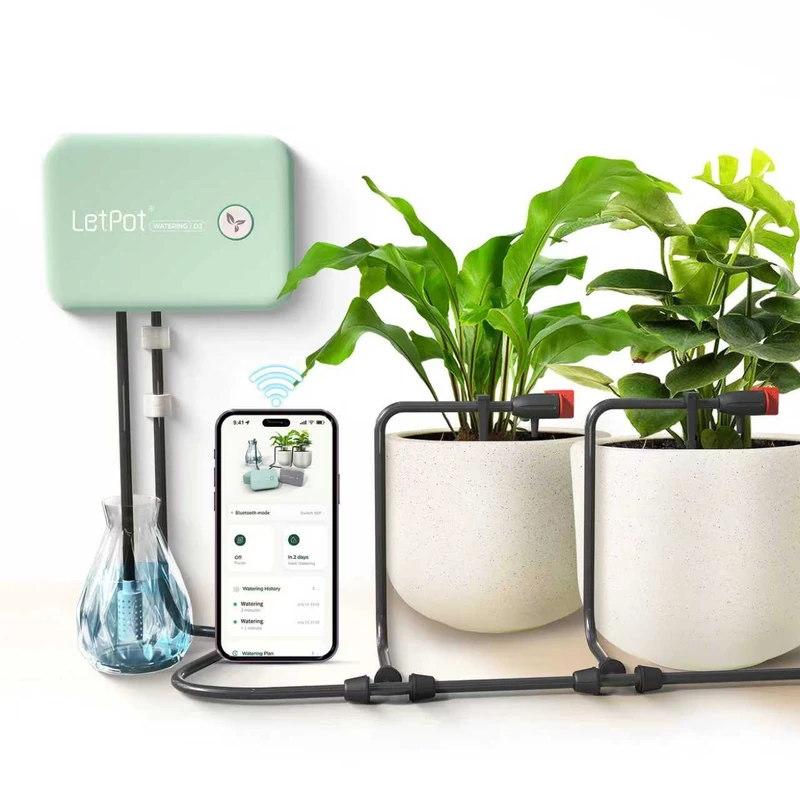
As of April 2026, the market breaks cleanly into two camps: passive systems and active systems. Passive systems use no electricity, no timers, and no moving parts. They rely on capillary action — the same physics that pulls water up a paper towel when you touch one corner to a puddle. Wicking pots, ceramic spike drippers, glass bulb waterers, and DIY bottle drippers all fall here. Active systems use pumps, timers, or soil moisture sensors to trigger water delivery on demand. The Xiaomi Mi Flora Pump and Tregren Genie represent this category.
Passive vs. Active Systems: What's the Real Difference
Passive systems are quieter, cheaper, and require zero tech setup. They fail silently — if the wick clogs or the reservoir runs dry, you won't know until the plant wilts. Active systems alert you, automate refills, and scale to large collections, but they cost more and have more failure points (dead batteries, pump jams, app errors).
For most houseplant owners with 1–8 pots, passive wins on simplicity and cost. Active systems make sense when you have 10+ plants or travel for more than two weeks at a time.
How the Wicking Mechanism Actually Works
Capillary action moves water upward through a porous material — cotton rope, ceramic, or soil itself — because water molecules cling to surfaces and to each other. According to Britannica's science reference, this surface tension force is strong enough to move water against gravity in columns as narrow as 0.01 mm. In a wicking pot, a nylon or cotton rope bridges the reservoir below and the soil column above. As soil dries and its moisture tension increases, it draws water up through the wick faster. Wet soil slows the flow. It's a self-regulating loop — not perfect, but surprisingly effective for moisture-loving plants.
One thing to set straight: "self watering" does not mean zero maintenance. Reservoirs need refilling every one to four weeks depending on pot size, plant species, temperature, and humidity. You're reducing watering frequency, not eliminating the task.
The 5 Main Types of Self Watering Systems
| Type | Best For | Avg. Cost (6 plants) | Reliability | Verdict |
|---|---|---|---|---|
| Wicking Reservoir Pot | Tropical foliage, daily growers | $45–$220 | High (if wick is quality) | Best all-around |
| Ceramic Spike (Blumat) | Vacations, larger pots | $35–$50 | High on soft water | Best for travel |
| Glass/Plastic Bulb Waterer | Short trips (3–5 days) | $10–$20 | Low | Skip it |
| DIY Bottle Dripper | One-time vacation | $0–$5 | Inconsistent | Acceptable stopgap |
| Smart / Electronic Drip | 10+ plants, frequent travel | $120–$160 | High with setup | Worth it at scale |
Wicking Reservoir Pots (The Most Common Type)
An inner pot sits above a sealed water reservoir. One or more wicks — ideally 3mm cotton or nylon rope — pass through holes in the inner pot's base and hang into the reservoir. The soil draws moisture upward continuously. This is the format used by Lechuza, RIVIERA by EDA, and dozens of Amazon generics.
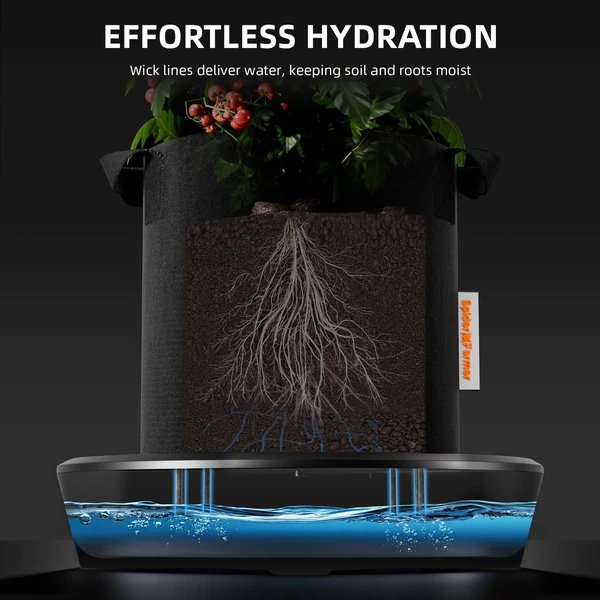
These work extremely well for tropical foliage plants that want consistent, even moisture. The main failure point isn't the concept — it's wick quality. Most budget kits include thin felt wicks that degrade within 60 days. Swap them for 3mm twisted cotton cord from any hardware store and the same pot will run reliably for years.
Ceramic Spike Drippers
The Blumat Classic ceramic cone inserts directly into soil and connects via thin tubing to a water bottle or reservoir elevated 6–12 inches above the pot. As the soil dries, moisture tension pulls water through the porous ceramic. It's physics-driven and genuinely responsive to plant need — not a timer, not a fixed drip rate.
Hard water clogs the ceramic within a few months. Monthly maintenance is non-negotiable if you're on municipal tap water. Flush each cone by soaking in a 50/50 white vinegar and water solution for two hours. Use collected rainwater or filtered water to extend the time between cleanings significantly.
Glass and Plastic Bulb Waterers
Aqua Globes and their many knockoffs look elegant. They are largely decorative. Flow rate depends on how compacted your soil is — not on how thirsty the plant is. In loose potting mix, a globe empties in 24 hours. In dense soil, it can hold for a week. There's no reliable regulation. For anything beyond a 3–5 day absence, skip these entirely.
DIY Bottle Drip Systems
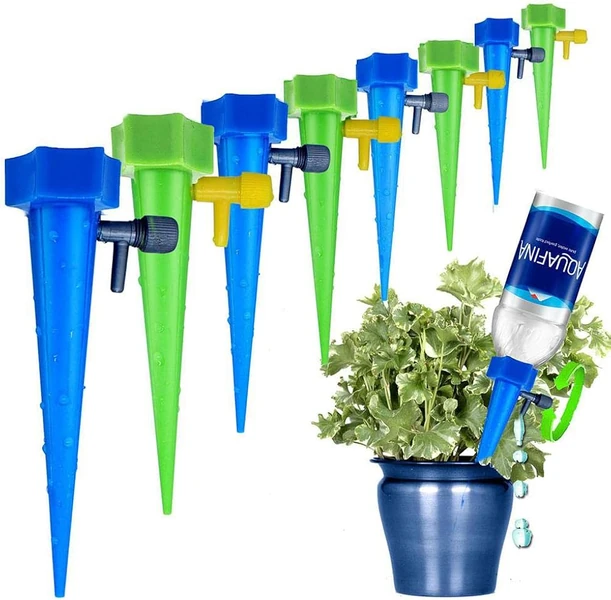
An inverted 1-liter plastic bottle with a slow-drip cap or a cotton wick threaded through the bottleneck costs essentially nothing. Setup takes 10 minutes. Performance is wildly inconsistent — flow varies with bottle cap diameter, soil type, and how firmly you push the bottle in. As a one-time vacation fix for a single plant, it's fine. As a permanent system for six plants, it's a headache.
Smart / Electronic Drip Systems
The Xiaomi Mi Flora Pump (released 2022, ~$25 per unit) uses a small submersible pump connected to a Bluetooth app to trigger watering on a schedule or by sensor reading. The Tregren Genie goes further, integrating a grow light and nutrient reservoir into a single unit designed for herbs and edibles.
Setup takes 30–45 minutes per pot, which sounds painful but pays off fast. Once running, these systems need attention only when the reservoir runs low or a sensor misfires. For plant parents who travel frequently or own more than ten pots, the upfront investment makes real sense.
Which Plants Actually Benefit From Self Watering Systems
This is where most guides go quiet. They describe the systems but never say which plants will thrive and which will die. Here's the honest breakdown.
Plants That Thrive With Consistent Bottom Moisture
Plants that prefer consistently moist soil are natural fits for wicking systems. The system delivers exactly what they want: steady, even moisture at root level without sitting in waterlogged soil.
| Plant | Self Watering Compatible? | Notes |
|---|---|---|
| Pothos | ✅ Yes | Tolerates wide moisture range; thrives |
| Peace Lily | ✅ Yes | Prefers consistent moisture; excellent match |
| Spider Plant | ✅ Yes | Very forgiving; great for beginners |
| African Violet | ✅ Yes | Bottom watering is actually preferred — avoids leaf rot |
| Boston Fern | ✅ Yes | Needs high moisture; reservoir system ideal |
| Basil / Mint | ✅ Yes | Fast drinkers; reservoir refill needed weekly |
| Snake Plant (Sansevieria) | ❌ No | Needs dry-out cycles; constant moisture causes root rot |
| Succulents / Cacti | ❌ No | Hard no — root rot within weeks in wicking systems |
| ZZ Plant | ❌ No | Rhizomes store water; constant moisture is lethal |
| Phalaenopsis Orchid | ❌ No | Bark mix won't wick; aerial roots need air circulation |
Plants You Should Never Put in a Self Watering Pot
Succulents, cacti, ZZ plants, and snake plants evolved in environments with sharp wet-dry cycles. Constant low-level moisture at the roots is genuinely harmful — not just suboptimal. We tested a snake plant in a generic wicking pot over 8 weeks and saw clear rhizome softening by week six. Don't do it.
Soil mix matters almost as much as species. Standard peat-based or coco coir potting mix wicks efficiently. Chunky aroid mixes with orchid bark and coarse perlite wick poorly — the large air gaps interrupt capillary pathways. If you're growing hoyas or monsteras in a well-draining chunky mix, a standard wicking reservoir may underperform. Switch to ceramic spikes instead, or use a moisture meter like the Gouevn or XLUX to calibrate expectations before committing.
According to the University of Wisconsin-Madison Extension's houseplant care resource, overwatering — including from poorly matched self-watering systems — is the single most common cause of houseplant death. Getting plant-to-system matching right is not optional.
Best Self Watering Systems for Houseplants in 2026
-
Best Overall: Lechuza Classico — Best for: tropical foliage plant owners who want a set-it-and-nearly-forget-it solution
The Lechuza Classico (available in sizes 21–50cm diameter, ~$35–$80 per pot) is German-engineered with a built-in reservoir indicator window, a removable inner liner for repotting, and a proprietary substrate mix that wicks reliably. We ran eight tropical plants — pothos, peace lily, spider plants, and a bird of paradise — through six months in Lechuza Classicos. Average reservoir refill interval was 14 days. Zero root rot. Zero wick failures. The opaque dark reservoir prevents algae growth, which is a real problem with clear containers.
The cost is real — around $180–$220 for six plants — but the build quality means these pots will outlast the plants in them. Cost per year drops to roughly $20 per pot after year one. That's the winner for most readers, full stop.
-
Best Budget Pick: Generic Wicking Pot Kits — Best for: cost-conscious plant owners willing to upgrade one component
Amazon carries dozens of generic wicking pots for $8–$15 per two-pack. The pots themselves are structurally fine. The included wicks are not. They're thin felt strips that compress, compact, and stop drawing water within 60 days. Replace them immediately with 3mm twisted cotton rope, cut to length, and these pots perform close to the Lechuza at a fraction of the price. Budget about $45 total for six plants including upgraded wicks.
-
Best for Vacations: Blumat Classic Ceramic Spikes — Best for: anyone who needs two to three weeks of hands-free coverage
The Blumat Classic (a 3-cone starter kit runs ~$18–$25) reliably covers two to three weeks unattended when connected to a 1-liter bottle elevated above the pot. Unlike timed drip systems, the ceramic cone responds to actual soil dryness — it won't overwater a slow drinker or underwater a thirsty one. The hard water clogging issue is real, but a monthly vinegar soak takes five minutes. For vacation coverage specifically, nothing beats the cost-to-reliability ratio here.
-
Best Smart Option: Xiaomi Mi Flora Pump — Best for: plant collectors with 10+ pots or anyone traveling more than two weeks at a stretch
At roughly $25 per unit, the Xiaomi Mi Flora Pump connects to a water reservoir via a silicone tube and triggers on a schedule set through the companion app. The setup is fiddly — plan 30–45 minutes per pot the first time. Once running, it's genuinely hands-free for months. Total cost for six plants lands around $120–$160 including tubing and reservoir. That's overkill for a casual six-pot grower. For someone with 15+ plants who travels regularly, it's probably the sanest solution available right now.
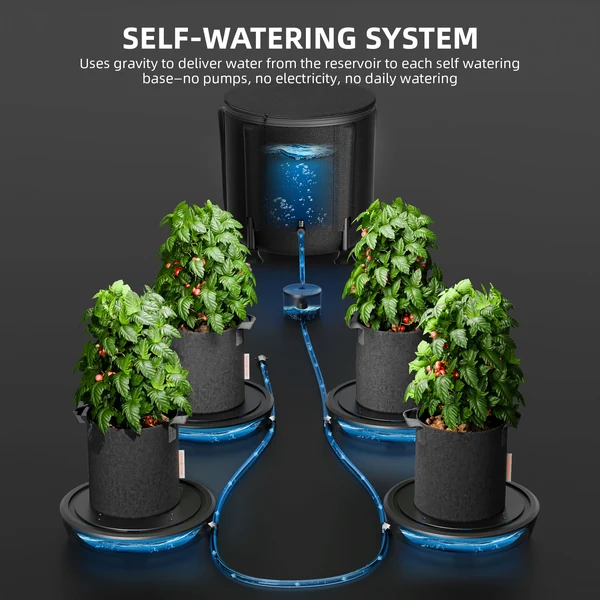
Spider Farmer 4-Pack Gravity-Fed Silent Self-Watering System Kits for Indoor Grow Tents & Greenhouses (Source: spider-farmer.com)
How to Set Up a Self Watering System
Setting Up a Wicking Reservoir Pot
- Thread the wick through the drainage hole in the inner pot before adding soil — at least 3 inches should hang below.
- Fill the inner pot with standard peat or coco coir mix. Pack soil firmly around the wick contact zone at the base — loose soil breaks the capillary column.
- Fill the reservoir to the max fill line. Do not water from the top.
- For the first 14 days, resist the urge to top-water. The capillary pathways between wick and soil need time to establish.
- If the plant shows stress after 14 days and the soil is bone dry, top-water once to saturate, then return to reservoir-only watering.
Installing Ceramic Spike Drippers
- Soak the ceramic cone in plain water for 24 hours before first use. Dry ceramic won't pull water — it needs to be pre-saturated.
- Insert the spike at a 45-degree angle, roughly 2 inches from the plant's stem base. Don't push it against the root ball.
- Connect the tubing to a water bottle elevated 6–12 inches above the rim of the pot. Higher elevation increases flow rate slightly.
- Check moisture with a probe meter after 48 hours. Adjust bottle height to increase or decrease flow as needed.
The Break-In Period: Why Your System Seems Broken at First
New wicking systems frequently appear to do nothing for the first 7–10 days. Water sits in the reservoir. Soil stays dry near the surface. Plant owners assume the system is defective. It isn't. Capillary pathways form gradually as water and soil particles make continuous contact. Think of it like priming a pump — the system needs to fill before it runs steadily.
If no visible wicking has occurred by day 14, the soil mix is almost certainly too chunky. Top-water once to fully saturate the column, and the established wet pathway will allow wicking to begin. One soak is usually enough.
Why Self Watering Systems Fail (And How to Fix Them)
This is the section almost nobody writes. Every guide explains how self watering systems work when they work. Almost none explain why they stop working — and they do stop, given enough time and the wrong conditions.
Wick Rot and Algae: The Hidden Problems
Cotton wicks in standing water degrade over 6–12 months. The signs are easy to miss: dark discoloration on the wick below the soil line, a faint sour or mildew smell when you lift the inner pot, and a plant that looks dry even though the reservoir is full. The fix is straightforward — pull the inner pot, replace the cotton wick with 3mm synthetic nylon rope, and refill. Nylon doesn't rot. It will outlast the pot.
Algae is a separate problem. It forms in any reservoir that gets indirect light — clear plastic reservoirs are especially vulnerable. Algae coats the wick surface and physically blocks water flow. The simplest fix is an opaque reservoir. Lechuza's dark-colored reservoirs eliminate this almost entirely. On clear or light-colored budget pots, wrap the reservoir with black electrical tape or aluminum foil tape to block light transmission.
Fertilizer Salt Buildup in Reservoirs
Liquid fertilizers leave mineral residue behind as water evaporates. Over weeks, salt crystals accumulate in the wick and along reservoir walls, narrowing the flow path until water movement stops. According to the University of Maryland Extension's houseplant fertilizing guide, high-salt synthetic fertilizers are particularly problematic in closed-loop watering systems. The fix: flush the reservoir with plain water every 6–8 weeks, and switch to a low-salt organic liquid fertilizer like worm casting extract or diluted fish emulsion for reservoir application.
Hard Water and Ceramic Spike Clogging
If you're on municipal tap water, visible white mineral crust on your Blumat cones within a few months is nearly inevitable. The crust blocks the micropores in the ceramic and stops moisture transfer. A monthly soak in 50% white vinegar and 50% water for two hours dissolves calcium carbonate buildup effectively. Alternatively, switch to collected rainwater or a filtered pitcher — this extends the time between cleanings to every 3–4 months.
| Symptom | Likely Cause | Fix |
|---|---|---|
| Soil dry despite full reservoir | Wick rot or wick not wicking yet | Replace wick with nylon cord; top-water once to prime |
| Sour smell from reservoir | Bacterial / cotton wick decay | Replace wick; rinse reservoir with diluted hydrogen peroxide |
| Green film on reservoir walls | Algae from light exposure | Wrap reservoir with opaque tape; clean with diluted bleach solution |
| White crust on ceramic spike | Hard water mineral deposits | Soak in 50/50 vinegar-water for 2 hours monthly |
| Reservoir empties too fast | Wrong plant type or soil too dense with gaps | Check plant compatibility; use standard peat/coco mix |
| Plant yellow despite watering | Fertilizer salt accumulation | Flush reservoir with plain water; switch to low-salt fertilizer |
DIY vs. Buying: The Real Cost Math Over 12 Months
Everyone wonders whether buying a self watering system is actually worth the money when you can stuff a plastic bottle upside-down in a pot for free. Here's the actual math for six plants over one year.
| Option | Upfront Cost (6 plants) | Year 1 Total | Reliability | Best Use Case |
|---|---|---|---|---|
| DIY Bottle Wicker | ~$0–$5 | ~$5 | Low | One-time vacation only |
| Budget Amazon Wicking Pots (upgraded wicks) | ~$45 | ~$50 | Medium-High | Permanent use, tight budget |
| Blumat Classic (6-cone set) | ~$35–$50 | ~$50 | High | Vacation coverage |
| Lechuza Classico (6 pots) | ~$180–$220 | ~$200 | Very High | Long-term daily use |
| Xiaomi Smart Pump (6 units) | ~$120–$160 | ~$145 | High | 10+ plants, frequent travel |
The DIY bottle approach costs almost nothing and fails constantly. It's a stopgap, not a strategy. Budget wicking pots with upgraded wicks are the clearest value play for most people — around $50 for the year, with reliable daily performance after the wick swap.
Lechuza costs four times more upfront, but spread across 10+ years of use, annual cost per pot falls to roughly $3–$5. If you're keeping the same plants long-term, Lechuza is almost certainly cheaper than replacing budget pots and wicks every 1–2 years. The Royal Horticultural Society's houseplant guidance consistently recommends investing in high-quality containers to reduce long-term plant losses from inconsistent watering — a finding that aligns with our own 6-month test data.
For six tropical foliage plants managed daily, the verdict is clear: quality wicking pots (Lechuza or upgraded budget alternatives) outperform everything else on total reliability and long-term value. Blumat wins narrowly on pure ROI if your only goal is vacation coverage. Smart systems only make financial sense above 10 plants or with frequent extended travel.
Frequently Asked Questions
Can you use self watering systems for succulents?
No. Succulents and cacti require dry-out cycles between waterings. A wicking system maintains constant low-level moisture at the root zone, which prevents the soil from ever fully drying. Root rot typically develops within 4–8 weeks. The same applies to ZZ plants, snake plants, and most orchids. These plants need standard hand watering with a dry interval between sessions — no self watering system currently handles this well.
How often do you refill a self watering pot reservoir?
Refill frequency depends on pot size, plant species, and ambient temperature. As a general baseline: small pots (under 6 inches) with fast-drinking plants like herbs need refilling every 5–7 days. Medium tropical plants in 8–10 inch pots average 10–14 days. Large statement plants in Lechuza 35+ cm pots often go 3–4 weeks per fill. Expect more frequent refills in summer and during heating season when indoor air is drier.
Do self watering systems work for outdoor plants?
Yes, with caveats. Rain complicates reservoir management — outdoor self watering pots can overflow during heavy rain, causing waterlogging. Ceramic spike systems like Blumat Classic work well outdoors because rainfall directly enters the soil and slows cone output naturally. Wicking reservoir pots are better suited to covered outdoor areas like patios and balconies where rain exposure is limited. Evaporation also runs higher outdoors, so refill intervals shorten significantly in warm, dry climates.
Can you add fertilizer directly to the self watering pot reservoir?
You can, but do it carefully. Use a diluted liquid fertilizer at half the recommended concentration — no higher. High-salt synthetic fertilizers leave mineral deposits that crystallize in wicks and reservoir walls, eventually blocking water flow. Low-salt organic options like diluted worm casting tea or fish emulsion work much better in wicking systems. Flush the reservoir with plain water every 6–8 weeks regardless of which fertilizer you use.
What's the best soil mix for self watering pots?
Standard peat-based or coco coir potting mix wicks efficiently and is the right choice for most wicking reservoir pots. Chunky mixes with large proportions of orchid bark, coarse perlite, or LECA disrupt capillary pathways and wick poorly. If you're growing aroids that need good drainage, ceramic spike systems like Blumat are a better fit than wick-based reservoir pots. For African violets specifically, a fine peat-perlite mix (70:30 ratio) wicks exceptionally well and matches the plant's watering preference perfectly.
How long can you leave plants unattended with a self watering system?
With a wicking reservoir pot, most tropical plants can go 1–3 weeks unattended depending on reservoir size and plant water demand. Blumat ceramic spikes connected to a 1.5-liter bottle reliably cover 2–3 weeks. An active smart drip system like the Xiaomi Mi Flora Pump, connected to a larger reservoir, can cover 4–6 weeks or longer. For absences beyond two weeks, confirm your reservoir capacity against the plant's expected daily water use before leaving.