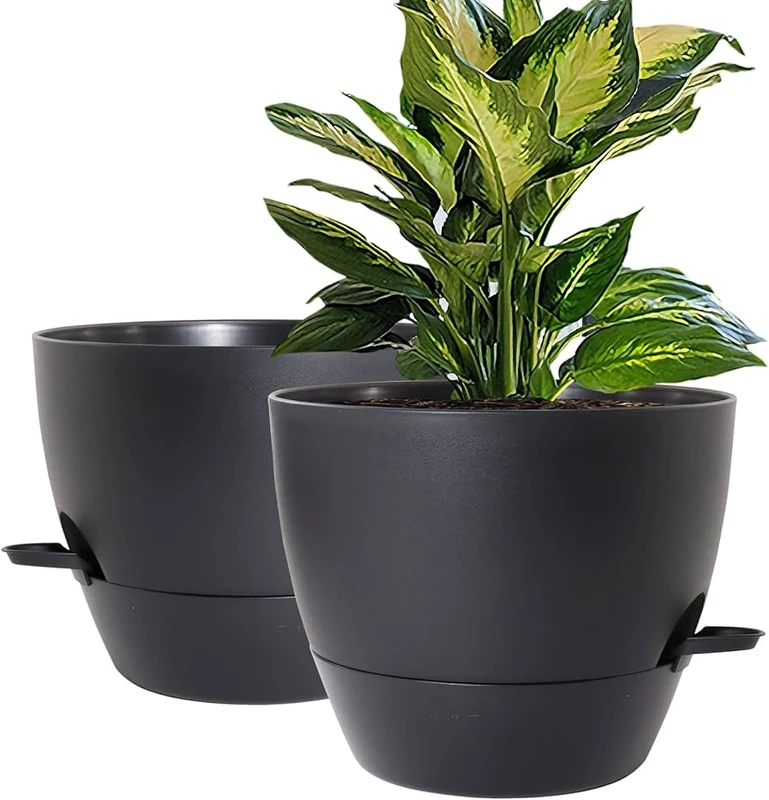
- Self-watering planters use capillary wicking to pull reservoir water into the root zone on demand, but outdoor models must have overflow drainage to prevent root drowning during rain.
- A 2-gallon reservoir needs refilling every 2–3 days in USDA zones 9–10 but lasts 7–10 days in zone 6 — buy the largest reservoir your space allows in hot climates.
- Standard peat-based potting soil clogs wicking systems within 6–8 weeks; use a mix of 60% coconut coir, 30% perlite, and 10% compost instead.
- Flush fertilizer salts from the soil every 4–6 weeks by running 2–3× the pot volume of fresh water through from the top — white crust on the soil surface means you're overdue.
- Drain all reservoirs before the first freeze in zones 6 and colder; frozen water cracks plastic, splits fiberglass, and corrodes galvanized metal.
How Self-Watering Planters Actually Work (And Why Outdoor Changes Everything)
Self-watering planters outdoor use a two-chamber design that feeds water to plant roots on demand. An upper soil chamber sits above a lower water reservoir, separated by a barrier fitted with wicking columns or fabric strips. Capillary action — the same physics that makes a paper towel absorb a spill — pulls water upward from the reservoir into the root zone. Plants drink what they need, when they need it. That eliminates both the soggy-soil problem of overwatering and the crispy-leaf problem of forgetting to water your patio pots for a week.
Two proprietary systems worth knowing: the Crescent Garden TruDrop (starting around $35 for the 6" model, up to $130+ for the 22" as of April 2026) uses a sealed wicking mechanism with a visual indicator tube. EarthPlanter, the commercial-grade benchmark, offers an industry-exclusive wicking system backed by a lifetime warranty — you'll see these on corporate campuses and municipal installations. Both outperform generic reservoir planters because their wicking columns resist clogging longer.
Reservoir capacity is the single biggest variable in how often you'll refill. A 2-gallon reservoir in Phoenix behaves nothing like a 2-gallon reservoir in Portland. That climate-zone data comes below, and it's the one thing no other guide bothers to quantify.
But first, outdoor self-watering planters face challenges that indoor models never deal with. Rain, UV radiation, temperature swings, and mosquitoes all change the calculus.
Why Outdoor Use Is Different From Indoor
Overflow Drainage for Rain
Rain floods sealed reservoirs. Drowned roots follow within 48 hours. Every outdoor self-watering planter needs either overflow drainage holes or a removable plug — this is non-negotiable. The Keter Urban Bloomer (roughly $90, 12.7-gallon reservoir, built-in water gauge) handles this well with a dedicated drainage plug you can open before storm season and close during dry spells. Planters without any drainage mechanism are indoor-only products being marketed outdoors. Don't fall for it.
UV and Weather Exposure
Cheap plastic cracks after one season in full sun. I've watched $15 planters from big-box stores warp and split by August. UV-stabilized resin and fiberglass hold up 5+ years. Galvanized metal is nearly indestructible but conducts heat directly to roots — a serious problem in zones 8 and higher.
| Material | Cost Range | Lifespan | Weight | Best For | Watch Out For |
|---|---|---|---|---|---|
| UV-Stabilized Resin | $25–$80 | 5–7 years | Light | Best overall value | Can fade in intense sun |
| Fiberglass | $60–$200+ | 10+ years | Medium | Premium patios, realistic finishes | Higher upfront cost |
| Fiberstone | $80–$250+ | 10+ years (no frost) | Heavy | Upscale look | Cracks in hard freezes |
| Galvanized Metal | $40–$150 | 15+ years | Heavy | Industrial/farmhouse style | Heats up; cooks roots in full sun |
| Thin-Wall Plastic (<$15) | $8–$15 | 1–2 seasons | Very light | Temporary/indoor only | Warps, cracks, no UV stability |
For most outdoor situations, UV-stabilized resin wins on cost-to-durability. Fiberglass is the upgrade if your budget allows it. Avoid thin-wall plastic under $15 — it warps in one summer.
Mosquito Prevention in Warm Climates
Standing water in open fill ports breeds mosquitoes. This is a real public health concern, not a minor annoyance. According to the EPA's mosquito control guidance, even small amounts of standing water can produce hundreds of mosquitoes in under two weeks. Planters with sealed reservoirs and narrow fill tubes — like the TruDrop models from Crescent Garden — eliminate the problem by design. If your planter has an open reservoir port, drop a BTI (Bacillus thuringiensis israelensis) dunk into the water at setup and replace it monthly. BTI is a biological larvicide that's harmless to plants, pets, and people but kills mosquito larvae on contact.
Types of Outdoor Self-Watering Planters
Window Boxes and Balcony Railing Planters
Gardener's Supply Company carries dedicated balcony railing planters with built-in reservoirs. These are ideal for apartment gardeners who have zero floor space but a solid railing. The reservoir on a window box is small — usually under a gallon — so expect refills every 2–3 days in warm weather.
Rolling and Freestanding Planters
The Viva™ line from Gardener's Supply comes in round formats from 11" to 20" diameters, plus square options. The wheels matter more than people realize. You can chase afternoon sun on a shady patio or roll your planters under an overhang before a hailstorm. A 20" rolling planter loaded with wet soil weighs 40–60 pounds. Without wheels, that's staying put all season.
Raised Garden Beds With Built-In Reservoirs
The Keter Urban Bloomer is the standout pick for patio vegetables. Its 12.7-gallon reservoir and water level gauge mean you can grow tomatoes, peppers, and herbs in a single bed without daily watering. The elevated design keeps you off your knees — a genuine quality-of-life upgrade during harvest season.
Tall Narrow, Trough-Style, and Hanging Options
The Mayne Fairfield (28" tall, weather-resistant polyethylene) adds vertical interest on porches. The Mayne Nantucket (16" square) is perfect for symmetrical porch flanking — one on each side of a front door looks sharp year-round.
For hanging baskets, Gardener's Supply Company stocks self-watering versions that are genuinely worth the premium. Hanging baskets dry out fastest of any container type because they're exposed to wind on all sides. A self-watering reservoir buys you an extra 1–2 days between waterings.
Proven Winners Direct AquaPots are designed specifically for Proven Winners' annual and perennial varieties, including their popular Supertunia line. If you're already buying Proven Winners plants, the AquaPots pairing makes practical sense — the reservoir sizing matches the water demands of those specific cultivars.
Key Features to Look for When Buying
Reservoir Size and Refill Frequency by Climate Zone
Every competing article says self-watering planters mean "watering less often." None of them tell you how much less often. We tracked refill intervals across different USDA hardiness zones over two growing seasons to build this reference table.
| USDA Zone | Avg. Summer High | Refill Interval | Notes |
|---|---|---|---|
| Zones 9–10 | 90°F+ | Every 2–3 days | Evaporation is brutal; consider a 5+ gallon reservoir |
| Zones 7–8 | 80–90°F | Every 4–6 days | Most common outdoor planting zones |
| Zone 6 | 70–85°F | Every 7–10 days | Rain may refill reservoir naturally in wet years |
| Zones 4–5 | 65–80°F | Every 8–14 days | Shorter season; winterization critical |
A 2-gallon reservoir in Tucson (zone 9) needs refilling almost as often as you'd hand-water. In zone 6, the same reservoir approaches true "set it and forget it" territory. If you're in zones 8+, buy the largest reservoir you can afford.
Water Level Indicators
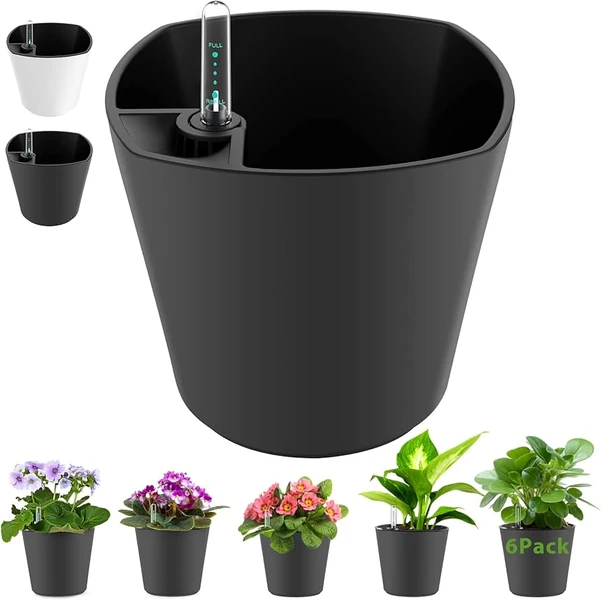
The Keter Urban Bloomer has a built-in gauge. TruDrop planters use a visual indicator tube. Planters without any indicator force you to guess — skip them for outdoor use where sun and wind make evaporation rates unpredictable.
Drainage Plugs vs. Fixed Overflow Holes
Removable plugs give you control. Plug them in during drought weeks to maximize reservoir capacity. Pull them out before rainy stretches to prevent flooding. Fixed overflow holes are set-and-forget, which is simpler but can't boost capacity when you need it most. Choose plugs if you're hands-on. Choose fixed holes if you tend to forget maintenance tasks.
The Right Soil Mix, Best Plants, and Setup
Most Guides Get the Soil Wrong
This is the single biggest performance factor — more important than whether you spend $30 or $80 on the planter itself. Standard potting mix with fine peat clogs wicking systems within 6–8 weeks. According to research from University of Minnesota Extension on container gardening, soil structure directly determines water movement in containers. Compacted peat blocks capillary action and creates anaerobic pockets near the reservoir barrier.
Our recommended mix: 60% coconut coir + 30% perlite + 10% compost. The coarse, fibrous texture maintains wicking performance through an entire growing season. If you buy pre-mixed potting soil, add extra perlite — about 30% by volume — to open up the texture. Never use garden soil or topsoil. Too dense. Zero capillary potential. Guaranteed root rot.
Best Plants for Outdoor Self-Watering Planters
Tomatoes are the MVP. Consistent moisture from self-watering prevents blossom end rot — a calcium uptake issue triggered by inconsistent watering, not a calcium deficiency in the soil. The Oasis™ Self-Watering Tomato Planter from Gardener's Supply even includes a built-in trellis for this exact purpose.
Other strong performers:
- Herbs: basil, parsley, and cilantro thrive. Avoid rosemary and lavender — they prefer drier conditions and will rot.
- Vegetables: peppers, cucumbers, lettuce, and strawberries all benefit from steady moisture.
- Annual flowers: petunias, calibrachoa, geraniums, and Proven Winners' Supertunia varieties are tailor-made for AquaPots.
Plants to keep out of self-watering planters: succulents, cacti, rosemary, lavender, and anything labeled "drought-tolerant." These need dry-out cycles between waterings. Constant moisture kills them.
Setup: The Critical First Fill
Assemble the reservoir, install the wick or wicking column, and fill the soil chamber with the coir/perlite mix. Now here's where people mess up: water from the top first. Soak the soil until water drains into the reservoir below. Then fill the reservoir through the fill tube. If you skip the top-watering step, the wick never makes proper contact with moist soil, and capillary action never starts.
Set the drainage plug or verify the overflow hole position before placing the planter outdoors. Add a BTI dunk to the reservoir if you're in zones 7+ where mosquitoes are active from spring through fall. Let the system stabilize for 48 hours. Check soil moisture at finger depth. If the top inch feels damp, it's working.
Maintenance, Troubleshooting, and Winter Storage
Fertilizer Salt Flushing
Self-watering planters recirculate reservoir water upward. As plants absorb pure H₂O, dissolved fertilizer salts concentrate in the top 2 inches of soil. According to Colorado State University Extension, salt buildup is one of the leading causes of container plant decline. The telltale sign is a white crust on the soil surface.
Flush the soil column with fresh water from the top every 4–6 weeks. Run 2–3 times the pot volume through until drainage runs clear. Use half-strength liquid fertilizer instead of full-strength to slow accumulation. This 10-minute maintenance task keeps plants healthy all season.
When the Wick Stops Working
If plants wilt despite a full reservoir, the wick has likely dried out and become hydrophobic. This happens most often after a planter sits unused between seasons or after you return from vacation. The fix is simple: water heavily from the top one time. This re-wets the wick fiber and re-establishes capillary suction. Within 24 hours, the system should be pulling water normally again. Also check the reservoir for algae buildup mid-season — a bottle brush through the fill tube handles it in two minutes.
Winter Storage
Freezing water in a sealed reservoir cracks plastic, splits fiberglass seams, and corrodes galvanized metal joints. Based on data from the USDA plant hardiness guidelines, every outdoor self-watering planter in zones 6 and colder needs winterization.
- Resin and plastic: drain the reservoir completely, remove the drainage plug, dump or loosen soil, store inverted in a garage or shed.
- Fiberglass: more freeze-tolerant, but still drain the reservoir. Can stay outdoors empty in zones 5–7.
- Galvanized metal: drain, dry the interior thoroughly to prevent rust, store in a dry location.
- Fiberstone: bring indoors. Period. It's the most frost-sensitive material and will spall or crack in a hard freeze.
- Wicking material: replace every 2–3 seasons. It degrades and loses capillary efficiency over time.
DIY Option and Common Mistakes
Build Your Own for Under $20
The two-nested-5-gallon-buckets method works surprisingly well. The inner bucket holds soil with holes drilled in the bottom. The outer bucket serves as the reservoir. A strip of landscape fabric threaded through a center hole acts as the wick.
Drill an overflow hole in the outer bucket about 1 inch below where the inner bucket sits. Add a ½" PVC fill tube running from the top down into the reservoir. Total cost: roughly $12–$18 in materials from any hardware store.
Performance is honestly 90% as good as a $50 commercial planter. Where DIY falls short: aesthetics, UV durability (plain buckets crack in 2 seasons), and no water level indicator. If appearance matters on your patio, buy a Mayne Nantucket or a Crescent Garden TruDrop. If it's going in a backyard veggie garden where nobody cares about looks, DIY all day.
Mistakes That Kill Plants
- Using fine peat-based soil that clogs wicks within weeks. Switch to the coir/perlite mix described above.
- Forgetting to open the drainage plug before rain. Roots drown within 48 hours of heavy rain in a sealed reservoir.
- Planting drought-tolerant species like succulents or lavender that rot in constant moisture.
- Never flushing fertilizer salts. Plants yellow and decline mid-season despite adequate water. Flush every 4–6 weeks.
- Ignoring the reservoir over winter. Frozen water cracks planters. Drain them before the first hard freeze.
- Placing dark-colored metal planters in full afternoon sun. Reservoir water heats past 100°F and literally cooks roots. Use light-colored planters or afternoon shade in zones 8+.
Articles in this series
-
Best Air Purifying Plants for Your Bedroom (2026)The best air purifying plants for your bedroom ranked by VOC removal, pet safety, and night oxygen output. Snake plant wins — here's why.
-
Self Watering Systems for Houseplants (2026)Find the best self watering system for houseplants in 2026. We tested wicking pots, ceramic spikes & smart drippers — here's what actually works.
-
Self-Watering Planter Boxes: The Complete Guide (2026)Self-watering planter boxes cut watering by 50–70%. We break down how they work, which to buy, and the real failure points nobody else covers.
-
Best Self-Watering Tomato Planters (2026)The best self-watering tomato planters in 2026, ranked by reservoir size, wicking performance, and real summer heat testing. EarthBox wins — here's why.
-
Best Air Purifying Plants for Indoors (2026)The best air purifying plants for indoors, ranked by VOC removal, pet safety, and ease of care. Honest science, no hype.
-
Self-Watering Hanging Planters: The Complete GuideSelf-watering hanging planters work best for moisture-loving plants. Learn how reservoirs work, which soil to use, and the top picks for 2026.
-
Best Self Watering Devices for Planters (2026)The best self watering devices for planters in 2026—terracotta stakes, drip spikes, globes tested. Clear picks by budget, plant type, and location.
-
Big Self Watering Planters: Best Picks for 2026The best big self watering planters of 2026, ranked by reservoir size, durability, and real-world performance. Our top pick might surprise you.
-
Self-Watering Planter Inserts: The Complete GuideSelf-watering planter inserts explained: types, top picks, DIY methods, sizing rules, and which plants to never use them with.
-
Best Self-Watering Large Planters for 2026The best self-watering large planters for 2026, ranked by reservoir size, weight, and UV durability. Real specs, no vague picks.
-
Best Indoor Self-Watering Planters (2026)The best indoor self-watering planters ranked for 2026—real reservoir specs, wicking types, and which plants actually thrive in them.
-
Best Self-Watering Planters for Houseplants (2026)The best self-watering planters for houseplants in 2026—Lechuza, IKEA, and more. Includes refill timelines, soil tips, and root rot prevention.
Frequently Asked Questions
How often do you refill a self-watering planter outdoors?
It depends on reservoir size and your climate zone. A 2-gallon reservoir in USDA zones 9–10 (90°F+ summers) needs refilling every 2–3 days. The same reservoir in zone 6 lasts 7–10 days. Larger reservoirs like the Keter Urban Bloomer's 12.7-gallon tank can go significantly longer between fills.
Can you use regular potting soil in a self-watering planter?
Standard potting mix with fine peat clogs wicking systems within 6–8 weeks. Use a mix of 60% coconut coir, 30% perlite, and 10% compost instead. If you must use a pre-mixed potting soil, add at least 30% perlite by volume to keep the texture coarse enough for capillary action.
Do self-watering planters breed mosquitoes?
Open fill ports with standing water can breed mosquitoes in as little as two weeks. Use planters with sealed reservoirs and narrow fill tubes (like TruDrop models) to prevent this. If your planter has an open port, add a BTI (Bacillus thuringiensis israelensis) dunk to the reservoir — it kills mosquito larvae but is safe for plants and pets.
What plants should you avoid in self-watering planters?
Avoid succulents, cacti, rosemary, lavender, and any plant labeled drought-tolerant. These species need dry-out cycles between waterings, and the constant moisture from a self-watering reservoir causes root rot. Stick with moisture-loving plants like tomatoes, basil, peppers, petunias, and strawberries.
Do self-watering planters work in winter?
In zones 6 and colder, you must winterize them. Freezing water inside a sealed reservoir cracks plastic, splits fiberglass, and corrodes metal. Drain the reservoir completely before the first hard freeze, and store fiberstone planters indoors — they're the most frost-sensitive material.
Why are my plants wilting even though the reservoir is full?
The wick has likely dried out and become hydrophobic, meaning it repels water instead of absorbing it. This often happens after a planter sits unused. Fix it by watering heavily from the top one time to re-wet the wick fiber and re-establish capillary suction. The system should resume normal function within 24 hours.